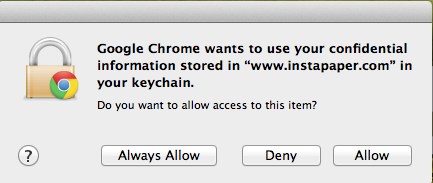
I am becoming annoyed with the Chrome request that I allow it access to my “confidential information” from other sources. I launch 6 such requests each time I open the browser. Not exactly the kind of thing that encourages me to make optional use of this software.
OK – I do appreciate Google and I do understand this is free, BUT it is my clicking on ads that pays for this access. If Google really wanted to help me out, I would have a one time option “Always Deny”. If it is necessary to give approval, I would think it would make more sense each time I wanted to use the service and not each time I launch the browser.
Here is what I do not get about the iBook “model”.
I have a book about ready to go. It is a rework and upgrade of a book my wife and I have had on the college market since the mid 1990s. We have been moving our original print approach to a hybrid model combining a Primer and web content and the process is nearly complete. New additions are easy in comparison. A completely new structure is pretty much like starting over. We are planning on an inexpensive ($5-10 Primer and complimentary online content) approach. We hope this is a good deal for what is presently a $120 book.
Anyway, the Apple model and the development tool would be an easy implementation. However, here is the dilemma. It would require us to market the book for an exclusive market. University settings typically allow students a great deal of latitude in equipment purchases. The iPad, even if a great device, would be a second device for many students. At present, Amazon seems a much better choice. They promote various Kindles, but their focus is on the content and not the device. Any device can pretty much use Amazon content. The Apple model and the restrictive options for pursuing secondary paid opportunities do not make sense for academic content when students purchase their own devices and the expectation is that every student in the class will access the content.
I am not big into the educational value of games – serious games or not. However, there are serious scholars who feel that games offer educational advantages not found in many traditional forms of instruction (e.g.., Gee).
I encountered an analysis today that made me wonder what the game designers might think of this. This game designer argues that the story is irrelevant. This position would seem to be at odds with academics such as Gee who began their examination of games as literature.
Posted inUncategorized|Taggedgame|Comments Off on Should games have a story?
One of the concerns regarding the android approach to apps is that it is poorly policed and the more open approach increases the danger of malware infecting an android device. Google has responded to such concerns by creating software that attempts to identify malware in the marketplace – see this Google blog post. Google will even respond to the identification of a problem by remotely removing defective software from your device. Leo always says that removing stuff after equipment has been infected cannot assure protection. I wonder if “sand boxed” software eliminates this concern?
Posted inUncategorized|Taggedandroid|Comments Off on Google will scan for malware before you buy
I really want to purchase an Android pad, but how do I justify the purchase when I already own iPads? How do I invest at a higher cost and a less developed app inventory? I would like to encourage a diversified market for these products, but the companies are going to have to help me out on the price.
Not sure how many individuals who follow this blog also follow MacBreak Weekly (Leo Laporte and colleagues). They have an interesting debate (in the middle of this episode) on Apple and education. The focus concerns equity rather than some of the other issues raised in connection with Apple taking on textbooks. The conversation revolves around whether Apple would be increasing the educational digital divide by connecting an expensive device with the improved learning content at a total cost many will not be able to afford. Interesting – the $15 price seemed a great deal in comparison to the normal cost of books.
We use cookies to ensure that we give you the best experience on our website. If you continue to use this site we will assume that you are happy with it.
You can revoke your consent any time using the Revoke consent button.


You must be logged in to post a comment.