When budgets are tight, leaders endeavor to keep cuts as far away from the classroom as possible. Thus, reductions are made in “nice to have” programs and projects, such as new technology, equipment upgrades, supplemental programs, professional development, and non-classroom staff, many of which are the backbone of the technology department
The article identifies practices tech directors can apply to limit the damage. Most involve clearly articulating the plan that is place:
What activities are the responsibility of each category of employee?
What are the replacement cycles for hardware and what are the commitments for software licenses? What are considered the highest priority items?
Vendors will also be under financial pressure. Will the be opportunities to secure multi-year contracts at significantly reduced rates?
Is your school a part of a cooperative and which services might be available to a cooperative?
Posted inUncategorized|Comments Off on School Tech in a Recession
I encountered this story through an outdoor segment on one of our local television stations. The story describes a project of Minnesota Department of Natural Resources in which the department provides classrooms with trout eggs and allows students to rear trout in classroom aquariums to eventually release in local cold water streams. The project ties into many science topics, but also offers opportunities in other areas.
Watch the videos. The 55-gallon tank took me back to my days student teaching in an Iowa high school. The biology teacher I was paired with had a tank he raised guppies in. I had several tanks of my own as a hobbyist and brought a large Oscar to share with the students. The Oscar did a job on the guppies.
At a later point, the tank had been drained and was still sitting in the back of the classroom. One of my jobs student teaching was showing movies the teacher had found and used from time to time. I knew how to get the loop just right while threading the film projector so I was left in charge of the class. The students soon figured this out and would grab a handful of gravel from the bottom of the tank when it was film day. With the lights off, they would start lobbing the gravel at each other. I used to use that story when talking about behavioral management techniques with my college educational psychology students. I figured out that consequences are not always the best way to maintain discipline. Behaviorism also proposes you can manipulate stimuli so you don’t have to deal with consequences. I figured out I could just roll the tank into the storage room thereby remove the stimulus for rock tossing.
Posted inUncategorized|Comments Off on Trout in the classroom
The Pew Internet and American Life project conducted a recent survey addressing U.S. citizen use of Twitter. Here are some of the facts I find most interesting.
About a quarter of those surveyed say they use Twitter. This means Twitter is less popular than YouTube (most popular), Facebook, Instagram, Pinterest, Snapchat, and LinkedIn. I was surprised that Twitter was this low in the rankings.
Political party makes a significant difference in the use of Twitter – Dems 32%, Republicans 17%
Political party makes a significant difference in the opinion that Twitter is good for the country – Dems 47%, Republicans 17%
Party reaction may be associated with the beliefs that 25% believe blocking certain users and tweets 31% are significant problems.
Infrequent users mostly reply rather than author original tweets.
Posted inUncategorized|Comments Off on Twitter facts
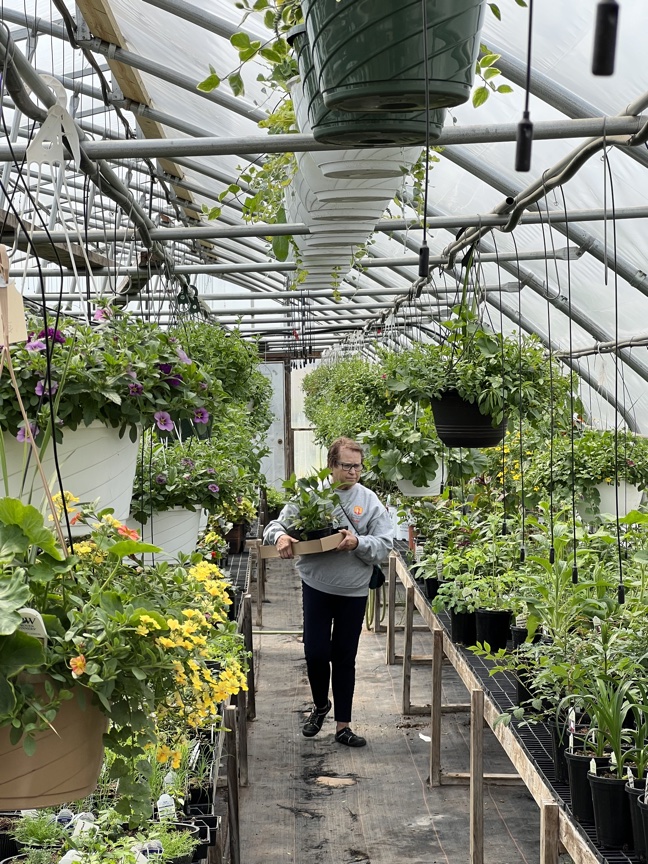
In 2019 we took a Spring trip to the Amish greenhouses near St. Charles, MN, to purchase flowers and vegetable plants for our gardens. I wrote a blog post about this trip. While the lifestyle of the Amish people is intriguing, their ventures into raising plants for those of us from the big city was what caused us to drive south.
This is more than a post about raising plants for home gardeners. This is a post about online popularity. I have maintained at least one blog since 2002, and this story about Amish greenhouses has been my most popular post of all time. This will likely still be the case this year even though I wrote the story in 2019.
I have tried to figure out just what about the post has made it so popular. I think I am capable of writing tech content for a national and sometimes international audience. These efforts generate nothing like the popularity of the Amish story. Here is what I have decided. The Amish probably have relied on word of mouth to attract customers to their farms on the gravel roads of southern Minnesota. There are many greenhouses so where they are located and how to get there is useful information. What do people do when they need information? They try Google. What would you find if you enter Minnesota Amish Greenhouses because you wanted to drive down from “the cities” on a nice Spring day? Not much, but there was my post. What happens when more and more people visit the same web site? It becomes more and more attractive and ranks higher in the Google ranking. In 2020, my post on the Amish Greenhouses was the top link. I see it has fallen a few rungs this year. It would seem this is because the Amish or at least those from the region have decided to market the greenhouses, but my post is still near the top.
The message – find something that is useful and unique and you will attract attention. Attention online brings more attention.
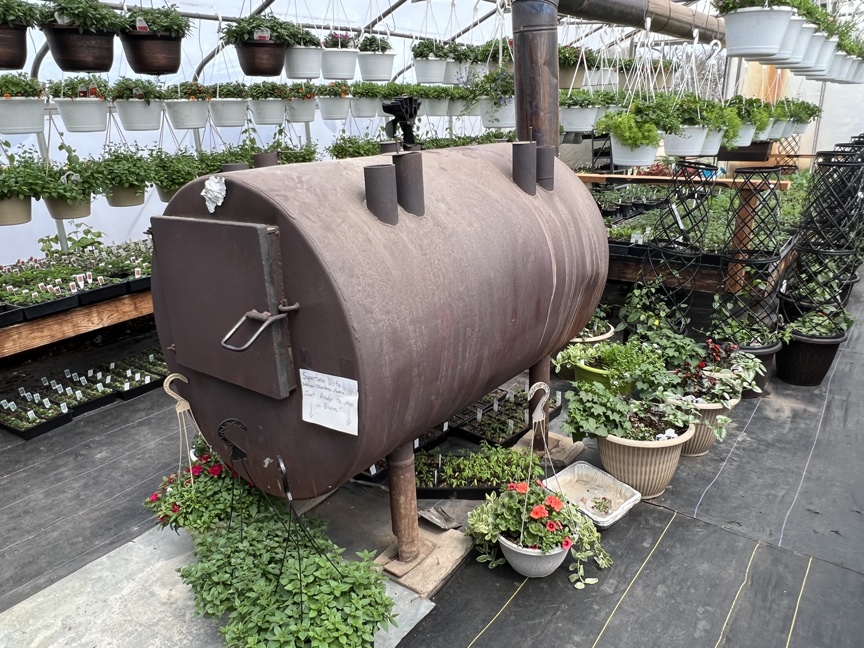
We visited the greenhouses again yesterday and I could not help providing a new set of images. You might think one greenhouse is pretty much like any other greenhouse until you notice the wood-fired heating system and the unusual way of watering the plants.
.
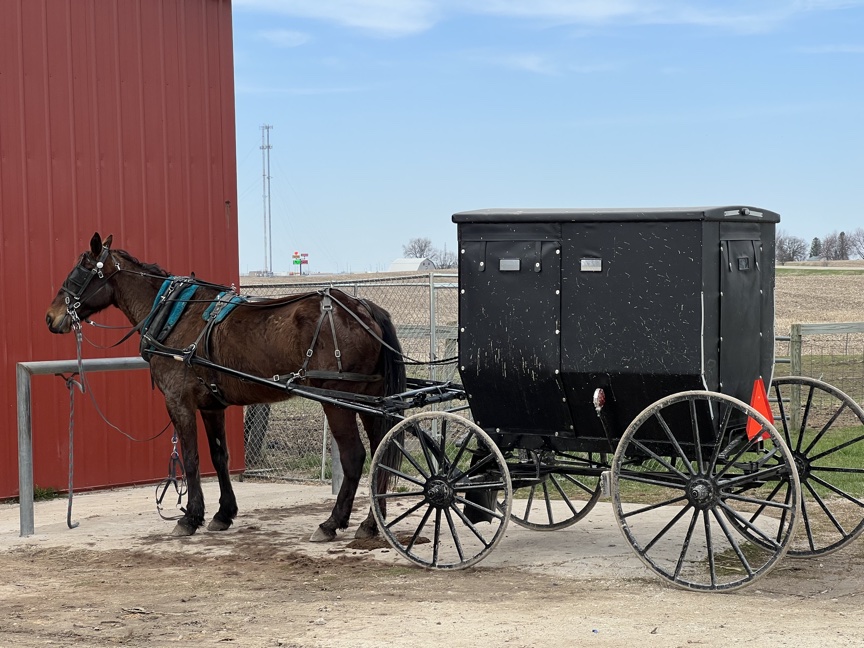
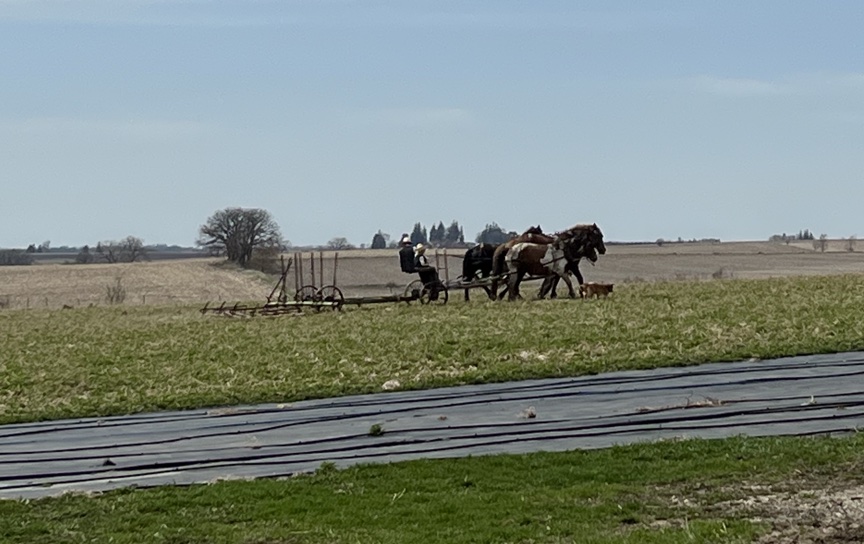
I did take some photos outside the greenhouses. I know the Amish do not appreciate being photographed so my photos concentrate on other interesting opportunities.
The Amish farms are mixed in with huge farms using very modern equipment and methods. The contrast in farming practices is stark.
Posted inUncategorized|Comments Off on Amish Greenhouse Stats
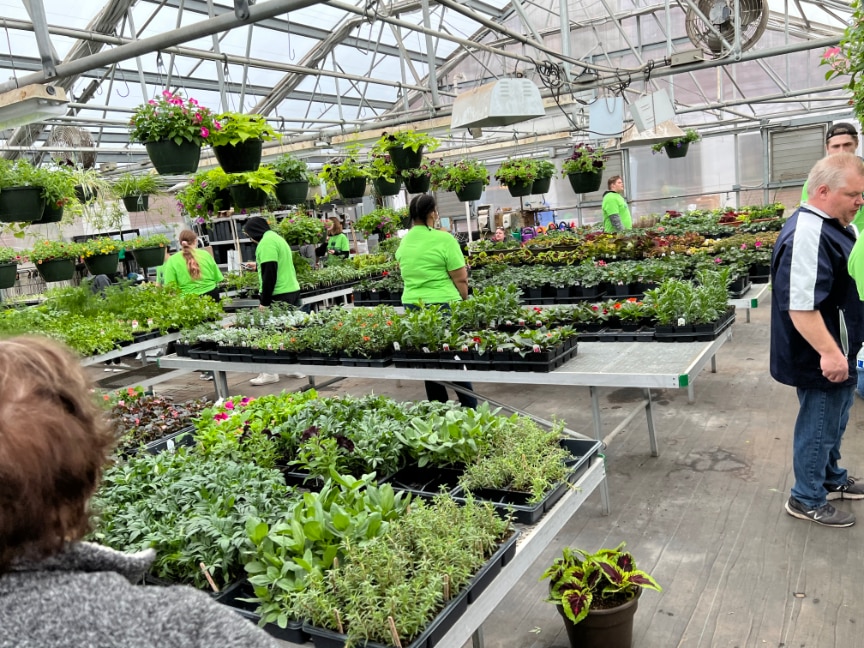
I just wrote a post yesterday about school gardens and then Cindy found this ad for a school-based plant sale. The sale was in a nearby suburb so we decided to check it out. It is getting close to planting time in Minnesota and we purchase some of our plants to support local charities.
Champlin Park offers secondary classes in urban agriculture. I understand that some city dwellers raise chickens in their backyards and many have gardens, but the phrase “urban agriculture” was new to me. I spoke at some length with the school’s program director and learned a lot. The courses are considered part of the science curriculum, but do not count toward required science credit requirements. I would translate that as electives. The director said that students take the courses for many reasons including just wanting to take a course for a change that allows them to do something. I have my own way of understanding some of these ideas and I would describe this as a “maker” argument. Some students want a different kind of science connection. Some see a possible vocational opportunity. I suppose in the kind of small, rural school I attended as a youth, we might describe this as FFA (Future Farmers of America). Rural agriculture and urban agriculture seem very different.
I wonder if others interested in urban agriculture could make the same argument as the eSports advocates. There is a vocational opportunity if you want to follow that path. I would guess gardening is a more life long activity than gaming. There is a science connection. A subgroup of students finds this focus interesting.
School gardens make a lot of sense to me. Gardens can be a learning experience out of their room and offers “making” opportunities related to nearly every area of the curriculum. Often overlooked is just the amount of work involved in producing vegetables and an appreciation for the small farmers who often do this work. Lesson plans are available to help interested educators get started.
One of the issues with school gardens is the timing of growing vegetables in relation to the school year. Unfortunately, educators may find themselves taking care of a garden their students started during the summer which may not be how they hoped things would work out and student movement to another grade in the fall may make it complicated for students to follow through with a harvest.
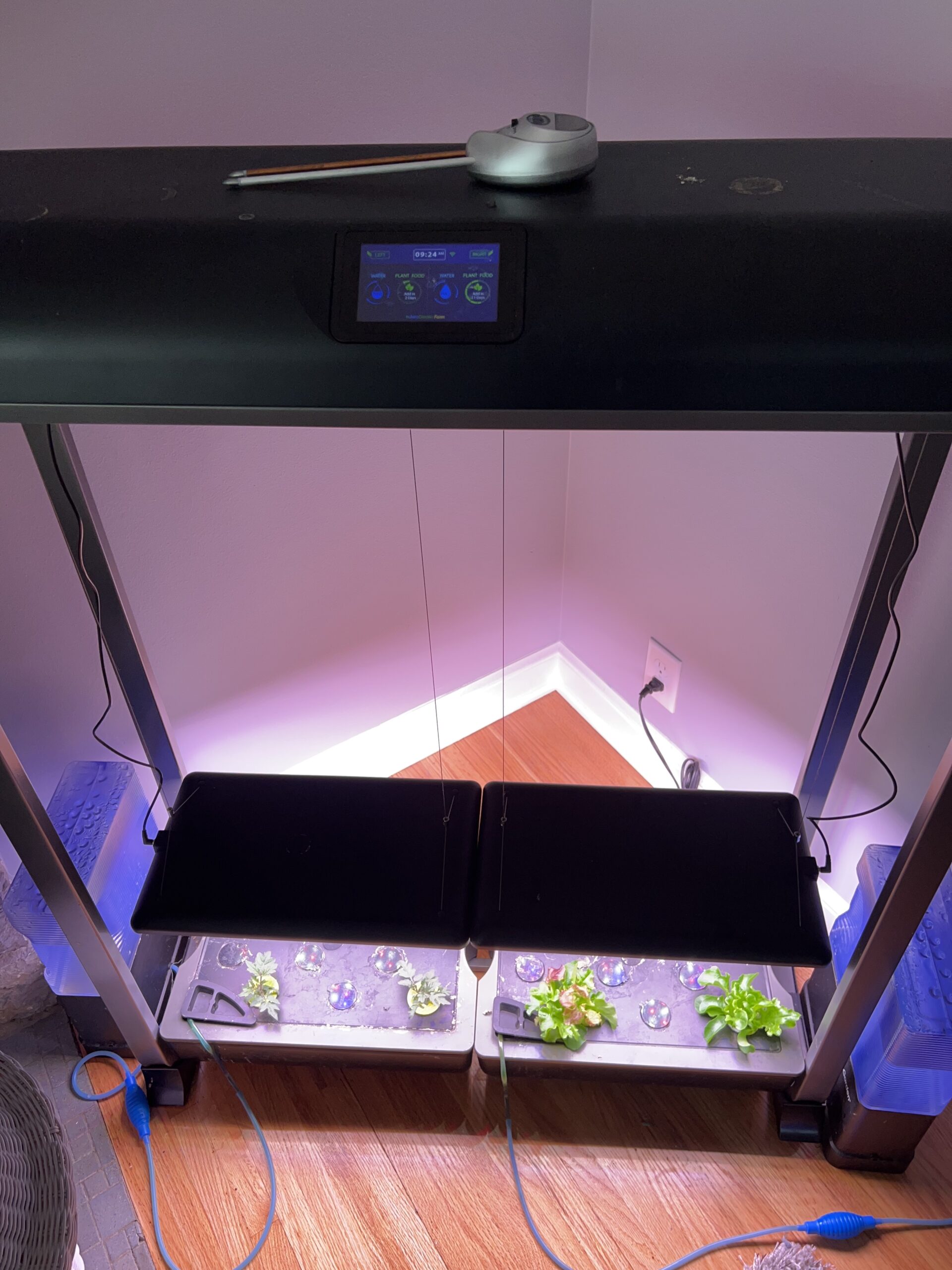
My proposal is to take advantage of hydroponic gardening during the Fall and Winter. These units can be operated in individual classrooms and offer many of the educational benefits of outdoor gardens. My unit is from Aerogarden. Schools may also have small greenhouses as part of the biology program.
I grow crops year-round supplementing my larger outdoor garden with the multiple crops I can harvest indoors. Here is the latest crop (about three weeks old) of cherry tomatoes, lettuce, and some herbs. These will be available before the same crops I could grow outside.
We use cookies to ensure that we give you the best experience on our website. If you continue to use this site we will assume that you are happy with it.
You can revoke your consent any time using the Revoke consent button.












You must be logged in to post a comment.