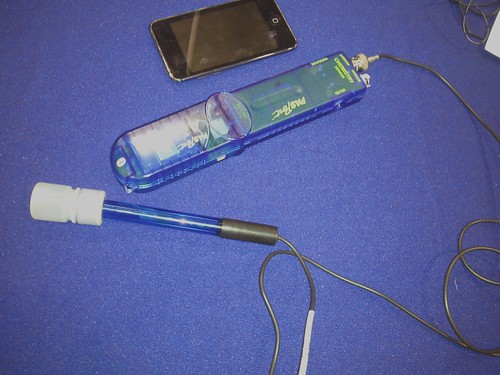
FETC does begin early. Earlier still for those of us from the midwest. But, with temps back home “below the donut”, as our local weather man like to say, it is certainly more pleasant here.
P.S. – Just for the record, I checked and it is -21.
![]()
FETC does begin early. Earlier still for those of us from the midwest. But, with temps back home “below the donut”, as our local weather man like to say, it is certainly more pleasant here.
P.S. – Just for the record, I checked and it is -21.
![]()
Several popular services (e.g., Instapaper) allow users to store content while stripping away the rest of the original site. This certainly would not be the intent of the authors and verges on unethical behavior. I say this as an Instapaper user. A new service proposes to pay part of subscription fee back to the sites that are viewed.
![]()
If you have been using the iPad NY Times app, you probably realize the days of free access are numbered. Here is a report from Wired on what to expect (presently).
![]()
The Washington Post reports that Verizon is suing the FCC contending that the net neutrality rules limiting the restrictions providers can impose are too restrictive. The object to the expectation that providers cannot control content.
For example, the rules prevent wireless operators from blocking Internet voice applications, such as Vonage and Skype.
So part of the profit from those cell phone and mifi data plan bills you pay are being used to propose that your service provider can have a say in what content you use these devices to access.
![]()
The International Society for Technology in Education has released a wish (priority) list for 2011. Two of the items seem focused – dedicated funding for K12 technology (rather than assuming tech funding was available as a part of other authorizations) and universal access to broadband. Both priorities recognize present limitations. I also understand the target – these would seem requests regarding government priorities.
The third priority – education technology must permeate every corner of the teaching and learning process – is somewhat like saying we value what our organization was formed to support. I guess if it seems necessary to state the core mission of your organization – knock yourself out.
Preparing Teachers for Digital Age Learners Act (PTDAL) (mentioned as an example of dedicated funding) seems similar in mission to the series of PT3 programs (Preparing Tomorrows Teachers to Use Technology) of past years. For what is worth I thought the PT3 focus generated change in teacher preparation while the funds were available.
The controversy regarding whether it is best to focus on the specific area you want to develop or to assume this same area will be developed when flexible money is provided is interesting. I think an implicit argument here might be expressed as “if they thought it was valuable they would spend money in the way you suggest”. It is somewhat like the government saying to ISTE – we gave schools money to improve education, it is your job to convince schools to spend this money on technology and the development of teacher skills in helping students use technology as learners. It admit that there is a certain logic in the government taking this position. The problem, if you are a tech advocate, is that the logic just does not seem to work to change practice. What does this mean?
![]()
I have been writing in support of the net neutrality cause for several years (e.g., a recent post describing core concepts in Tim Wu’s book). Today, it appears that the FCC approved a joint venture of cable provider Comcast and content creator NBC. This is exactly the type of arrangement Wu, who proposed the phrase Net Neutrality, argues is dangerous.
However, in making the decision allowing the merger, the FCC stipulated certain requirements designed to address certain issues identified by net neutrality advocates:
Many of the conditions focus on the burgeoning online video industry, ensuring that Comcast doesn’t stifle competition there with its control over access to content and so many shows.
FCC Chairman Julius Genachowski approved of the joint venture late December, saying that ultimately the union would benefit consumers as Comcast promised to contribute more local news and informational programming on some channels, more programming aimed at children and minorities, and $9.95 broadband Internet service for low-income households. (Washington Post)
I do not that Senator Al Franken has been specifically opposed to this merger evidently without success.
![]()