For those of us who make classroom recommendations for educators, keeping current can be a challenge. Not only are there always new services and tools, but those we have recommended in the past can disappear or change. I have long recommended Glogster as an easy to use tool for making what I described as multimedia posters. I was pleased to see that the demo I generated six years ago is still there and active.
It appears that the demo account I have used needs to be explained more carefully at present. Beyond exploration and decision making, the price for elementary classrooms (up to 30 students) is $40 and secondary classrooms (up to 125 students ) is $95 a year. You can purchase access for a month for $5. What I don’t remember from my previous experience was Glogpedia – exemplary glogs organized by content area and templates to make the construction of classroom glogs easier and more polished.
Posted inUncategorized|Comments Off on Glogster – update
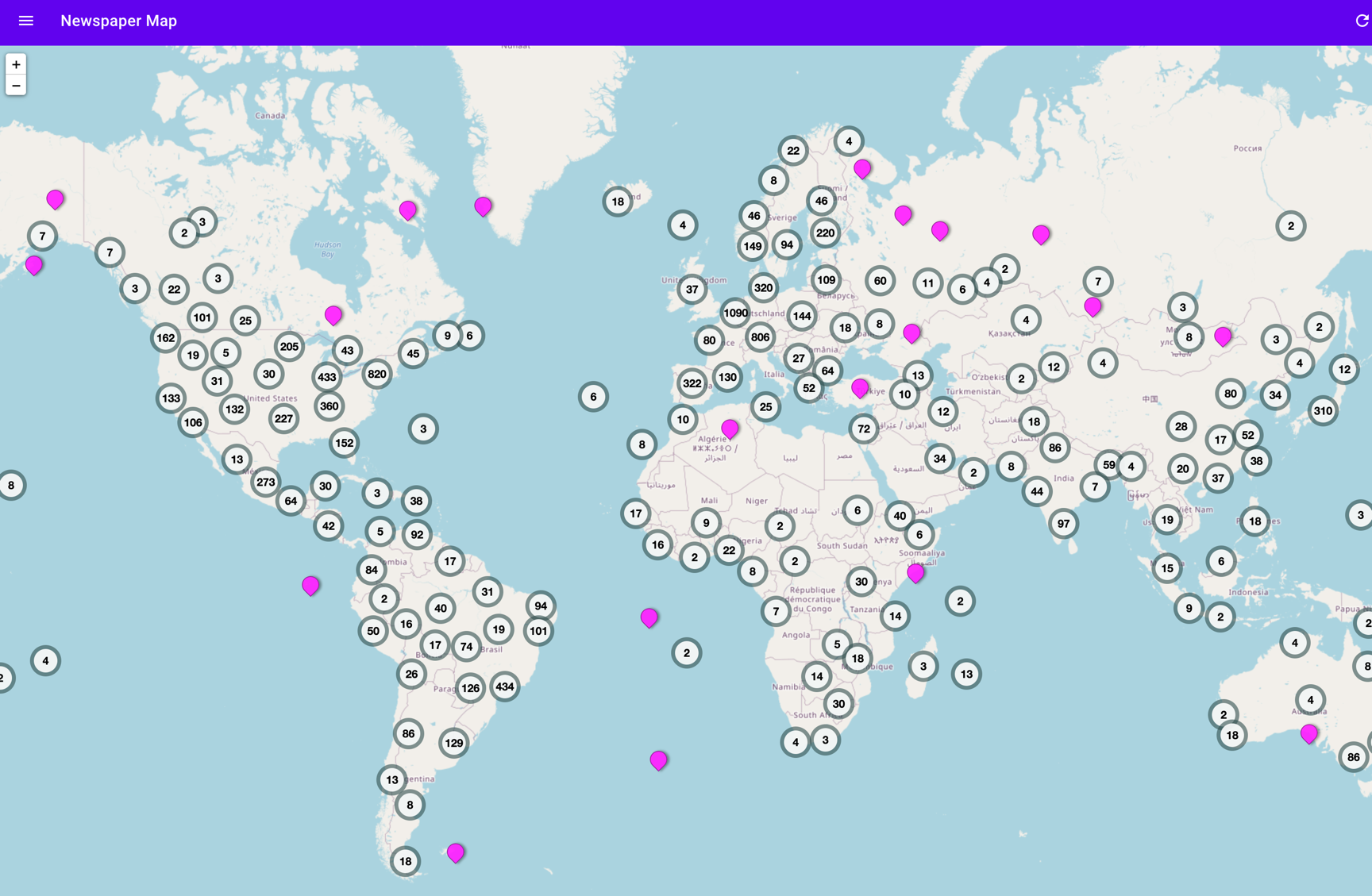
Newspaper Map provides access to over 10,000 newspapers from around the world. I wondered if I could read papers I knew were behind a paywall and while Newspaper Map accessed the papers I tried, the paywall was still active.
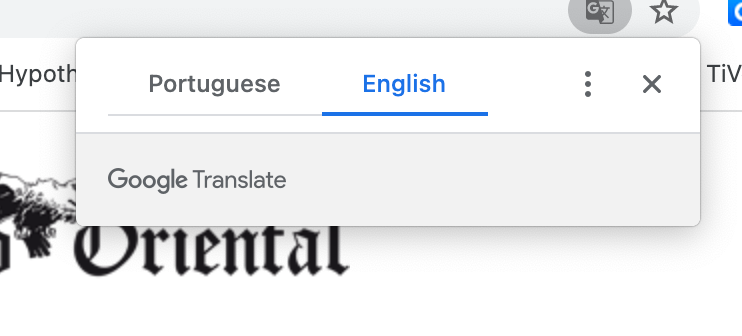
Newspaper Map shows the paper in the language in which it was printed and uses Google Translate to provide an English version.
Reading local small-town papers is an interesting experience and so is comparing how papers in different parts of the world explain the same story.
Posted inUncategorized|Comments Off on Read Newspapers of the World
Deep Fakes represent a significant future disinformation nightmare. The technology allows the mimicking of both voice and appearance making it very difficult to trust what you see and hear. This 60 Minutes segment describes just how advanced deep fakes have become.
Posted inUncategorized|Comments Off on 60 Minutes on the capabilities of deep fakes
I enjoy reading background content on the technology industry and those who generate the tools and software we use. If you have similar interests, you might appreciate Command Line Heroes. This podcast is sponsored by Red Hat, a Linux company, but the episodes don’t require an interest in coding or the Linux operating system.
Posted inUncategorized|Comments Off on Command Line Heroes
I think of this week as “mastery” week in my grad educational technology class. This is the unit in which I get to teach the principles of mastery learning which is one of my favorite topics and argue that technology provides the means to make practical the concept of mastery learning which I trace to articles by Benjamin Bloom and Fred Keller fro the late 1960s. Keller’s model for the “personalized system of instruction (PSI)” and Bloom’s notion that the time to learn should be related to the individual’s aptitude for the subject offer suggestions seldom realized in group based instruction.
Technology-based systems offer practical ways to track the achievements of individual students and with teacher support present learning experiences when individual students have mastered prerequisites. The Kahn Academy offers an example likely to be familiar to many educators, but there are other examples. This recent post from the Cult of Pedagogy blog features an individual describing the Modern Classroom Project. I think it is unfortunate that the approach is described as “mastery grading” because that oversimplifies what a mastery approach involves, but ignore the title and consider the ideas raised in the discussion,
Back in Apple II+ days when I first began exploring the educational potential of “personal computers”, I wanted to explore the potential of these devices in education. I learned to program and worked with students to develop activities (games) to evaluate and develop reading skills. Our initial efforts were based on text-based tasks that required comprehension skills. An important influence was text-based adventure games.
I was reminded of this phase of my career when I was listened to a podcast today and heard George Broussard describe his early experiences programming and writing adventure games. He suggested that his original game (Arctic adventure) could still be played in emulation online.
Anyone interested in adventure games needs to go back to the original – Crowther and Woods (1976) Adventure. Again, this game is available online via an emulator.
Adventure games are games of exploration based on the issuing of commands (in text) in reaction to the text that appears on the screen. The commands influence the flow and successful advancement within the game. There are usually simple instructions, but a reasonable strategy is just to try things – e.g., go west, open door, take lantern. Typically, you collect objects in order to solve problems that allow you to advance in the game. The following from the opening of Adventure should give you the idea.
I ended up writing a different type of text-heavy game called Master Detective requiring the player (detective) to identify errors in the testimony of potential criminals during interrogation. I was interested in comprehension monitoring and this capacity to notice failures of comprehension was studied in research settings by having readers attempt to identify different types of errors (factual errors, cross-sentence inconsistencies) as a proxy for the type of errors that occur naturally when readers attempt to comprehend. I turned this research task into a game with a rationale for such a task.
With adventure games, I got as far as collecting data on the number of moves it took good and struggling readers to advance through games of different levels of complexity.
I continue to think the genre offers potential as a motivated reading activity.
Posted inUncategorized|Comments Off on Adventure Games
We use cookies to ensure that we give you the best experience on our website. If you continue to use this site we will assume that you are happy with it.
You can revoke your consent any time using the Revoke consent button.






You must be logged in to post a comment.