Current events and their politicized interpretations require some way for the public to process it all. Since the world is now engaged in an important conference of political leaders to address the issue of climate change. I thought I would offer this as a resource for the rest of us.
Zuckerberg’s surprise announcement of Facebook morphing into Meta caught many by surprise and has received a variety of reactions. It is certainly true that Facebook faces many challenges and probably deserves criticism for its indifference to the societal problems it has created. Meta and the metaverse have been interpreted by many as a crude attempt to detract from these serious issues. A few sources (CBS) have at least made an effort to put the issues of the abuse of the collection of personal data and misinformation aside and comment on the vision of a commercial metaverse.
It seems possible to argue Zuckerberg offers a vision of the future of virtual reality (VR) and augmented reality (AR). Certainly, there was a huge financial bet on this vision in the costly acquisition of Oculus. The immersive nature of Oculus offers a way to differentiate this vision from some modern reincarnation of Second Life.
I personally don’t get the social potential of VR. A better Zoom experience perhaps, but not improved avatars. I do see educational potential in VR. Think of educational VR as allowing for immersive educational simulations and you may begin to see the potential. AR is what has the most appeal for me. In imagining the future of what I described as layering, AR as layering information on life. You get a feel for the potential if you have ever used Google lens – a way to identify objects and link to information about these objects. Having this opportunity in daily life in real-time, seems doable and useful. It will take the resources of companies such as Facebook (Meta) to explore and move the field forward.
I see Mark Zuckerberg and Elon Musk in similar ways. They seem selfed absorbed and capable of generating a wake of damage, but certain accomplishments (e.g., Musk’s focus on electrical energy in transportation and advances in battery design) seem great advances for society. It is partly up to us to sort out the good from the weirdness.
Bill Gates’ book on climate change is available for download at no cost to college students for a limited time. I have read this book and I found it to be carefully researched and well written.
For those of us who make classroom recommendations for educators, keeping current can be a challenge. Not only are there always new services and tools, but those we have recommended in the past can disappear or change. I have long recommended Glogster as an easy to use tool for making what I described as multimedia posters. I was pleased to see that the demo I generated six years ago is still there and active.
It appears that the demo account I have used needs to be explained more carefully at present. Beyond exploration and decision making, the price for elementary classrooms (up to 30 students) is $40 and secondary classrooms (up to 125 students ) is $95 a year. You can purchase access for a month for $5. What I don’t remember from my previous experience was Glogpedia – exemplary glogs organized by content area and templates to make the construction of classroom glogs easier and more polished.
Posted inUncategorized|Comments Off on Glogster – update
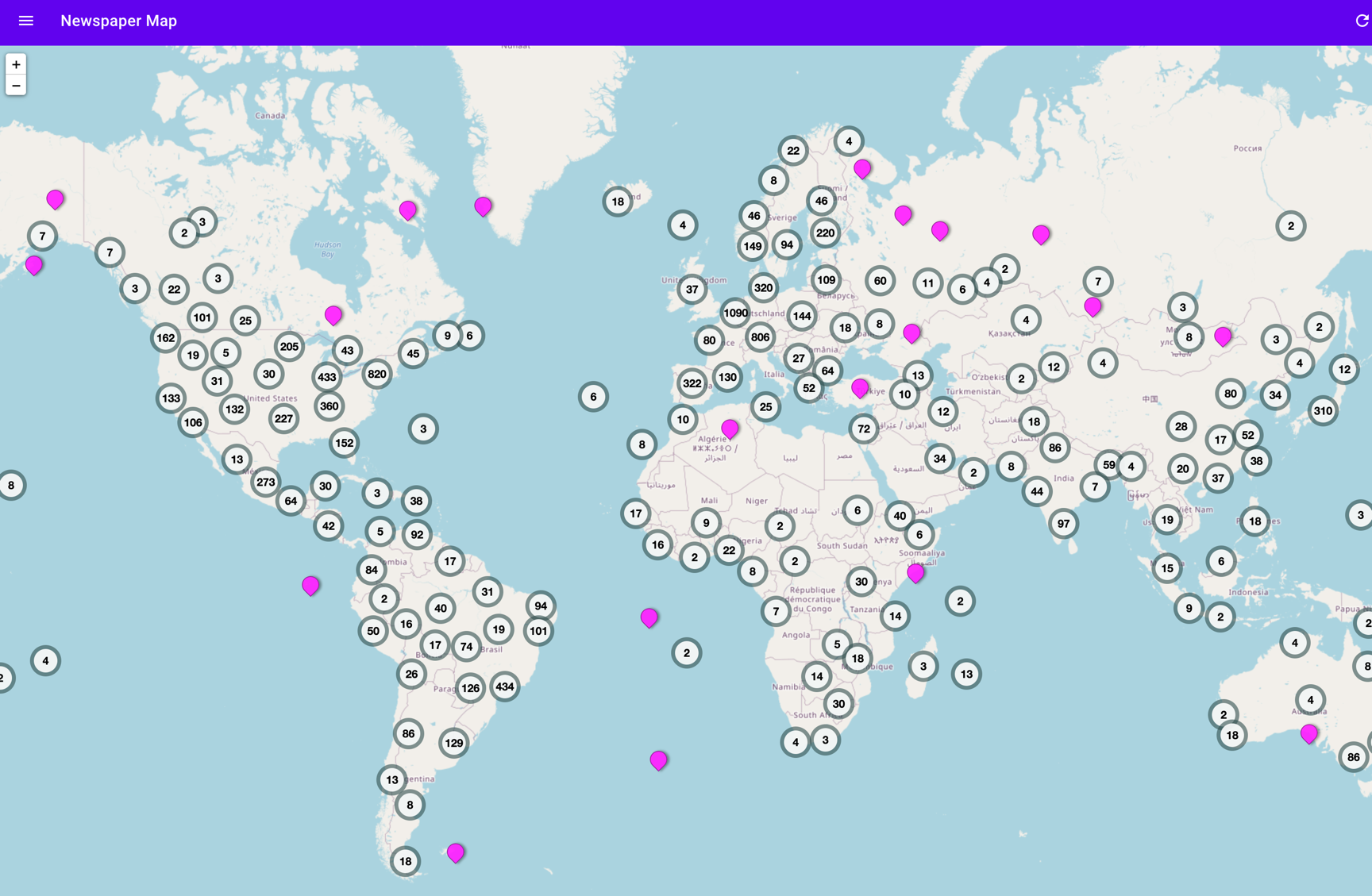
Newspaper Map provides access to over 10,000 newspapers from around the world. I wondered if I could read papers I knew were behind a paywall and while Newspaper Map accessed the papers I tried, the paywall was still active.
Newspaper Map shows the paper in the language in which it was printed and uses Google Translate to provide an English version.
Reading local small-town papers is an interesting experience and so is comparing how papers in different parts of the world explain the same story.
Posted inUncategorized|Comments Off on Read Newspapers of the World
Deep Fakes represent a significant future disinformation nightmare. The technology allows the mimicking of both voice and appearance making it very difficult to trust what you see and hear. This 60 Minutes segment describes just how advanced deep fakes have become.
Posted inUncategorized|Comments Off on 60 Minutes on the capabilities of deep fakes
We use cookies to ensure that we give you the best experience on our website. If you continue to use this site we will assume that you are happy with it.
You can revoke your consent any time using the Revoke consent button.





You must be logged in to post a comment.