I have recommended the Ad Fontas media bias chart before, but with the election nearing I thought it worth a repeat. The chart has panels of individuals rate attributes of individual articles from a news source on multiple dimensions and then uses an algorithm to position the source on a multidimensional graph based on these rankings (Method).
A recent version of the chart is interactive allowing you to request information about specific publications. I tried the Minneapolis Star Tribune (my local paper) and it was not included. So, I am unclear on how the sources covered were selected.
As an educational resource, this chart is interesting to explore and the methodology would be a good starting point for questions about the value of the press.
Posted inUncategorized|Comments Off on Interactive Media Bias Chart
The Social Dilemma is a recent Netflix documentary from Jeff Orlowski. The video explores digital social media services and processes those responsible for these services use to maximize the commitment of viewer attention and the negative consequences of these processes. Be warned, the documentary is disturbing and pessimistic. The video makes the claim that these services go beyond the online world to serve as a disruptive force in society resulting in depression, division, and possible violence. This said I strongly encourage you to view the documentary.
I watched the film with Cindy. A couple of our kids also watched it on their own and discussed their resulting anxieties with Cindy. We ended up wondering why we were less bothered and decided it must be because of our personal experiences working with technology and our longer term view of technology and society. I have read the work of several of the experts appearing in the documentary and my background as a psychologist and long-time technologist provides some understanding of the cognitive and technological mechanisms at work.
Here is my simple description of the basic technological mechanisms I think users must appreciate. A core issue is that the dominant services of concern offer capabilities that are often very useful at no financial cost to users and it is this combination of value at no obvious cost that sets a dangerous trap. The point to appreciate here is that users have come to expect what they see as a free service and dominant providers would be quickly challenged by competitors if they now tried to charge. To cover their substantial personnel, infrastructure, and research and development costs, the free services rely on advertising. To optimize the revenue from advertising, these services began collecting data on user preferences in order to make the ads more appealing. As the potential of these data became more apparent, these companies started collecting data not only while viewing the services the company provided but also while users used other online services. The more data the better. Data = money.
Relevant ads attract more clicks and convince those who want ads displayed to pay more. The more ads that can be displayed the more revenue for the companies using ads as the core of funding. To display more ads it follows that the more time users spend using your service the more opportunities there are to display ads. I don’t blame companies for the decision to display ads as the need for revenue is obvious. In my thinking, the collection of user information associated directly with the use of a service is also acceptable. It is when the services start collecting information when not using their services (e.g,. third-party cookies) that the business model becomes questionable.
Two techniques lie at the core of concerns directed at social media services. First, providing content you want rather than content you need is a way to increase revenue. Google search results originally were based on an algorithm (page rank) that used a reasonable way to estimate the value/importance of content. As time went on, this algorithm was tweaked to augment value (e.g., most accurate) with variables associated with user values and interests. Again, what we should see because it is most accurate is not the same as what we might want to see. A related issue in some services would be prioritizing content that is like to generate an emotional reaction. Topics that get us upset, angry, satisfied, etc. create greater engagement and result in users spending more time.
Behavioral psychology is also playing a greater and greater role increasing time engaged and as a consequence ads viewed. Reinforcement for spending attention is a basic mechanism explained by behaviorism (note some try to use brain functions such as dopamine hits as a way to explain the same thing – I stick with an explanation that has been taught in Introductory Psychology for decades). By definition, reinforcement is defined as a consequence for behavior that increases the frequency of that behavior. What can services offer to provide reinforcement. The services don’t provide reinforcements directly, but provide mechanisms through which fellow users of the service can provide these reinforcements. Views, follows, likes, shares are experienced as reinforcements and we work to increase such consequences. Much in the same way emotional content generates greater attention, emotional content also generates more reinforcements. Our efforts are harnessed by the services to increase our attention to a service through such consequences.
I think there are measures you and can take to mitigate the mechanisms social media services use to capture our attention.
Be mindful. Understanding the mechanisms I have identified and how they work can be used to your benefit. You don’t have to consistently provide reinforcements for others and you can indicate that you don’t want other users to respond to everything you post with likes and shares. Trust that others read what you write and assume others will trust you as well. Be aware that systems are you using your own online behavior to feed you information that will fit your biases. If you accept this is what happens you can take steps to defeat such bias. I will provide some techniques in the suggestions that follow.
Limit your dependence on any given service within a given category. I set up my browsers to use different search engines – Google on my desktop, DuckDuckGo on my laptop, Bing on my other laptop. I do regard Google as the best and I will return to it should I not find what I think should be available. Sometimes there are reasonable alternatives to the most popular services within a category. I like PixelFed as an alternative to Instagram. Diaspora.social or wt:social as an alternative to Facebook.
Limit the diversity of uses to which you put a given service. I try to limit my activity on Facebook to discussing political issues. I use Instagram for what most might describe as family sharing (I do not that Facebook and Instagram are services from the same company). I have written in several blogs for longer than Facebook has been around so I have outlets for what I write about other topics and perhaps more importantly I have some followers for these blogs. You will hear the phrase “network effect” as an explanation for the value of being on a service, even an inferior service, because everyone else is on the same service. This is the challenge in moving to other services. I try to recommend other services to others and I cross post content to ease what I eventually hope is a transition.
Avoid features of services that feed bias. For example, I try not to pay attention to the recommendations when I use YouTube. When I search for something on YouTube, I have greater control of the experience. Once I start watching recommendations, I am letting the algorithm have much more influence. I can usually do this, but I often am distracted by music videos and once I start listing/watching these videos I can be distracted for hours. Several services offer a distinction between a less algorithmically driven feed and a “for you” feed. These feeds (news feed, Twitter and Facebook feeds) differ in the impact your history using the service has. Typically, when you opt for the less personally biased feed content selected for you will appear later as you move through content. Hence, the initial content is more neutral.
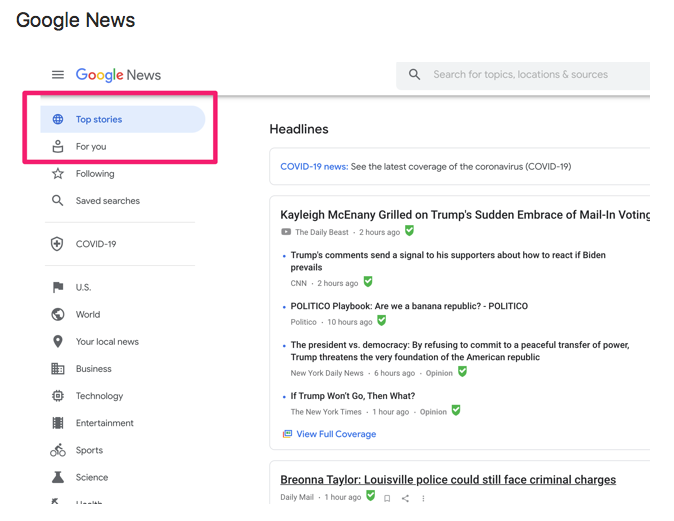
I use news feeds rather than a social media service to identify news I read. Both Apple News and Google News differentiate content that might be described as “Top Stories” and “For You”. The for you category is based on your history of content selection. BTW – Apple News+ is a paid service that allows you complete control of the content from a variety of content providers.
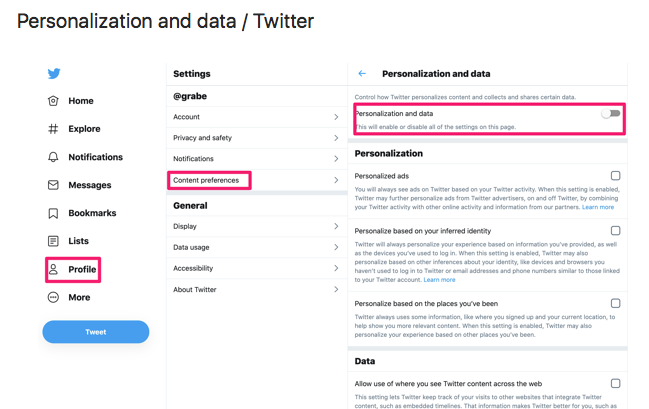
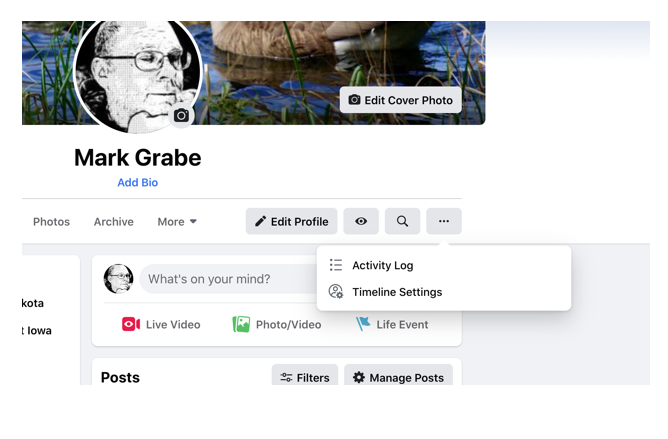
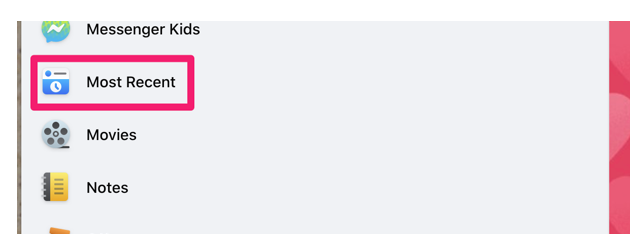
Both Facebook and Twitter offer a somewhat similar differentiation. In this case, there is an option that positions content at the top of your feed based on your past behavior and there is an option that first offers recent content from this you follow/friend before other content. In both cases, you set the approach you want.
Twitter
Facebook
One final thought. Much of this situation involves the need to offer targeted ads in order to make money. There are ways around the ads. It is easy enough to block ads. As a matter of personal ethics, I don’t recommend blocking ads. This is unfair both to the social service and content creators who put a lot of work and money into generating and providing access to content. There are ways to block third-party ads and it is my impression that the popular services are moving in that direction. Instead, I prefer a browser and viewing environment called Brave. If you use a Chrome browser, you will be comfortable with Brave as it is based on chromium. Brave blocks ads and cookies. However, you can either contribute money or view Brave vetted ads to compensate the sites you visit. Sites must sign up with Brave, but this is not a difficult process. If you offer to view ads through Brave, you will generate funds that are divided among the sites you visit in proportion to the time you spend on those sites. Use the Brave link for more details.
Posted inUncategorized|Comments Off on Social Dilemma
Wakelet is a great free classroom tool for creating and sharing collections. These collections might be personal or group efforts and might be generated to serve a variety of educational goals. I have written about Wakelet previously. This effort is focused specifically on how to share a collection. Sharing might be done to show a completed effort or to invite collaborators to participate in an evolving project.
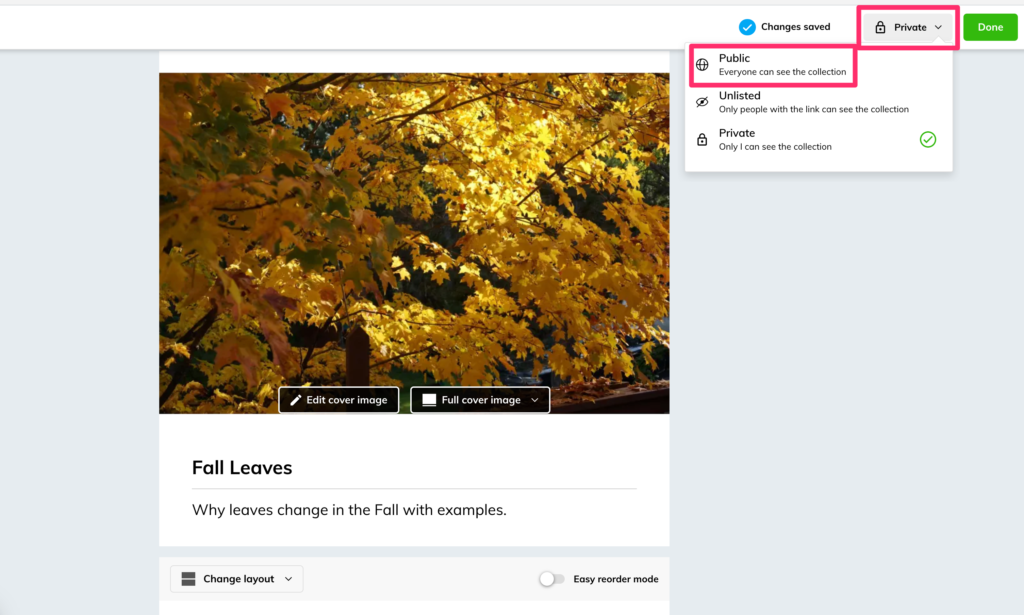
I needed an example for this demo so I decided to focus on the changing leaf colors of fall – why do leaves change colors and what are some examples of fall color that result. I am sharing my demo project for viewing only, but this topic would lend itself to group collaboration.
At the topic of a completed Wakelet project, you will see the dropdown menu for setting viewing rights. Here you can see I have set rights to public.
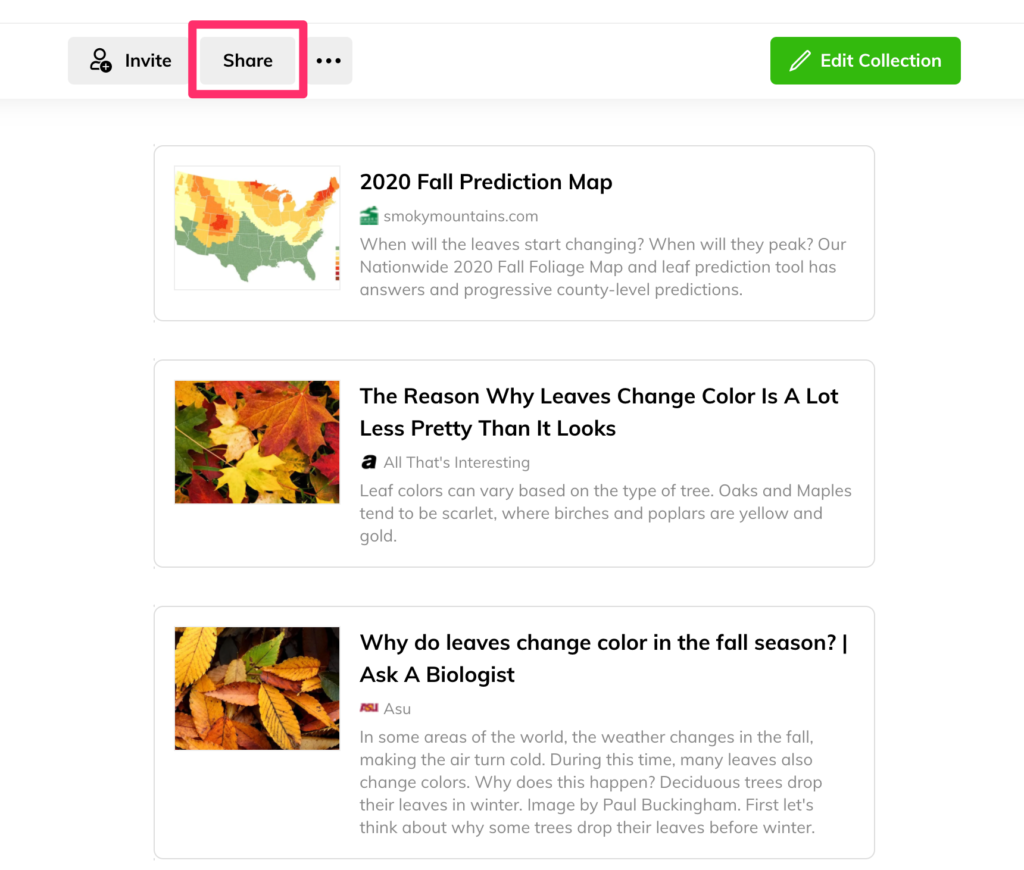
A project offers options for invitation and sharing. Invitation would offer the opportunity to others to contribute to a project. Sharing is the option for offering others viewing opportunities.
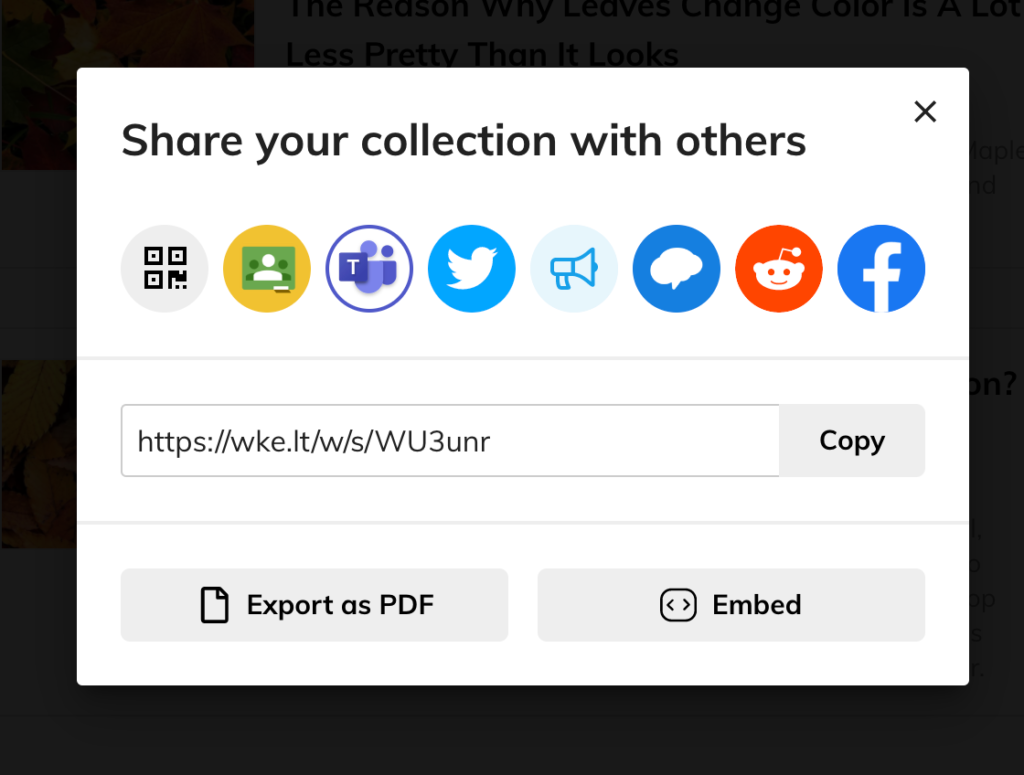
Selecting sharing brings up these opportunities. In this case I copied the URL for the collection so that you can view the project.
Posted inUncategorized|Comments Off on Sharing a Wakelet Collection
This opportunity requires immediate action if it sounds interesting. Justin Reich, author of “Failure to disrupt” (a book about why technology has not played a larger role in education) is offering a free presentation entitled – What the History of Education Technology Teaches us about Pandemic Teaching. You must have a ticket (free) available at EventBrite.
September 22,2020 at 3:30PM – 4:30 PM EST
I have participated in several of these presentations in recent months typically associated with a book. There is no requirement to purchase the book before or after, but the presentation may interest you in a deeper investigation of a topic.
Posted inUncategorized|Comments Off on Technology in pandemic teaching
The challenge and the inequity of child care has become quite visible during the pandemic. The issue has been there in the past few decades but not widely discussed. It is now obvious how important child care is to the general economy as working parents struggle to find a way to care for their children with many schools not engaged in full-time face to face education. The inequity has always been there because of the cost of care and the dilemma faced by poor parents, particularly poor single parents, in both working and finding a way to provide appropriate care for their children. So many complain naively about the work ethic of such parents. The pandemic has only made this situation worse.
We have seven grandchildren within easy driving distance. We have never been involved in full-time care for our grandkids while parents worked, but we have provided some help when a special circumstance such as illness or the temporary closure of a normal childcare option required help. As seventy year olds it is now necessary to be a little selfish. We can help with equipment, but risking personal health with families already asked to quarantine a couple of times because of known exposure. Expecting the elderly to provide coverage with parents working and thus exposed and kids sometimes in and sometimes out of school would be unwise and selfish.
Parents of means have sometimes organized themselves into small groups to take care of their children and assist in remote education. It is not just the differences in family income making this possible, but also the likelihood these parents have the opportunity to schedule their work more flexibly and often because they can work from home. This practice is often described as a child care pod.
One of our daughters involved in such a pod and recognizing how such opportunities are not possible for all happened across a kick starter project for partially funding similar approach for the benefit of families not able to provide it for themselves. She brought this to our attention and we all contributed. This seems a possible alternative approach when governments on multiple levels often seem unable to provide a solution.
Posted inUncategorized|Comments Off on Child care and equity
This is a continuation of my series on data literacy
Probes provide a way to collect information from the environment and summarize it numerically. You use a probe when you check someone’s temperature with a medical thermometer or a thermometer that reports the temperature outside of your window. Our textbook devotes considerable space to the classroom use of probes as allowing student participation in authentic activities. Probes were a category of digital tool we emphasized in our expansion of the core ideas we first found in Jonassen’s description of mindtools. We describe an authentic task as mimicking the behavior of practitioners. There is a theoretical explanation for the benefits of contextualizing learning through the use of authentic tasks, but this is type of thing I explain in our textbook and not here.
Probes play an essential role in most sciences and engineering and the data generated are important inputs to mathematical and statistical calculations. Probes have long been promoted for classroom use. I used to see multiple booths at education conferences displaying the probes companies had available and demonstrating some of the types of information these probes could collect. Student use of probes to conduct authentic investigations just seems such a logical fit with STEM initiatives and yet I don’t see the frequent use I expected when these devices first became available for classroom use. Again, probes represent another of the mysteries of why some ideas catch on in education and others do not.
My recent example of the multi-function power consumption monitor would be the last example of a probe I have used. Here is another example of a probe (heart rate monitor) that you may have used personally applied to a novel investigation. The links at the end of this example offer access to some of the companies providing probes for classroom use.
Probes = another opportunity for student data collection.
We use cookies to ensure that we give you the best experience on our website. If you continue to use this site we will assume that you are happy with it.
You can revoke your consent any time using the Revoke consent button.



You must be logged in to post a comment.