This comparison of textbooks summarized in the NYTimes reveals the degree to which the states influence textbook content (Texas and California). Even the same history textbook from the same company differs in how key passages related to politically sensitive issues are described. For example, when explaining the Bill of Rights, the California textbook notes that article two allows for some regulations on ownership and this comment is missing in the Texas version.
Posted inUncategorized|Comments Off on Textbooks targeted to region
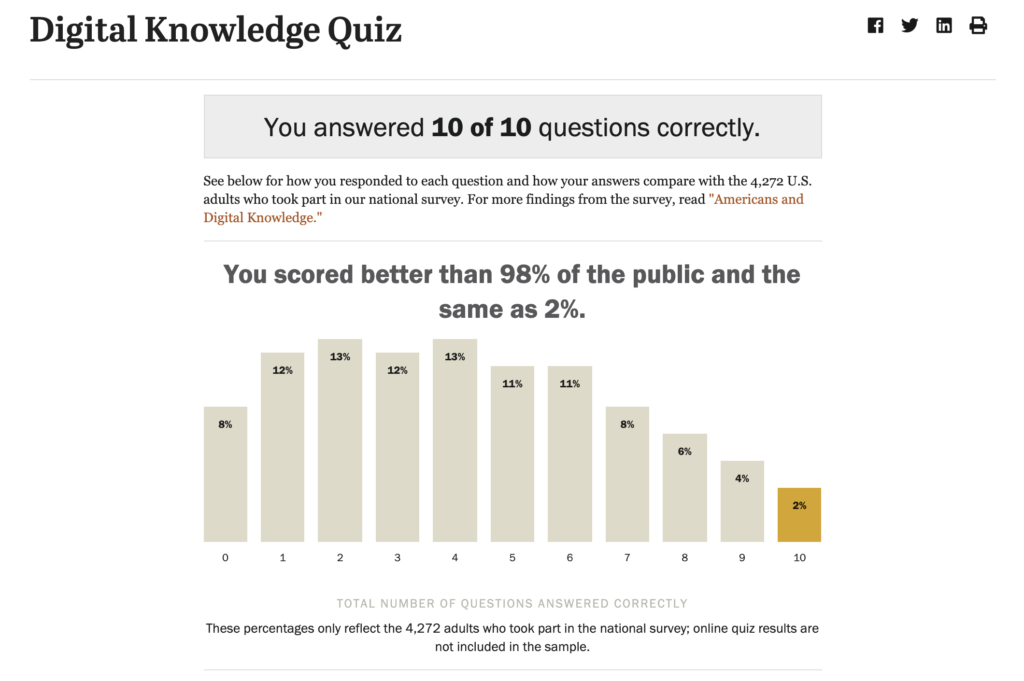
PEW has a simple 10 item MC exam it put together to evaluate Internet knowledge. You can try it yourself. Yes, I did score 101/10 putting me in the top 2% of those taking the quiz. Yes, I know more than the average 70+ guy and more than the average individual taking the quiz. Internet knowledge helps, but so does just a lot of experience evaluating MC items. I did pretty well as a 65+ taking the MN drivers test. The one question I missed was messed up. 😉
Anyway, the quick quiz offers some interesting insights about age differences in knowledge and the type of thing most folks don’t know. The toughest question involved the recognition of an Internet entrepreneur.
So, just for all of you digital natives out there. I am calling you out. Perfection is tough to beat. (PEW summary)
No cheating now. Using the Internet not allowed.
Posted inUncategorized|Comments Off on Old guy a perfect 10
I have written on the value of argumentation (debate) for developing research and critical thinking on multiple occasions. This form of social interaction has value in most content areas.
An important skill for teachers in hosting a classroom argument is framing the core question so that those assigned or selecting the pro or con positions have a clear idea of what is being discussed and have a fair opportunity to promote their position. This post on phrasing the debate proposition offers some helpful device on launching an argument that has learning benefits.
This article from the PEW Research Center summarizes research on attitudes toward higher education. Whether you assess higher education as having a positive or negative impact on the country varies considerably as a function of your political party affiliation. Democrats have a more positive view. The position of Republicans has been growing more negative since 2015.
When asked to identify negative issues Democrats point to the high cost of attending college. The Republicans were most likely to claim that professors bring their political and social views into the classroom. When it comes to the negative influence of professors. 17% of Democrats see this as a negative issue in comparison to 79% of Republicans. Republicans also contend that the institutions do not protect students from views they find offensive (75%) and are not providing skills needed in the workplace (73%).
The negative views of Republicans are strongly related to age. For example, 96% of those over 65 see academics bringing their views into the classroom as a problem.
Data provided in this report indicates that the financial value of an undergraduate degree has increased during this same time period. The difference between “some college” and a degree was about $20,000 in 2017.
This writer being old, but a professor for over 40 years, can only smile.
Posted inUncategorized|Comments Off on Politics and perspective on higher ed
This is the second of my two-part series on Facebook political ads. The first part addressed how you can determine why you are seeing certain political ads. Part one concerned the information about you that Facebook used to target you with a particular ad.
The second issue I wanted to address concerned the ads that I don’t see. I might hear about these ads from others, but the way I am categorized means that these ads don’t appear in my feed. More specifically, what interests me is how those sponsoring ads have categorized individuals they think will be influenced by a specific ad particularly if I think the ad is misleading. I understand that what I and you believe to be misleading can be a judgment call, but remember Facebook has indicated that it will not take down political ads known to be factually flawed. Facebook’s position (I am being charitable in my interpretation) is that ads can tell voters something about a candidate whether true or not and it is up to voters to address false ads. Of course, more complaining about fake ads on Facebook is more Facebook activity allowing more ads to be displayed, etc., etc.
What Facebook does do is to offer a database of ads and it is possible to examine active and inactive ads designated as political. So, I can scroll through the political ads that appear on Facebook and learn some things about the ad.
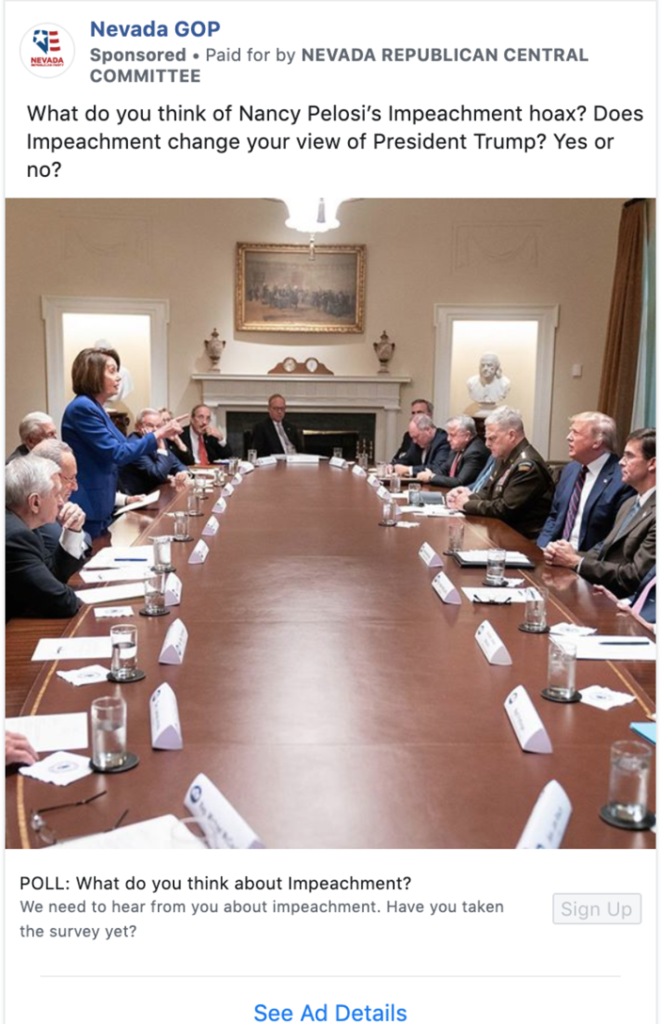
As I understand it, the database works like this. First, I locate an ad.
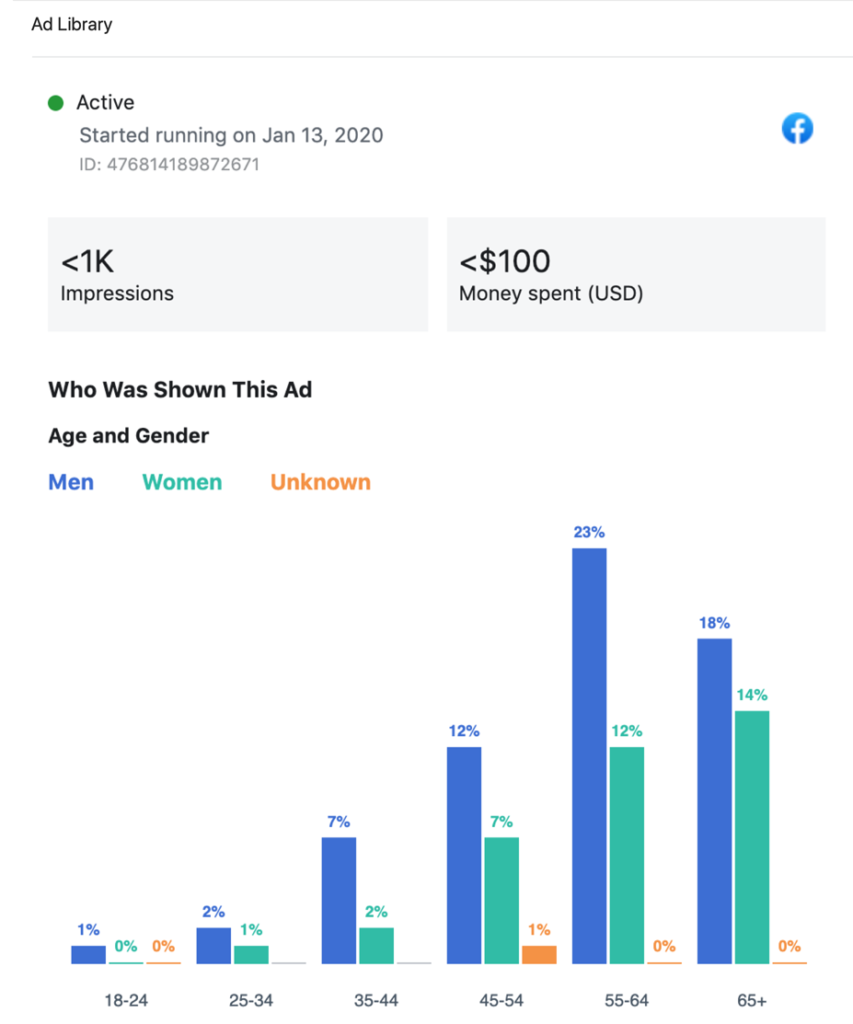
I then can examine the details Facebook shares regarding the ads. I can find who paid for the ad and determine some things about who sees the ad.
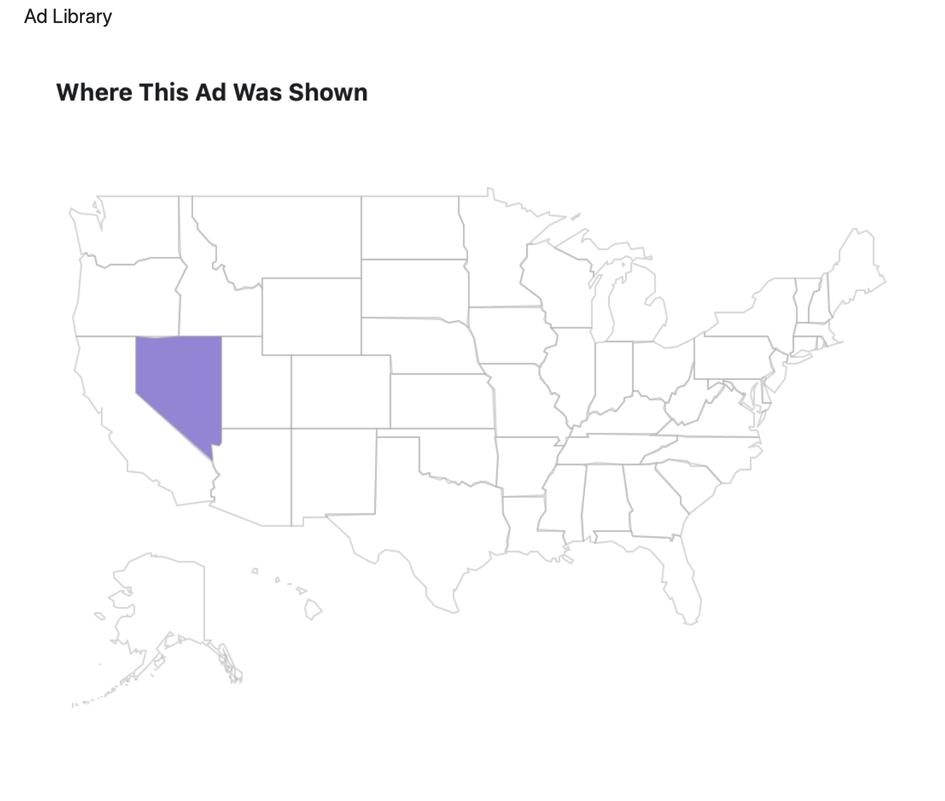
I am not told exactly how the purchasing organization targeted the ad. I can make some guesses from the data provided, but other factors could also be responsible (e.g., who has a Facebook account). It makes sense only Nevada residents saw this ad. It was purchased by the Nevada GOP. Why are mostly older viewers and more men than women viewing this ad? Is this a function of who uses Facebook (not likely) or something more specific in the targeting.
It is possible that Facebook reveals more about targeting, but I could not find anything in the database. So, based on what I have found from my exploration of Facebook ads, I can learn much more about why I see a specific ad than why others see that ad.
I have found some other things related to political ads that are worth considering. In 2018, ProPublica was asking similar questions to those I raise here. They created their own database of ads based on an app used by volunteers and using information about the volunteers attempted to determine why individuals say what they saw. This service and chrome extension are still operational leading me to accept my own interpretation of the state of affairs with ad targeting data (individuals can determine how they are targeted, but not necessarily how ads for others are categorized).
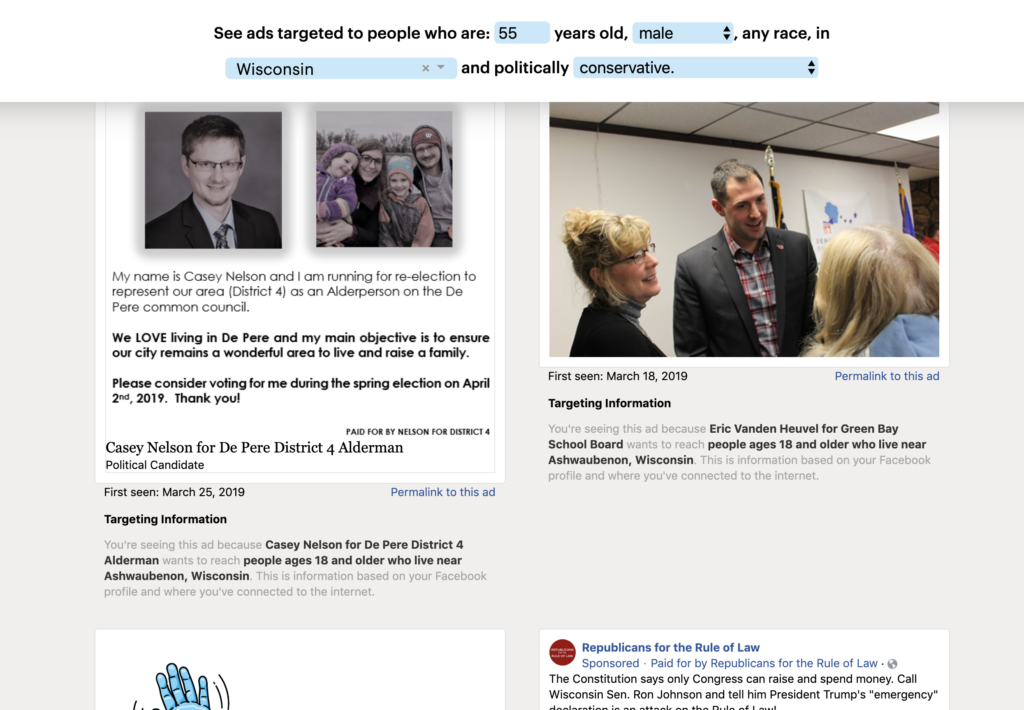
You can use the data ProPublica has collected to identify ads aimed at what its methodology (see above) suggests are the targeting variables. The following image suggests how this tool works. While I am experimenting with the Chrome extension to provide data, I don’t think you have to use the extension to view the data collected. For my example, I selected ads that appear to target males who are over 55 and conservative living in Wisconsin.
P.S. – please comment if Facebook shares more data on political targeting than I have discovered.
Posted inUncategorized|Taggedad, facebook|Comments Off on Facebook ads – why is someone seeing this ad
I have been focused on the micro-targeting of Facebook ads ever since Facebook said it would not block political ads containing falsehoods. If you care, you can learn some things about why you see what you see.
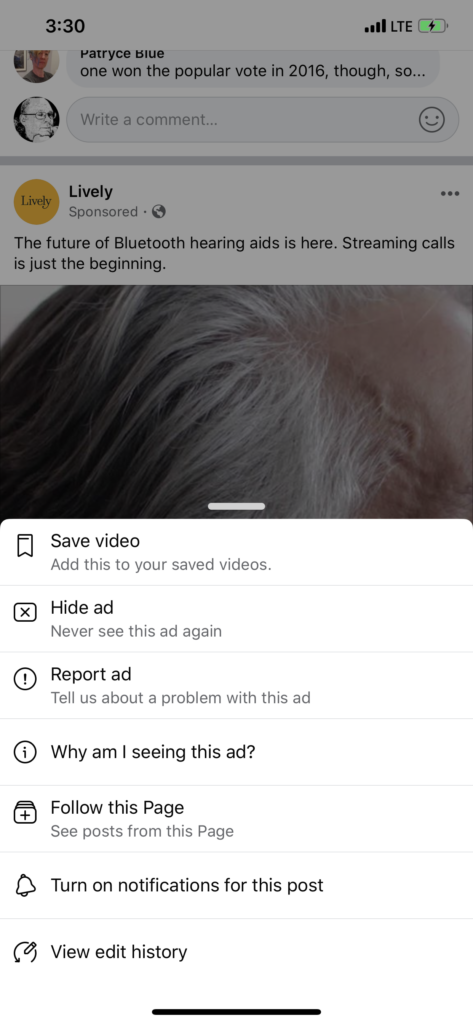
For any ad, you will have three dots in the upper right-hand corner. Clicking this icon will offer multiple options including one that explains what about your history fit with the goals of the source for that ad. So, here is an ad I received for hearing aids (my hearing is fine).
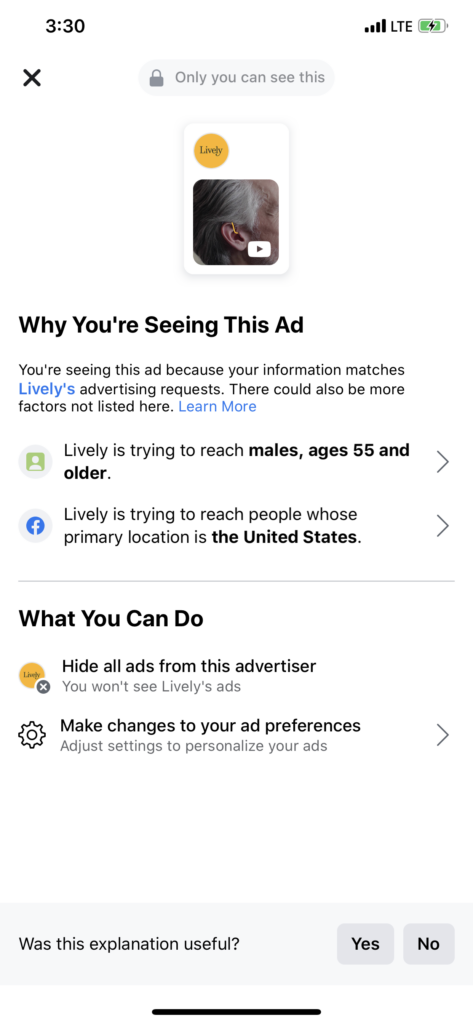
Here is the explanation associated with this ad.
So, yes, I am an old male living in the U.S. and you can probably guess what types of devices, pills, and services advertisers think I would find useful.
We use cookies to ensure that we give you the best experience on our website. If you continue to use this site we will assume that you are happy with it.
You can revoke your consent any time using the Revoke consent button.





You must be logged in to post a comment.