This is a panel discussion form the 2019 AERA panel on Social Media in a Post-Truth Era. I thought those who follow online media may find it of value. The description of how some groups are organized to take over and mislead the general public is interesting.
Posted inUncategorized|Comments Off on AERA 2019 – Social Media in a Post-Truth Era
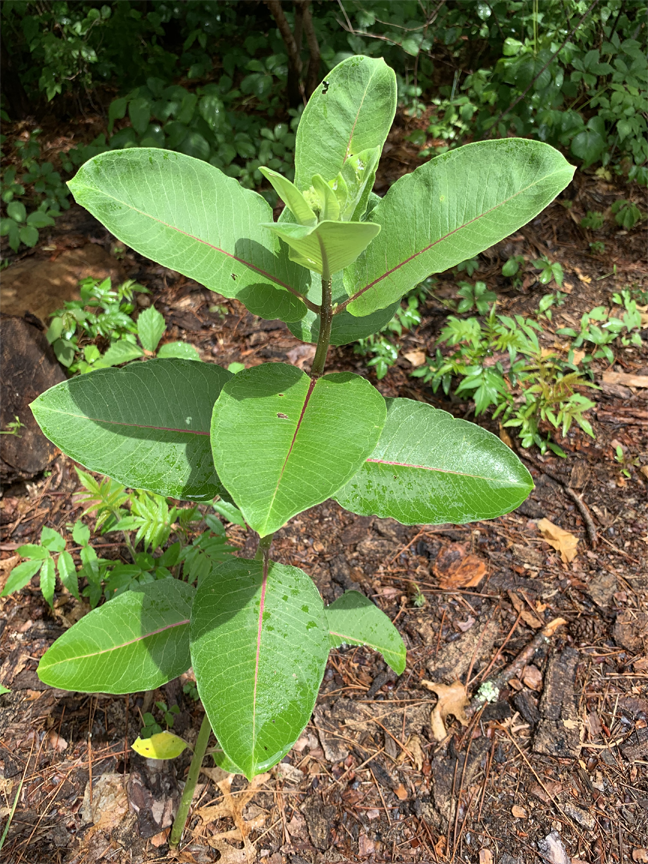
Many classrooms raise monarch butterflies to see the transition from caterpillar to chrysalis to butterfly. In doing so, students probably learn that the monarch is endangered because of the loss of habitat that pretty much translates as access to milkweed plants.
The processes of rearing monarchs and planting milkweeds are both relatively easy to accomplish and offer some interesting opportunities for learning. If students plant milkweed plants in home gardens, will they be able to attract butterflies that lay eggs that emerge as caterpillars. There is plenty of content to read. There are activities that can result in scientific observations and data collection. There are opportunities to author content related to this research and to urge others to participate.
The value of increasing access to milkweed within cities has been documented. Seeds are typically easy to find. Try your local garden store. We raise milkweeds by collecting seeds from one location and scattering them in another.
One more thing. There is evidence that hand rearing monarchs does not result in the necessary migration at the same rate as is accomplished by those maturing in the wild. Reading about what scientists have discovered about this issue offers another opportunity for learning and raises some interesting questions about what is the best approach to saving the monarchs.
Posted inUncategorized|Comments Off on Monarchs, milkweed, and learning
Buitrago and colleagues (2017) offer several specific recommendations for the use of programming experiences to develop computational thinking skills. These recommendations include:
A clear statement of objectives so the computational skills to be learned are understood
the use of educational tools and instructional strategies such as the use of concept mapping before coding as a way to emphasize organization, planning, and other computational thinking tools
The application of programming skills to authentic tasks such as robotics and game development
Collaborative team coding activities that encourage communication and discussion of strategies.
The use of programming languages (the researchers mention LOGO, Scratch, and Python) that scaffold skill development through the simplification of code syntax and limit tasks such as variable definition that are required by other languages.
I have no issues with these ideas and suggestions. My frustration is that both the ideas and suggestions are very similar to what Salomon and Perkins (1987) suggested after analyzing the success of LOGO programming experiences in schools 30 years ago. They did not call it “computational thinking” then, but the suggestion that the thinking involved in programming would transfer to other areas requiring higher order cognitive skills means pretty much the same thing.
The message from researchers to practitioners has been there for a long time.
Buitrago Flórez, F., Casallas, R., Hernández, M., Reyes, A., Restrepo, S., & Danies, G. (2017). Changing a Generation’s Way of Thinking: Teaching Computational Thinking Through Programming. Review of Educational Research. 87(4), 834-860.
Salomon, G., & Perkins, D. N. (1987). Transfer of cognitive skills from programming: When and how?. Journal of educational computing research, 3(2), 149-169.
Posted inUncategorized|Comments Off on Computational thinking and related strategies rehash
Most K12 educators have now completed the 2018-2019 academic year. Many have taken to social media to comment in different ways about the end of the year. The comments express a wide range of sentiments.
I react to some of these comments with mild annoyance. I admit it. More significantly, I think, I am concerned with the public perception these comments may generate. The tweets I have in mind combine two elements – 1) we work hard and 2) we deserve time to recharge because our jobs are demanding. If others feel they also work hard and aren’t given the time to recharge, you might imagine why you promoting a deserved rest would be somewhat annoying. The people who work at Amazon distribution centers work hard and aren’t well compensated. Nurses work hard, sometimes with significant stress, and without a three month break to recuperate. etc.
I tried to come up with a different perspective and generated a series of tweets that seemed to be well received. I tried to think of an occupation that had annual on and off seasons and hit on professional athletes. I think there are some useful similarities – I am guessing athletes could loaf during their off season, but most take a different approach. They work on their skills. They do recuperate and rehab.
Tweet1 – It is the off season for educators. Online voices argue it is time to relax and others it is time to learn. Public is watching these proclamations.
Tweet2 – I don’t usually reply to my own tweets, but the responses I received have encouraged this extension. With social media, I think it important educators describe their off season carefully. Lots of people work hard and do so year round. This is why I prefer off season to vacation
Tweet3 – Consider that off season as used by athletes still implies you are working on your skills to improve. Yes, when necessary, you also let your body recover.
This perspective on in and out of season activities is one way of thinking about some occupations. I have a broader perspective that goes something like this. People have a general understanding concerning what different vocations demand and offer. Once they identify those occupations they have the time, resources, and aptitude to prepare for, they make personal decisions to prepare for those remaining options that are most personally desirable. I think teachers treat June, July, and August in different ways. Some work at improving their job related skill set. Some work at other income generating opportunities. Some spend time with family and in leisure pursuits. Most and sometimes depending on their stage of life do some combination of the above.
I think it is in poor taste to publicly argue that you deserve this or that. There are some things I think we all deserve. There are other things I wouldn’t put into this category and how hard you work falls into this category. I can handle minor annoyances unless provoked. When annoyed, I try to remember that I made my choice and others have done the same. The country faces a teacher shortage and the required preparation is easy enough to understand.
Posted inUncategorized|Comments Off on Vacation or Off Season
I have written multiple posts explaining why I think educators should use an RSS reader to focus their online reading. Howard Rheingold, a long-time time tech leader, has just released his own justification for prioritizing RSS and suggestions for what reader you might use and how to set it up. This is a great “all in one location” resource.
Setting up a RSS system would be a productive summer activity for educators.
If you want to view what a feed reader looks like “in action”, you are welcome to visit my FreshRSS site. This is a personal RSS I run on the server I rent. You can explore (update the feed when you arrive (the right most icon in the icon bar) when you arrive. I must login to cause the reader to delete links once viewed so you don’t have to worry about messing with my feed.
Posted inUncategorized|Taggedrss|Comments Off on Howard Rheingold explains RSS
I have made the transition to using a password manager so my multiple accounts are protected with more complex passwords. I should have anticipated a problem using my chromebook, but I did not. The default way you activate your chromebook is with your Google password. LastPass automatically will enter your complex passwords for most services, but not as a way to open your chromebook. The solution is to switch your chromebook activation from your Google password to a pin. This is much easier to do before you create a complex password for Google, but you should be able to see your new Google password using a different device, take the time to enter this complex password a few times on the Chromebook to make the switch to a pin, and then you should be fine. I am not certain what you would do if your chromebook is your only device.
We use cookies to ensure that we give you the best experience on our website. If you continue to use this site we will assume that you are happy with it.
You can revoke your consent any time using the Revoke consent button.


You must be logged in to post a comment.