
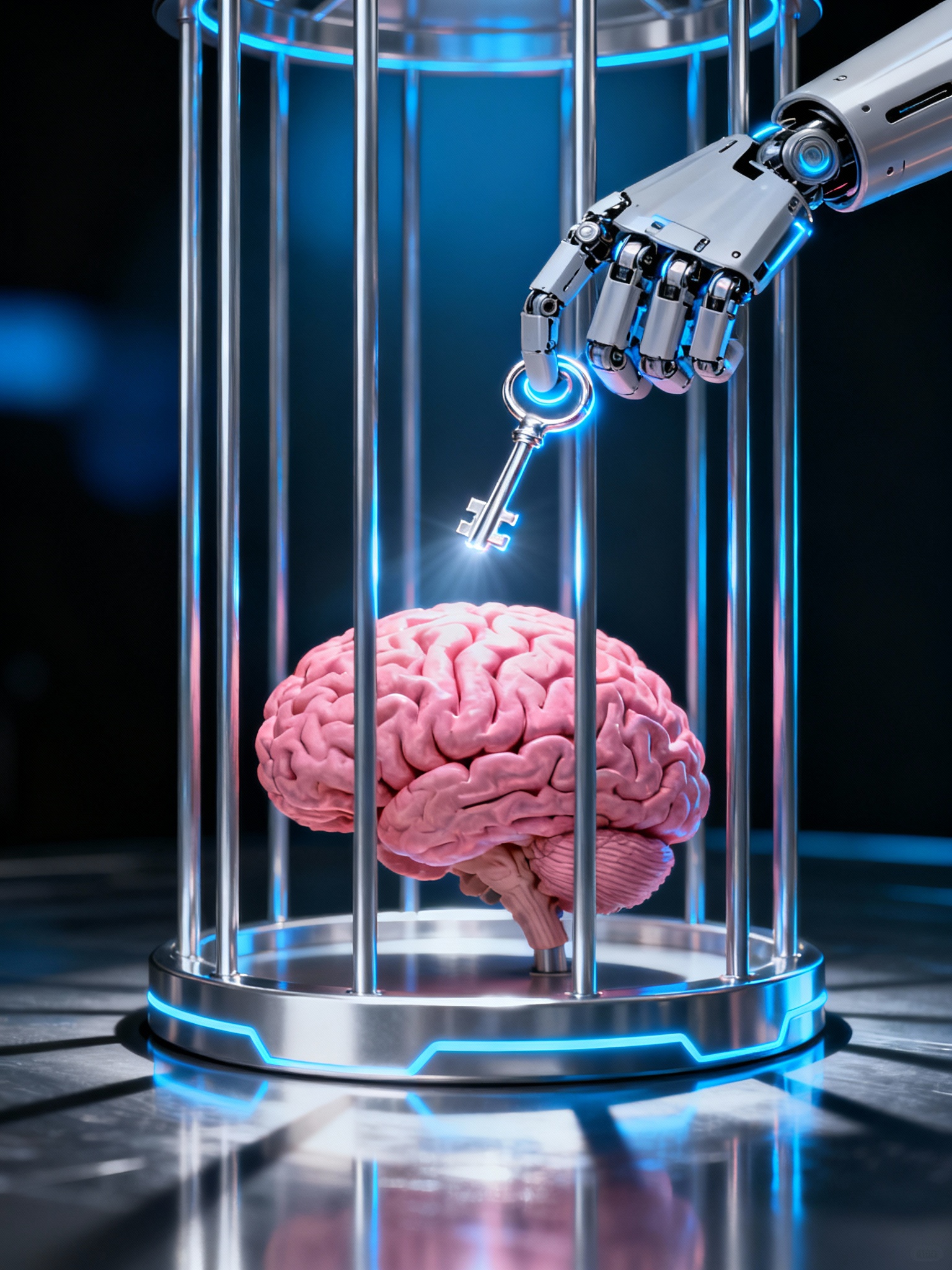
Like many educators, I have begun to question the impact of AI tools on learners. It is not the potential of AI that concerns me; it is how individuals end up using AI as an easy substitute for what are intended to be ways to develop essential skills and personal knowledge. Many who read my comments and tutorials are interested in Personal Knowledge Management (PKM) and the development of what is called a Second Brain. Therefore, I thought I would describe how the challenges facing university and K12 educators also seem to be creeping into the PKM and Second Brain space.
Those captivated by concepts and strategies emphasized by PKM and Second Brain advocates are typically adult, independent learners who believe these ideas can contribute to personal understanding and productivity. I tend to translate specific practices using the concept of generative processing, which comes from my background as an educational psychologist. From this perspective, individuals learn from what might be called thinking, but how to do this is often not understood. Generative activities encourage and involve external tasks that tend to engage productive internal (cognitive) processes. So, for example, if the understanding and usefulness of new information is enhanced by relating new information to existing knowledge, such connections could happen without external encouragement or could be encouraged and given direction by asking a simple question: what is an example from your personal experience that seems to be an example of the concept XXX? Questions are an example of an external task heavily used in education. Other examples of common learning tactics include taking notes and writing in response to a prompt related to content to be learned.
PKM and Second Brain strategies emphasize similar generative processes. There is a heavy emphasis on notetaking, summarization using a personal perspective, revisiting and reworking existing notes, and physically linking personal notes immediately as recorded and over time. The Second Brain perspective emphasizes the external storage and delayed use of the products of such activities. The argument for a second brain identifies the limitations of human memory and cognitive processes. It proposes that external storage systems can be developed to support cognition and augment the limitations of the human information processing system. Each component (the human brain and the second brain) are intended to partner in ways that each functions in what that component does best.
The observation that led to this post and its title was my recognition that new digital AI tools offered me ways to develop a second brain with little use of my own cognition. For example, I can use Recall to provide a detailed summary of complex documents, I can use TwinMinds to create a complete transcription of an audio presentation and store both the presentation and a detailed summary, I can use Smart Connections to identify links among the ideas appearing in summaries, and I can collect all of these products using a tool such as Obsidian or Recall. I can then ask the AI within one of these collection tools to write a blog post. All of this processing has involved very little of my own thinking or analysis. I can be from input to second brain to output with very little participation from my own brain. Of course, I can simply ask an AI to write something using a prompt without even identifying specific inputs to the example tools I have identified.
What is lost in classrooms and in the potential options now available to independent learners is the development of specific skills (e.g., writing, note-taking, critical analysis) and the products the engagement of these skills produces (notes or extended written documents). It is easy enough to avoid the downsides through personal decisions, but ask educators how well trusting personal learner decision-making works. I can commit to reading the inputs that influence what I write, taking notes, and finding interesting connections among the notes I have stored over time. I do not operate under time pressures that require a product, and I am not rewarded for meeting such deadlines. I have developed insights into the challenges of our present circumstances and admit to being concerned about what learners will lose, impacting their futures and the collective future we all face.
I welcome your comments in response to my observations.

You must be logged in to post a comment.