Protecting Kids on Social Media Act

I will begin with a couple of caveats. First, while this post describes and comments on federal legislation, this legislation has not been voted on. Second, while this legislation would place restrictions on social media use by teens and tweens, these restrictions apply only to accounts that require a login. So, for example, a 12-year-old could legally watch YouTube videos as long as that child did not establish and make use of a login. 

A bipartisan group of Senators has proposed the “Protecting Kids on Social Media Act”. In justifying the proposed legislation, the Senators note the amount of screen time accumulated by young individuals and the relationship (correlation) between screen time and mental health. 

The specific requirements included in the legislation include the following (remember that the requirements apply only to social media use that involves a signing):

  • Children under 13 would not be allowed to use social media.
  • Social media companies would be required to implement a system for validating the age of social media participants. The government would establish a system, but companies could create their own as long as the effectiveness of the system could be verified.
  • Individuals between the age of 13 and 18 could only create a social media account with the approval of a parent or guardian.
  • Social media companies could not make use of algorithms to recommend content to those under the age of 18.

In total, it would seem to me that the goal of these requirements would be to limit algorithmic recommendations because such recommendations could result in emotional consequences for young people. I say this because anyone of any age could continue to access online content as long as this content could not be tied to the identity of that individual and the denial of recommendations (e.g., YouTube) or control of a content feed (e.g., Twitter, Facebook) linked to an individual. 

Although it is not clear to me how this combination of requirements would work (e.g., a social media service would have to create a mechanism for using or not using algorithms to impact the content viewed as a function of age), I do give the lawmakers credit for volunteering the government to create a system for validating age. I think this is trickier than it sounds as it would first be necessary to verify that a parent or guardian was actually a parent or guardian and then determine what documentation would be required to verify age). The only document I can think of would be a birth certificate. 

Any bets on the likelihood of implementation?

Other sources. 

NPR

Wired

Loading

Posted in Uncategorized | Tagged | Comments Off on Protecting Kids on Social Media Act

Kahn explains Kahnmigo

Sal Kahn recently prepared a TED talk explaining his plans for Kahnmigo. This addition to the Kahn Academy provides AI-powered support for learners and educators. My interest was in Kahn’s description of the potential of this addition as a student for learners. He makes similar arguments to my own thinking. For example, he uses Bloom’s two-sigma argument to explain why tutoring is potentially the most productive way to improve learning. Of course, Bloom was describing human tutors.

I have written about AI as a tutor myself and provide some suggestions for using ChatPDF as a tutor.

Loading

Posted in Uncategorized | Tagged , | Comments Off on Kahn explains Kahnmigo

Books on AI application

Large language model AI services have only been widely available to the public for months which really does not seem lot a lot of time for evaluation and best use investigations. Yet, there are many books on ChatGPT and similar services and AI tools in the classroom. When I encounter a new technology category and find myself intrigued, my first reaction is to purchase a book or two. My shelves used to contain multiple volumes first on hypertalk (the scripting language for HyperCard) and later PHP and MySQL. I now have four books on ChatGPT and ChatGPT in education. Although I even recognize some of the authors, I have been disappointed. 

I wonder if it is too early to expect quality books about AI in education because the field of AI is still rapidly evolving and its potential applications in education are not yet fully understood. The integration of AI in the education system is relatively new, and the implementation is still in its initial stage. The development of AI technology requires a long time and extensive testing to ensure its accurate and correct application.

I in the education sector is still undergoing experimentation and application, which makes it difficult to produce an authoritative and comprehensive guide on how AI can be integrated into learning. Owing to the ever-evolving nature of AI technology, it is difficult to predict its full range of effects on education. Thus, writing books on AI in education would still be considered superficial and vague. It might take several years before we can get comprehensive and in-depth books on AI in education, given the constantly adapting nature of the technology’s scope.

I have located a journal focused on AI in education, Computers and Education: Artificial Intelligence. For those looking for content with an academic approach, this journal is open source so you can read any article you want without visiting a library or purchasing a subscription. The journal has been sharing content since 2020.

As an open access journal with no subscription charges, a fee (Article Publishing Charge, APC) is payable by the author or research funder to cover the costs associated with publication. This ensures your article will be immediately and permanently free to access by everyone. A side comment – the cost of journals to libraries and access by the public is an important issue. This journal deals with this by charging authors ($1800) rather than charging readers. I just don’t think this is a good model and content creators should not be paying to share their content.

Loading

Posted in Uncategorized | Tagged | Comments Off on Books on AI application

Earth Day 2023

It is Earth Day 2023. Imagine a humpback coming up to take a look. Not a pretty sight with the environment deteriorating under the impact of human indifference. Politicians are prioritizing short-term issues and the greed of large corporations over the opportunities to address the crisis.

We all can make a difference.

Kids and Earth Day

Loading

Posted in Uncategorized | Comments Off on Earth Day 2023

Scispace and CoPilot

The number of my recent posts focused on AI applications has probably started to blur together for many who follow this blog. I admit that at a basic level, the services described are similar. However, the services I describe have been optimized for different purposes and for individuals with specific needs. This service, Scispace, is focused on those of us who read academic research papers. The basic idea is to be able to generate from such articles quick summaries and insights that may be helpful in generating and storing a quick overview and help readers when components of such articles involve unfamiliar elements (e.g., statistical procedures).

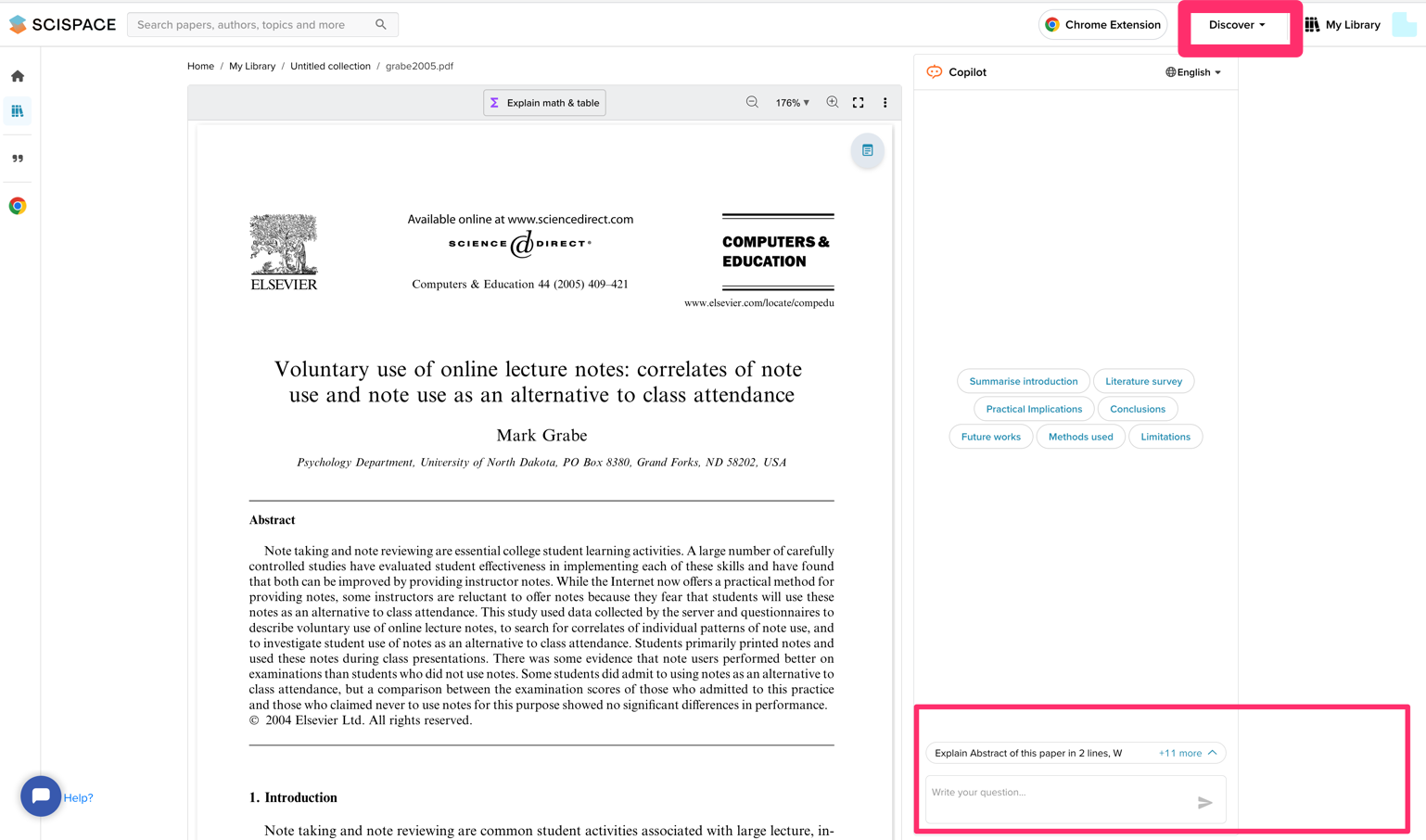
You either upload the pdf of an article you want to read or explore a pdf already added. The service is designed for users to create a library of articles they want to consult over time so this is not just for a one-time reading of articles. The basic design of the application is shown below. The article being read appears on the left and the AI inquiry panel appears on the right. I have added two red boxes to this panel to highlight two important capabilities. The box at the top opens a Discover dropdown menu which I will describe at a later point. The box at the bottom of the panel allows the entry of AI queries or the selection of a query from useful preselects.

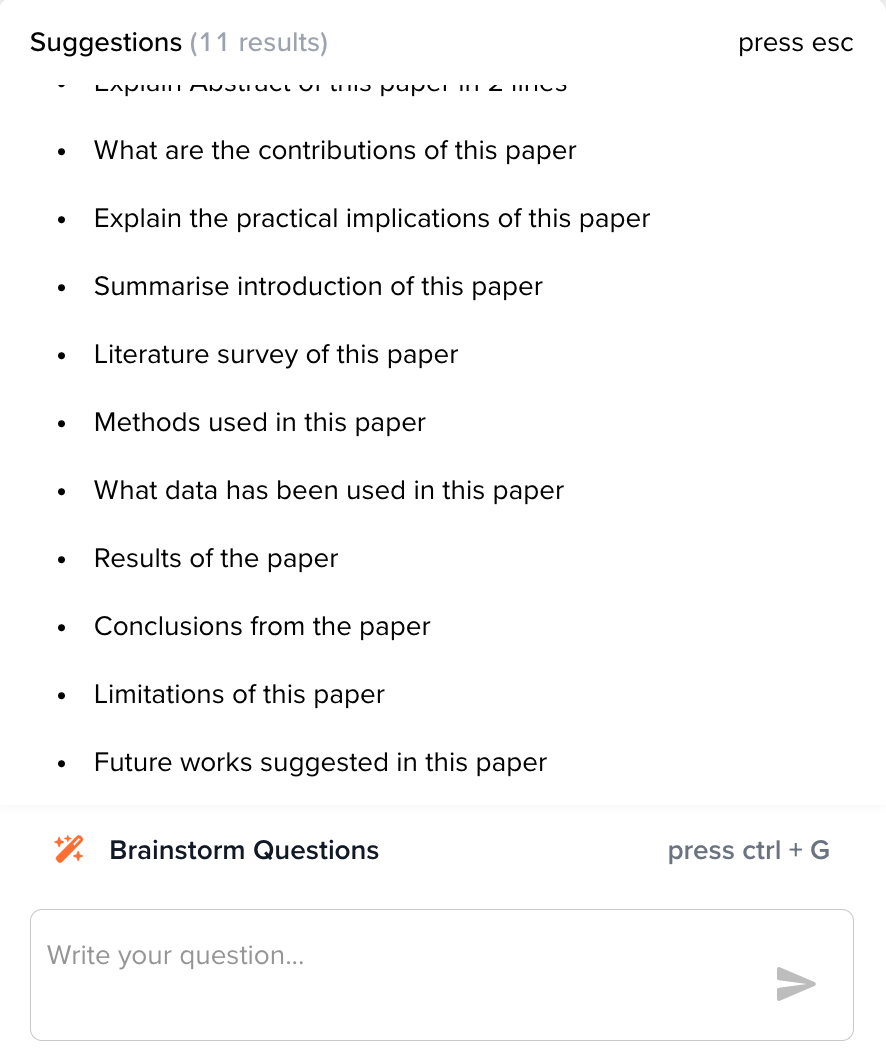
Some of the query presets are listed in the following image. These questions or questions you generate yourself can be applied to the article using AI.

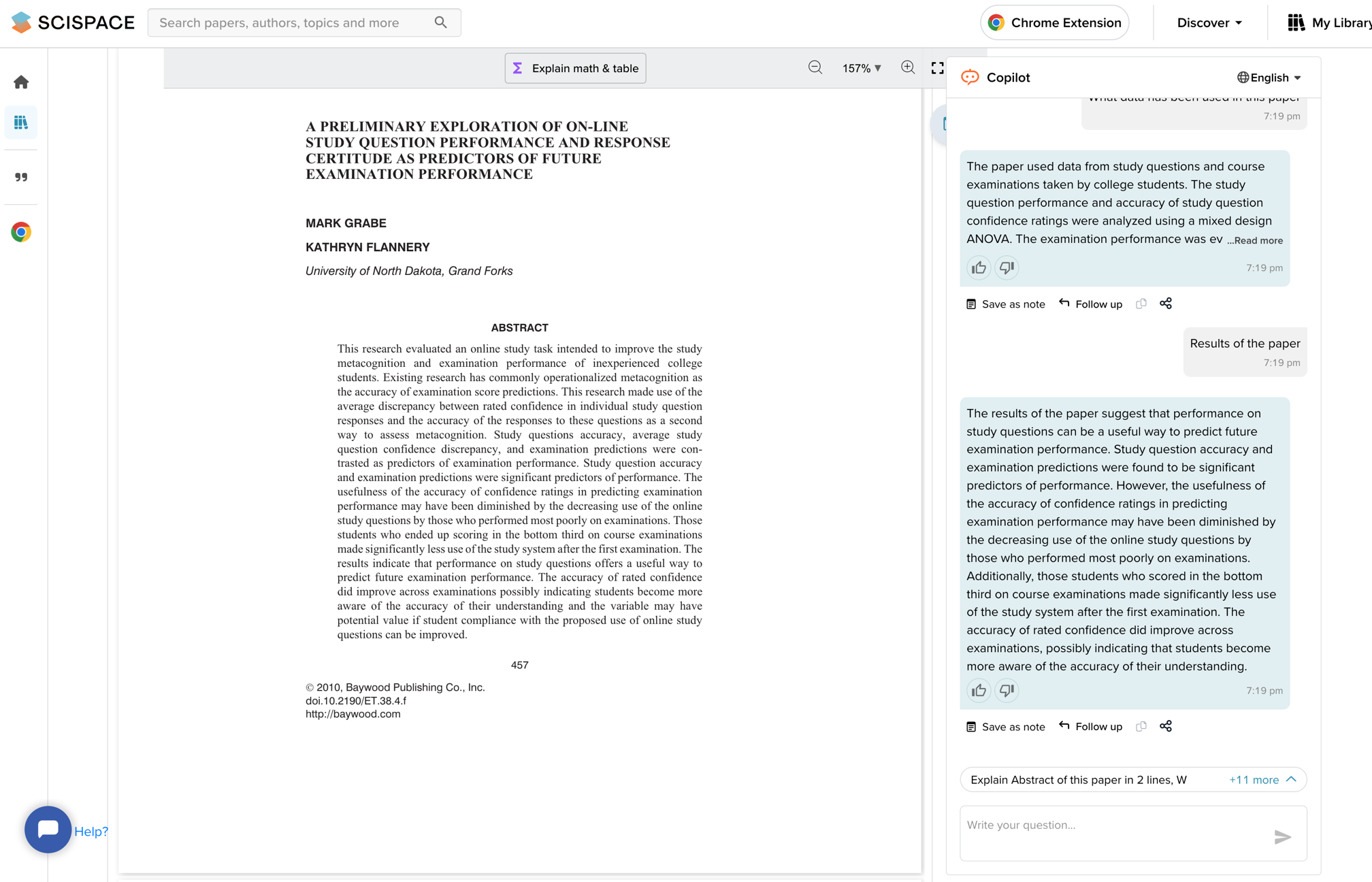
Answers to some of these questions for the article I uploaded are shown here,

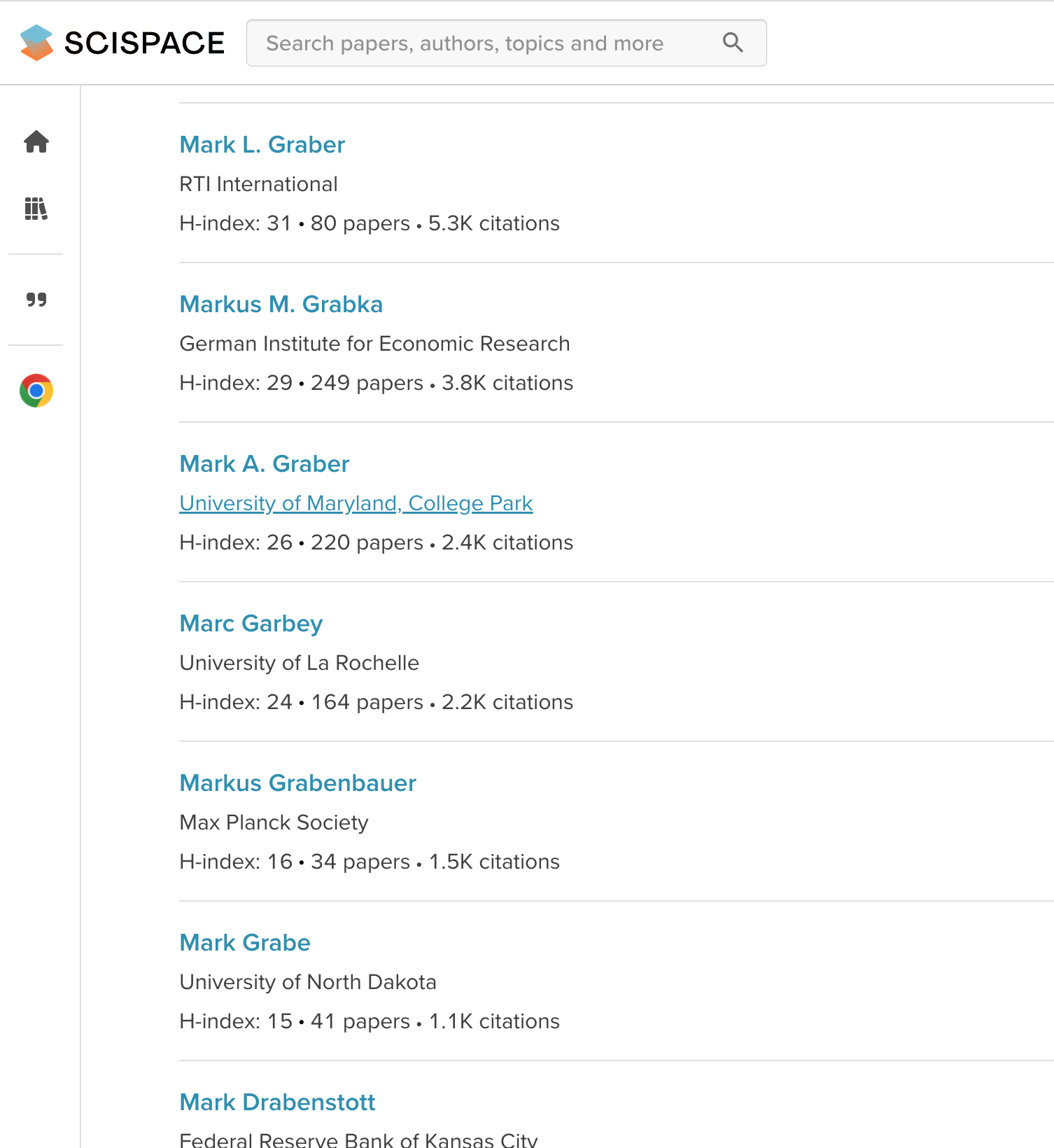
The Discover feature allows you to identify authors whose work interests you and then identify publications of an author you select. Yes, I did use myself in this example.

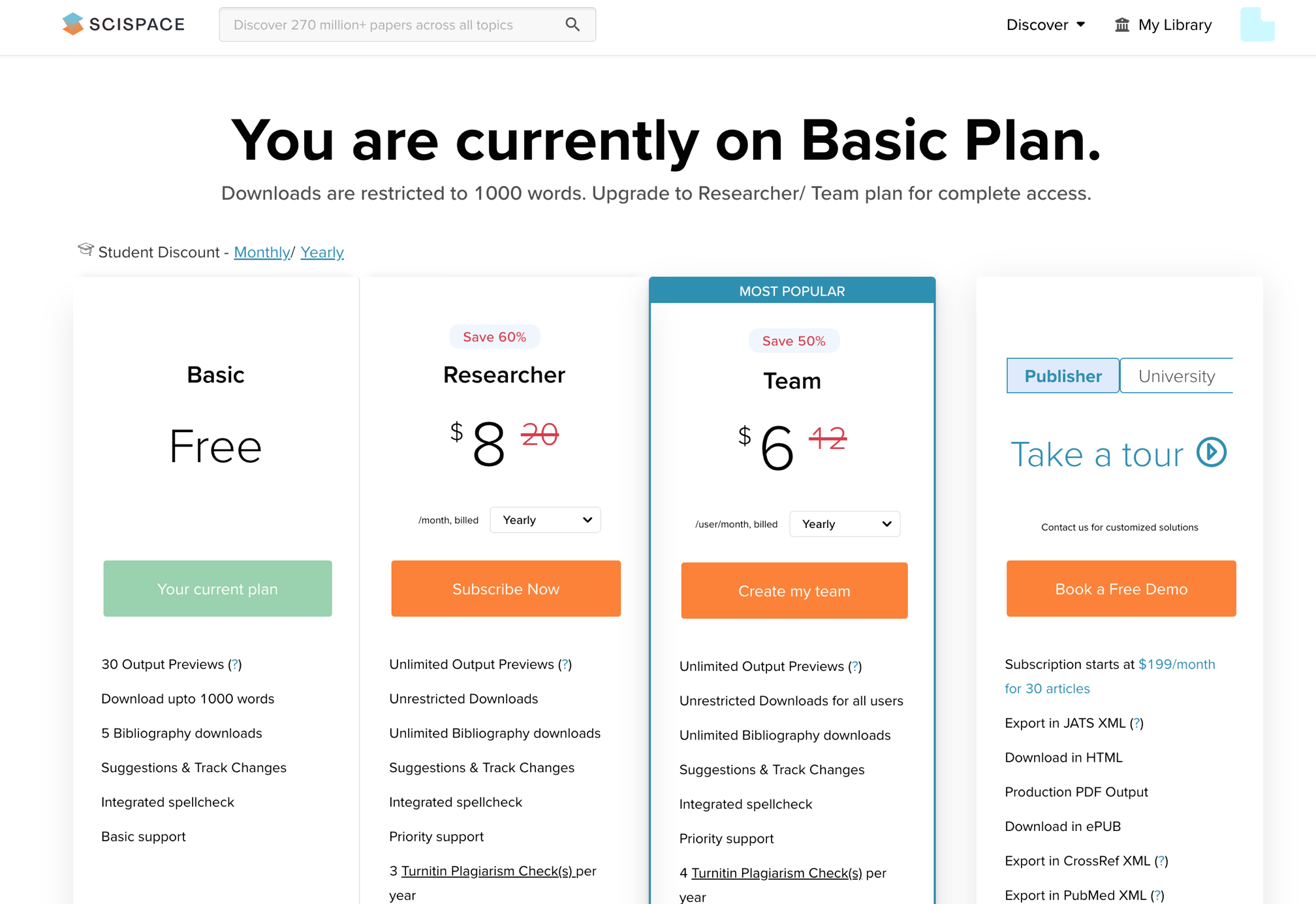
Unlike some of the other AI services I have explored, SciSpace does charge a fee for serious use. This makes sense as aside from just answering questions about pdfs you upload, it stores and allows the organization of these resources. Thus, there are infrastructure expenses associated with the service.

I see less personal value in the general question-answering potential of AI tools I have explored at this point, but I see how I can use AI tools targeting specific content I can designate.

Loading

Posted in Uncategorized | Tagged | Comments Off on Scispace and CoPilot

Digital library books from the Internet Archives

You may be unfamiliar with the Internet Archives and the recent controversy of whether the Archives legally lends digital books in a way that honors copyright (for an example see this story). The Archives just lost a case in which they claimed they were functioning like other libraries. Lots of people don’t use libraries anymore and don’t understand that libraries loan audiobooks and “Kindle” books (digital books). You don’t even have to go to a library. Just have a membership in that library (have a library card) and you can download books.

Libraries can do this because they purchase a number of licenses for any digital book in their holdings. They can lend the number of books for which they have a license. The loans are for a file with DRM (digital rights management) that cannot be duplicated and kept or passed on. When the time for the loan is up, the file will no longer open.

The Internet Archives claimed this is what they were doing and the court that heard the case disagreed. Many feel that the Archives has been discriminated against in some way and that libraries and public access rules have been attacked. The concern is often expressed as an issue of greed and equity.

I was initially on the side of the Internet Archives mostly because I frequently borrow both Kindle and audiobooks from several libraries. I have tried in various ways to understand exactly what the issue was that made the Archives lending approach different. I thought maybe the Archives was loaning files without DRM that then allowed users to copy and share copies.

When I investigate issues that involve digital content I try to use material I am very familiar with. This is a way to rule out issues because I have a sense of what should be there. With this topic, I had the advantage of being able to access a book I wrote through the Internet Archives. Two editions of a textbook were available. The value of a textbook on classroom use of technology that is a dozen or so years old has modest value at best because things change so quickly, but there it was and copyright issues still apply even when you can no longer actually purchase that edition.

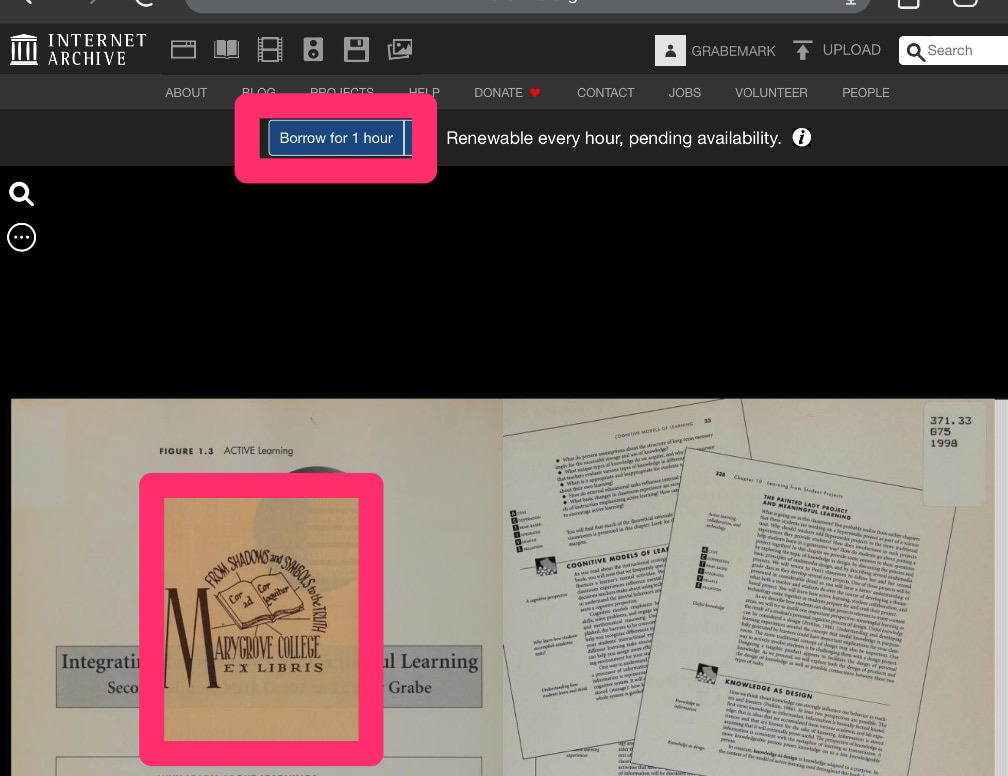
I found that I could easily access a book and “borrow” it online for an hour at a time. No waiting because a book has been committed to someone else, but with an old book this was not surprising. If you see the little box at the top of the page you see where I click to start the timer and reveal the full-text version.

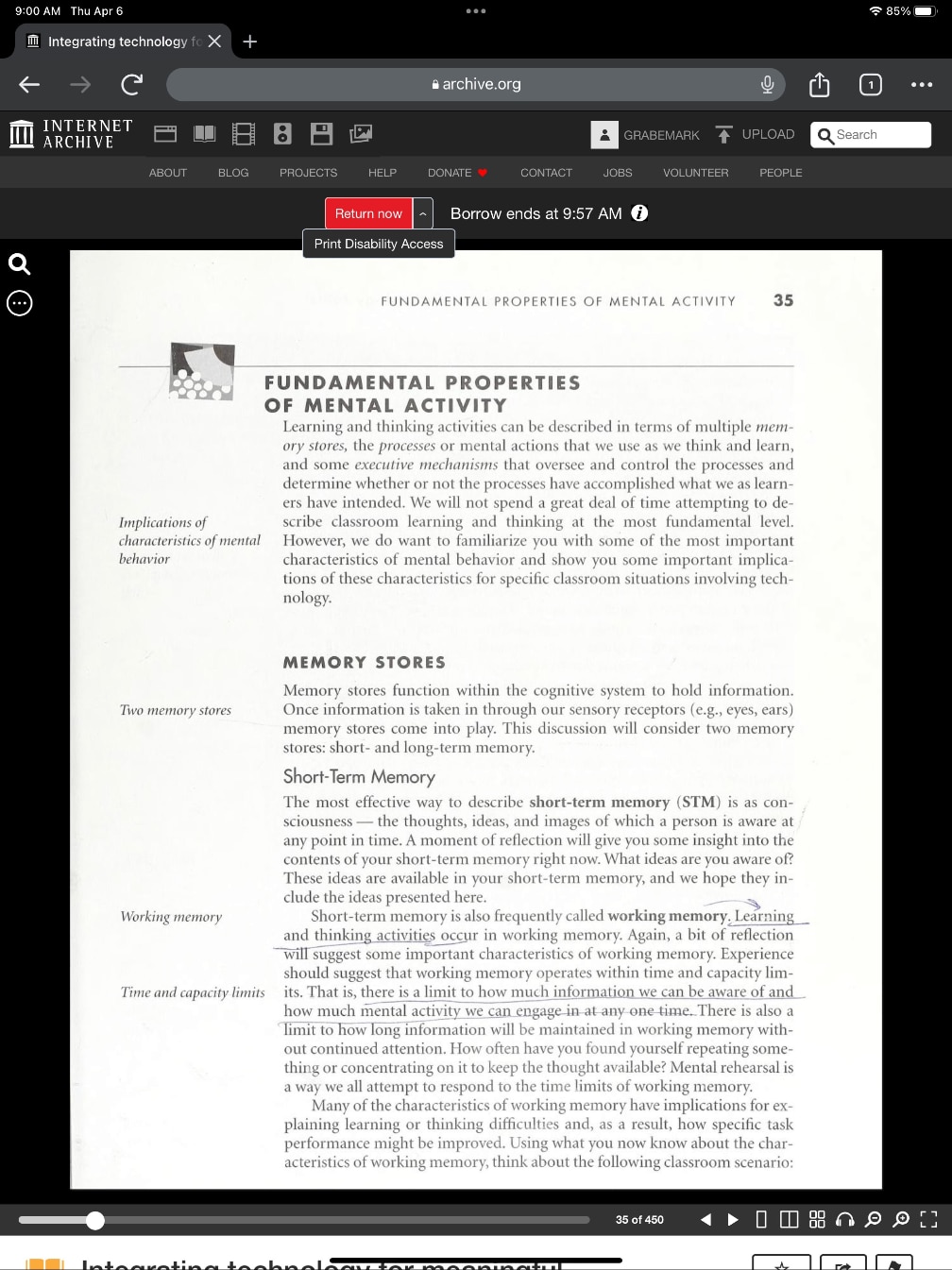
Several things to observe from my example. First, it appears that access is limited (you have the resource for an hour, but can end your access early). However, I was able to just request access again. Second, and maybe not obviously, the books are used. This was the case with both editions I looked at. One had a library seal and both had underlining and annotations. Here is the thing about books that are not “first sale”. Whether these books were purchased used or donated there is nothing from the acquisition of a used book that compensates either the company or the author. Finally, I was curious about the one access for one license requirement libraries must honor. I found I could open a copy of the same resource on both my laptop and my iPad. I seriously doubt the archive has retained multiple copies of the used books it had photographed (the camera used in recording the page images is listed in the metadata).

So, the Digital Archives approach to lending books is nothing like the approach of actual libraries. I have been unable to find the details of the court reasoning process at the level I have provided here, but it does surprise me that the court reached the decision that it did.

Loading

Posted in Uncategorized | Comments Off on Digital library books from the Internet Archives