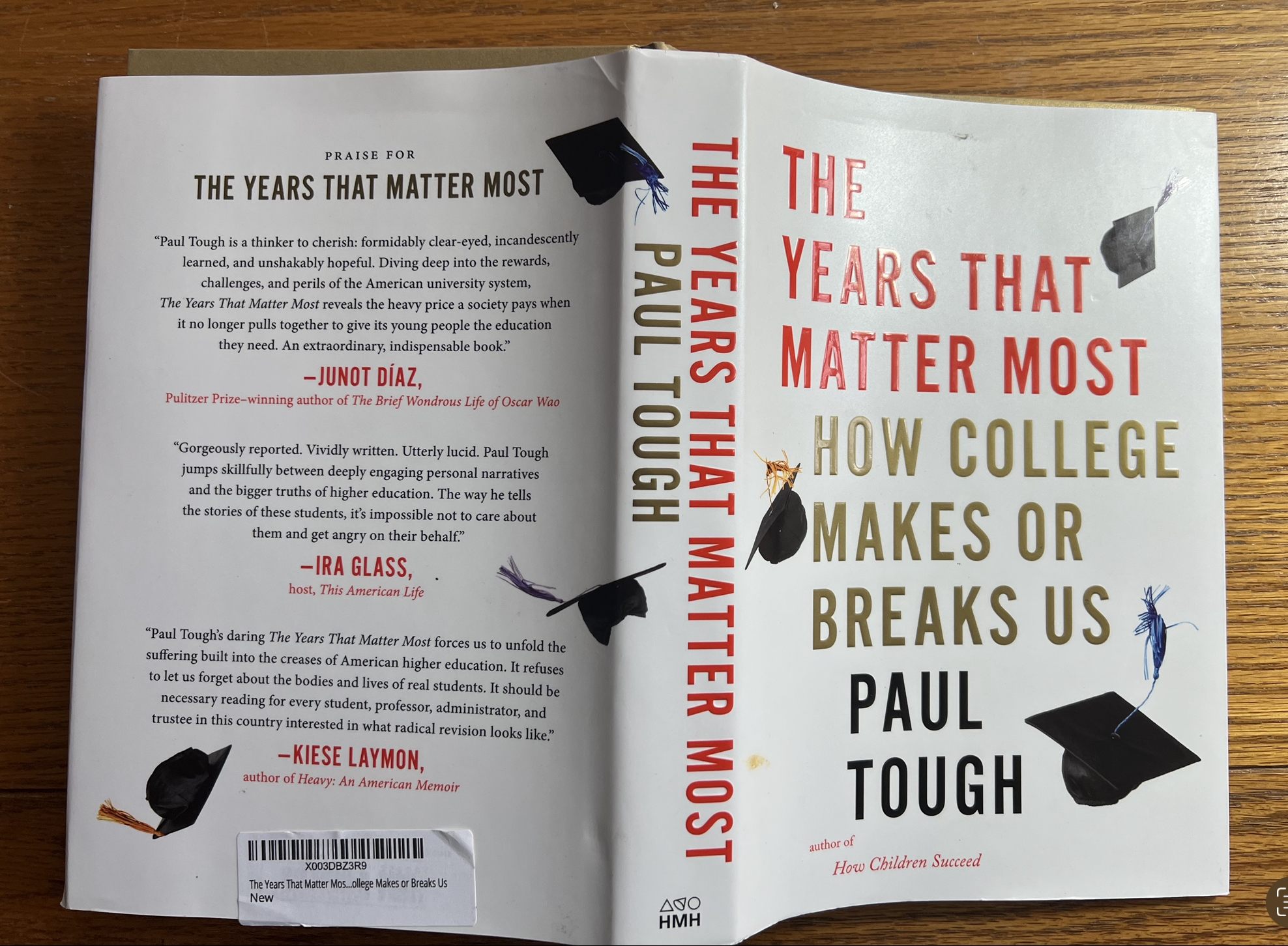
I realized with the exception of a few books I have purchased to get signed copies of books from author friends, this is the first paper book I have purchased in a decade. I no longer find the experience of reading a book with my yellow highlighter productive. I read digital books so I can alter the size of text and so I can highlight and take extended notes connected to source material. When you read something I have written on one of my blogs, it is often based on the digital notes I have taken, stored, organized, and retrieved at a later date.
I purchased this book because I made an error in ordering from Amazon. Reading it has been a reminder of the advantages digitized content allows.
Posted inUncategorized|Comments Off on Bought a book
The Smithsonian Learning Lab offers digital resources and tools to the public. The lab promotes it functions as Discover, Create, Share, and Learn and offers resources hoping that educators will share how they use these resources and instructional materials created with these resources with peers.
The Create function offers educators tools they can use to repurpose existing resource collections or create a new collection from scratch. The tools go beyond selecting resources and allow the educator to annotate, add quizzes, and incorporate assignments.
Posted inUncategorized|Comments Off on Smithsonian Learning Lab
ACT scores continue to decline with 40% of those taking the test (supposedly interested in college) not meeting any of the standards for doing college work (performance in English, reading, math, and science). While the ACT organization says that COVID plays a role in this decline, the downward pattern has existed for some time and COVID only increased the rate of decline.
Posted inUncategorized|Comments Off on ACT scores continue to decline
I encountered this source arguing there are at least three common misconceptions when it comes to K12 curriculum. The false assumption that caught my attention involved the belief that the most effective teachers create their own curriculum materials. In arguing the contrary, the source suggested that teachers average 7-12 hours per week searching for or creating curriculum content and this time either extends the workload of educators or cuts into the time educators spend with students or providing feedback on work completed. With present concerns over teacher workloads and related stress and the competing suggestion that educators should “ditch the textbook”, educators and the public are getting mixed messages. The source proposes that modern commercial curriculum offerings offer far more than content to read and worksheets to complete and these resources are prepared with an eye to solid learning theory, content quality, and a plan for how learning experiences fit together to meet standards and assure learners are prepared as to what is to come.
My professional work included teaching in a graduate-level instructional design program and while I am an applied cognitive learning researcher by training and experience, exposure to the issues that educational designers address in generating learning materials and procedures has been enlightening. There are so many important things that go beyond authoring lesson plans. I have tried to identify and explain many of these considerations in a resource I have written for interested educators titled “Designing instruction using layering services: Educators and students guiding learning”. For those educators interested in instructional design and wanting to build instructional content based on online resources, my focus was on identifying the issues that are important in curriculum generation and how the issues can be addressed in creating learning resources. So, I see both sides of this issue. If you want to “ditch” the use of commercial materials and act as an instructional designer, I explain what the design process involves.
The resource on commercial curriculum and educator time I reference identified one issue that requires consideration. A high proportion of educators complain that they receive inadequate professional development when it comes to the implementation of modern commercial curriculum materials. My personal reaction to complaints about professional development tends to focus on the challenge of continuing support as what are perhaps initially explained as good ideas are put into practice. Who to blame? This is a tough call and much ends up being a function of financing. To me, this would seem the point at which “curriculum coaches” and teacher collaboration should be the emphasis.
Posted inUncategorized|Comments Off on Complexity of curriculum
I encountered this post with what I see as shocking data on the production of PhDs. One in eight of the PhDs granted in the U.S. are produced by just five institutions.
Why is this an issue? Because PhDs are crucial to the knowledge generation of academe and the job market for this select group of individuals is quite limited. By dominating the production segment of training, a small number of institutions are threatening the productivity of other institutions. Without a record of employment, few will become willing to commit the time and work required to earn an advanced research degree.
Academic research depends on advanced students to man/woman the research labs of academics. At the advanced level, training and education are based on what is essentially an apprenticeship model. There is a great deal of labor in research activity and great benefits to the general public of having the diversity of research academic institutions produce in comparison to business and industry. The competitive nature of institution to institution attraction of external money – the grant money on which the research factory of higher education runs depends on reputation and existing infrastructure – means the rich get richer and less numerous.
Posted inUncategorized|Comments Off on The production of Ph.D.s
Google’s Ngram viewer allows the production of a graphic representation of the frequency with which words or phrases appear within the content Google can access by date. It can be used as a way to explore trends. Here are a couple of examples.
I have become interested in the concept of a “second brain”. The concept refers to the uses technology can serve in externalizing and extending brain functions such as storage and retrieval. Efforts are even being made to extend such obvious uses to the identification of associations. Recently, the phrase appears in several book titles.
It is hard to resist Googling yourself. Ngram appears to indicate that I am past my prime. I guess this makes sense because after my retirement from academia my name would appear less frequently in print.
I would think various trends could be proposed and investigated with this tool.
Posted inUncategorized|Comments Off on Exploring trends with Ngram
We use cookies to ensure that we give you the best experience on our website. If you continue to use this site we will assume that you are happy with it.
You can revoke your consent any time using the Revoke consent button.







You must be logged in to post a comment.