This is a new post from danah boyd (hope I have that anti-capital thing right) regarding how adolescents define cyberbullying. The core idea, I think, is that adults and adolescents appear to be using the term in different ways and this may be a consequence of all of the attention the topic has received. With victims, redefining what is happening to you (I would describe this as a form of normalization) provides a defense mechanism the clinicians talk about.
I suppose I watch enough television, but my viewing habits lean toward sports and news. I think that is OK. My life has plenty of reality and I am not much interested in the weird worlds that are promoted as reality television.
I do like documentaries and am recommending Snagfilms. I prefer the iPad app, but it looks like you can watch on your computer as well. I like the versatility of the iPad. I can watch while I work out or I can listen for a little while before I sleep.
It seems to me that documentaries are often the story of the little guy and that has always appealed to me. I was listening to SoLa: Louisiana Water Stories this evening. Kind of little guy against big corporation stories – good for all of us to understand that our behaviors and search for inexpensive goods has consequences.
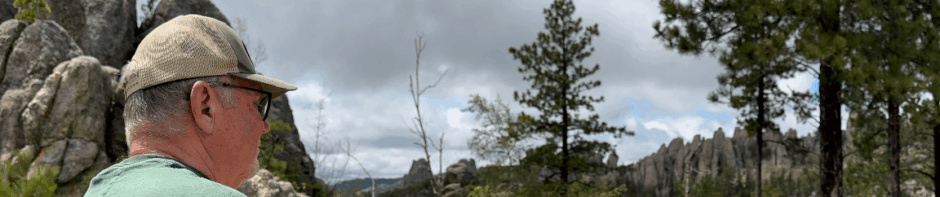
A photo from our trip to the area described in the film.
Posted inUncategorized|Comments Off on Documentary Source
I have commented on this service before, but a podcast reminded me of what the service offers and I decided to promote the site again. OpenDNS is a filtering service that takes advantage of DNS. The domain name service you use converts a URL (a web address) to a the ip address that computers use to communicate (the series of four numbers separated by periods). You probably use a DNS provided by your service provider, but you can use other DNS servers. This is how OpenDNS works – you substitute it for the default.
When you use OpenDNS, the service can block (filter) your access to web sites. You might want to do this to avoid known phishing sites or to prevent children using your computer from viewing content you feel is objectionable. You have several ways of controlling what sites will be blocked. If you do nothing else, blocking phishing and some malware sites is worth the effort. This is a free service for home users.
One challenge in using this service is asking your system to use the DNS assigned by OpenDNS rather than the default. On a Mac, you open the network preference option from system preferences, select DNS and then enter the IP number provided by OpenDNS.
I have been attempting to determine if this geofence feature now available in Flickr is useful. The concept is that you can define an area and if images in your account are geotagged within that area you can limit who can view.
We actually have a camera that geotags photos but very view people do. The most likely issue would involve the use of a cell phone that tags images. If you manually geotag images, I would think you could also set access privileges.
I guess if I were a teacher and used a cell phone that tagged images with location from my school and I was concerned that some might object to me including these images so that anyone could see and know the location of the school, this might be a useful safeguard.
That is a lot of “ands” –
I seem to remember that getting Flickr to recognize the geotags in the images I uploaded was a hassle and required that had to I change a setting. Maybe this has changed – at that time (see this description) the problem was how to get Flickr to recognize the location data in the exif.
Now the assumptions seem to be that many people want to include geotags, but have the problem of getting the system to ignore geotags that might reveal personal location.
Here is an answer to my own question (see below) – Lion comes with Quicktime 10. Hidden in the utilities folder is Quicktime 7. Who knew? Quicktime 7 can be used to create a progressive download video. There are many explanations of the Fast Start in Quicktime 7, but it took me a long time to find the information that I still had a copy of 7 and it had been magically moved to the utilities folder.
How will I remember this next time I encounter this problem? Solution – move it from Google + to a blog I can search.
Here is a geek question. I have m4v videos embedded in web pages. Chrome and Firefox seem to download the entire file (takes maybe 30 seconds) before the quicktime plugin will even display the videos for play. This looks pretty dumb. Safari on the Mac or iPad displays them immediately.
The ability to play video as it downloads (not streaming) used to be called progressive download (Apple calls it fast start). Older versions of Quicktime Pro let you set this property, but the newest version while really cool does not.
I am not certain what is going on – are different capabilities built into the different browsers? It looks like I can download Quicktime 7, pay for the pro version (again), and use it on Lion. Before I do that, I would like to know that these videos that work correctly in Safari are not already set for progressive download and the problem with non-Apple browsers can be fixed without saving the videos out in a different format.
Kindle is developing a feature allowing readers to query authors (@author). I have been attempting to get my past publisher to understand this possibility for years. Technology allows opportunities for blurring the lines among traditional roles – say student, teacher, content developer. I imagine more roles and more possible opportunities for interaction. You are starting to see some of this – e.g., readers can see things other readers highlighted in some forms of online content (Kindle again). What if teachers who used the same content had a more convenient way to share some of their ideas for implementation? etc.
We use cookies to ensure that we give you the best experience on our website. If you continue to use this site we will assume that you are happy with it.
You can revoke your consent any time using the Revoke consent button.


You must be logged in to post a comment.