Amazon Glow is a little known product I thought might be useful for reaching remote students, but I have since decided the device is more appropriate as a present for grandchildren. It consists of a display and projector system that displays images on a touch sensitive mat. The idea would be for the learner to have the Glow and the adult to interact with the learner using an app. The content could be a book to be read together or various games. The system works reasonably well (we found it was important to keep the mat clean), but all participants must have an Amazon account,
The price ($250) seems a little high based on the very low prices for other Amazon devices that seem intended to rely on the purchase of content to offset the cost of the device.
I was listening to a podcast episode from the creatives responsible for the documentary “The social dilemma”. They were describing the unexpected popularity of their documentary and their experiences in the year since the documentary was released. Their personal interests in generating documentaries to target serious issues took on the social media project as a secondary target taking time away from their primary interest in climate change.
They made an interesting point about their interest in social media. They concluded that the issues they describe in the Social Dilemma have ended up making it difficult to take on other challenges. The polarization encouraged by social media has made serious discussion of other problems far more difficult. I agree or at least our differences used to be more hidden. Why did disagreements over masks, vaccinations to tamp down a pandemic, financial inequities, etc. become much more difficult to take on logically and factually because of the tribalism that has resulted from social media driven animosities?
Posted inUncategorized|Comments Off on Solve social media issues now
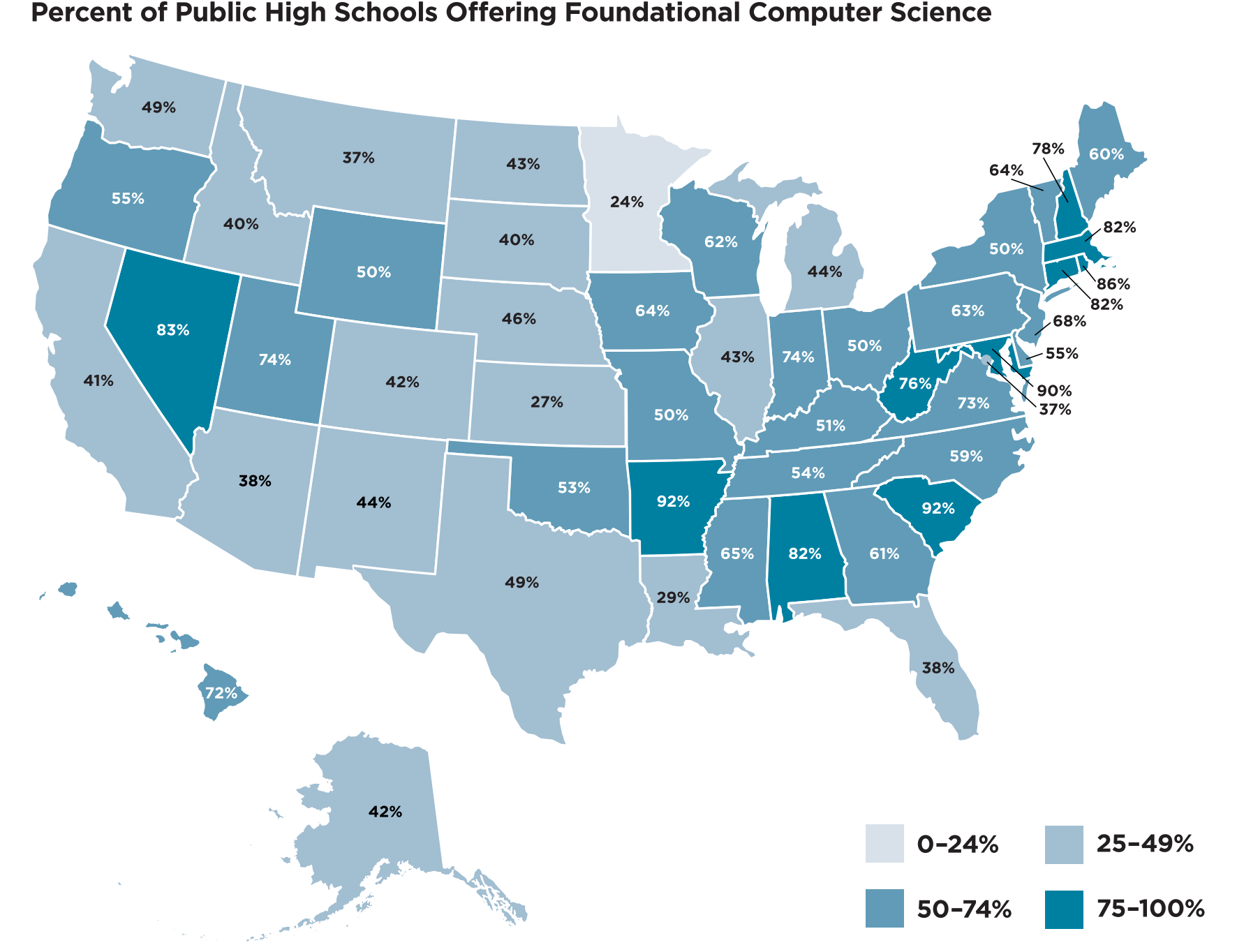
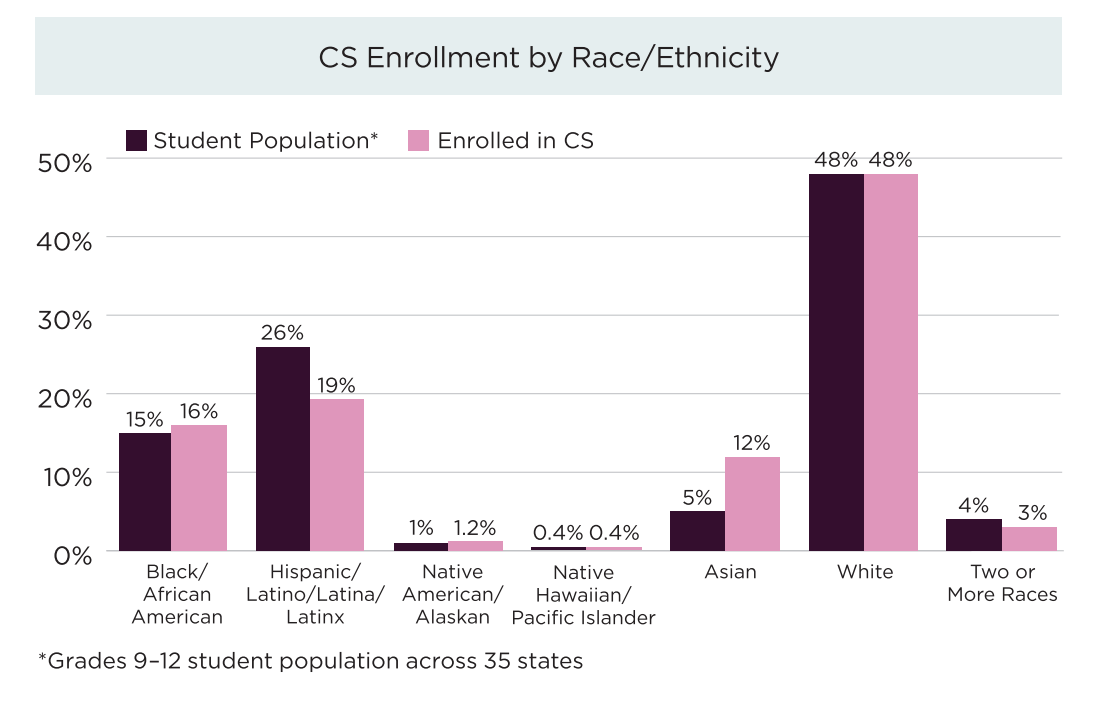
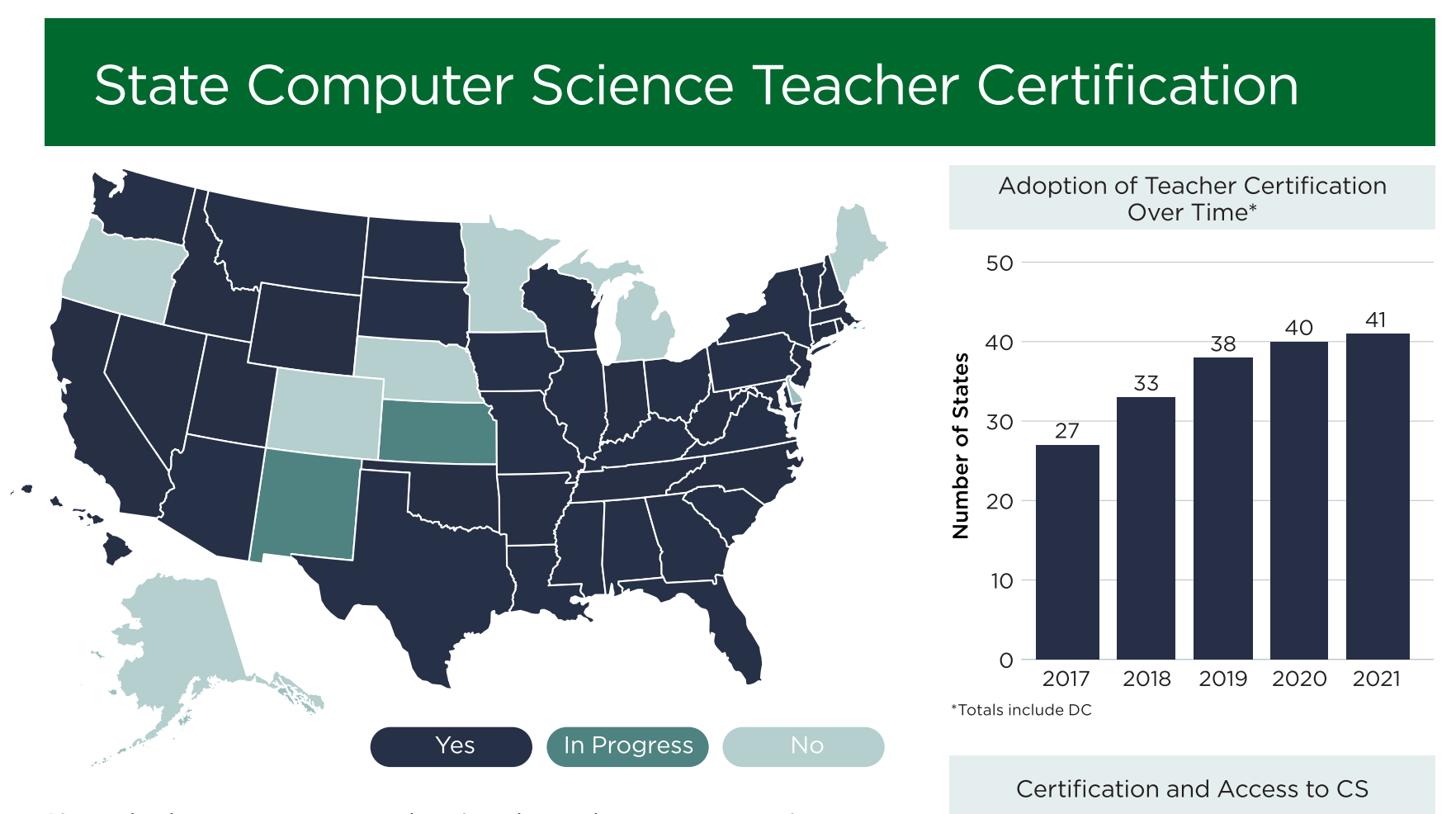
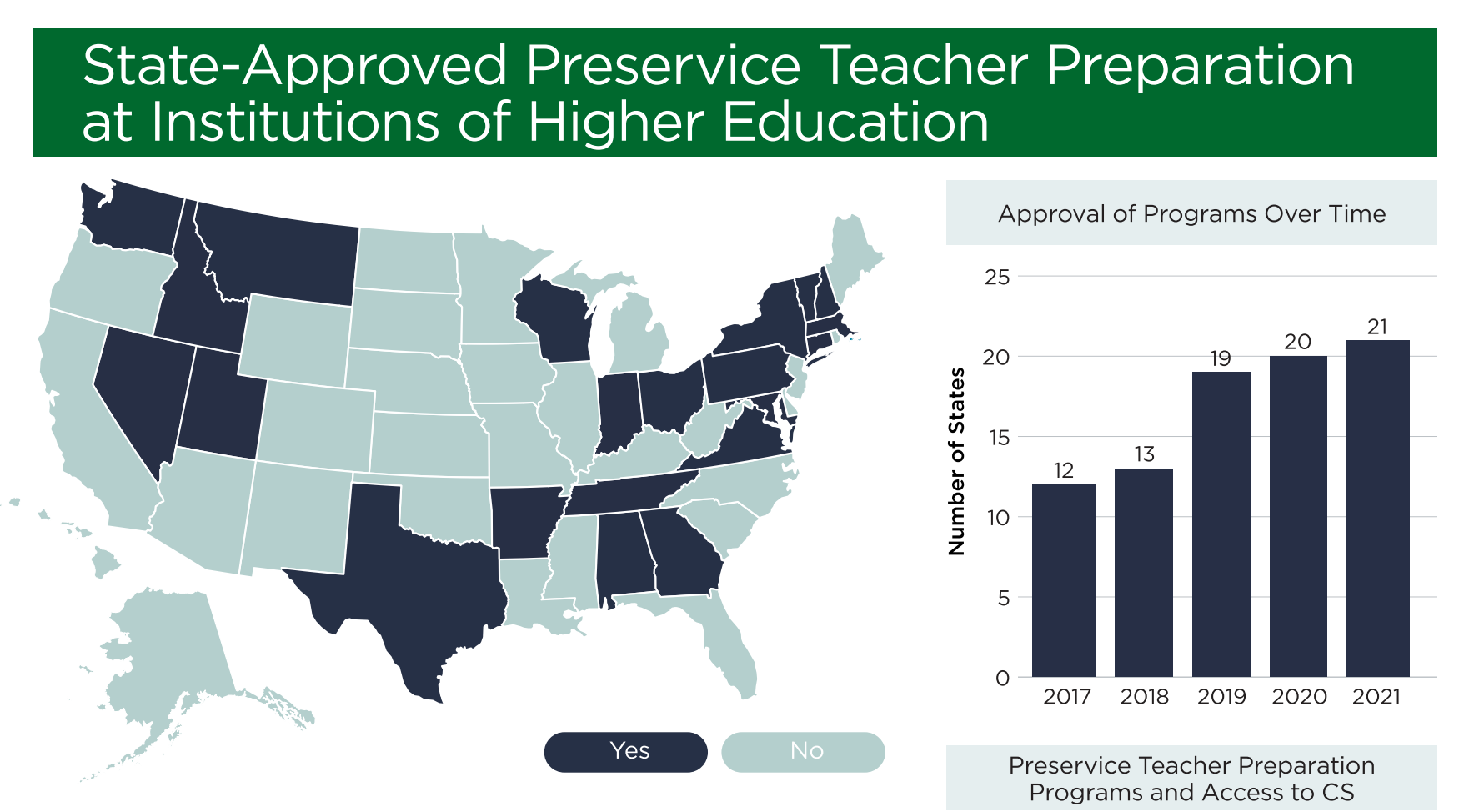
Descriptive statistics are very useful in the kind of writing that I do. Whether it is a textbook for future K12 educators or a blog post for practicing educators, being able to factually support a description of trends or offer some insight into the circumstances of a typical classroom, data in the form of charts or just simple descriptive statistics is helpful.
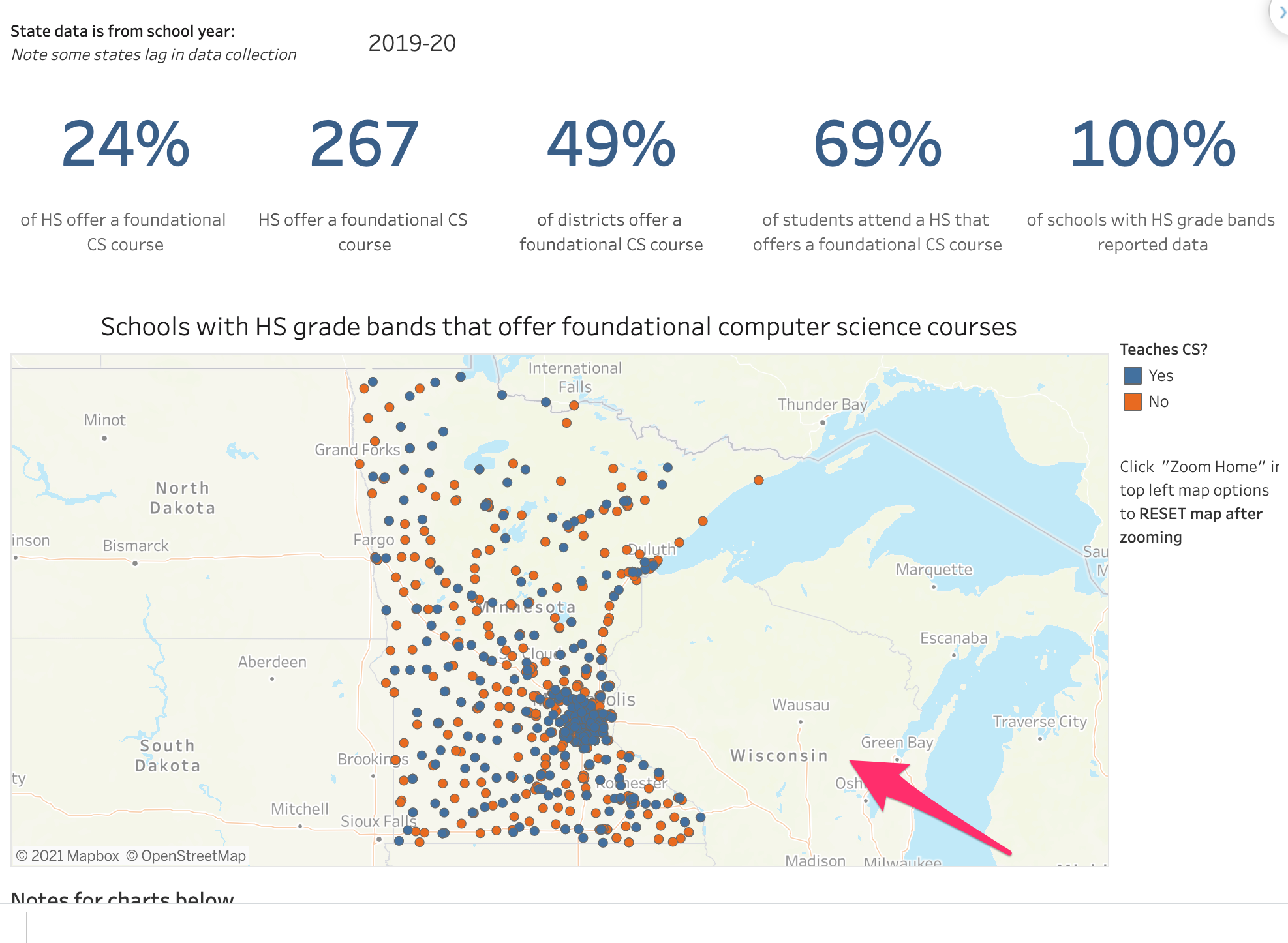
What I offer in this post is a link to a source for current statistics on computer science instruction. I highlight a few statistics here that offer insights into topics I find particularly interesting, but also promote this source as it offers a way to examine related issues on different levels (e.g., state and in some cases districts). I keep such links carefully curated for future wiring projects.
It is always important to consider the methodology used to accumulate statistics. The stereotype that anyone can lie with statistics has always annoyed me. The statistics don’t lie, but can be misleading if based on a flawed methodology. Pulling together data on a grand scale relies on contributions from other sources and may make assumptions about the comparability of the systems used to collect information and the willingness of the parties studied to share.
I came across this article from Forbes that is kind of a mix of a complaint focused mostly on the business model of Facebook/Instagram and a promotion of the photo sharing service – Waldo. The article is worth your time if you are interested in either topic.
I have not heard of Waldo, but from article I have learned that is a privacy first, photo service originally focused on photo collections for schools, camps, and sports teams. The article itself is more focused on individual and family sharing and explains that Waldo is expanding its reach to offer services to families.
I am interested in photo sharing as an individual and for classrooms. I have paid for Flickr for years and have used it both to share photos publicly and store others privately. I also use Google Photos and share an album with family members. I do share some photos on Instagram, but don’t really use this service heavily.
The issue of cost always comes up. The cost to a school for Waldo is about $1000 for the base model (12,000 images per year). The cost for an individual account is $5 per month for 5 gigabytes of storage. My Flickr account costs more, but I have over a terabyte of images.
Here is a resource listing photo sharing options. Google photo sharing is included and I am glad to see that Google is not listed as a free service. Photos are included within your total Google storage limit which can be substantial if you also use Google Drive and Gmail. 100 GB a month is $2.
I c0ntribute images to a federated service Pixelfed. I am a member of the instance pixelfed.social. This is social in that images are shared for viewing and commenting, but the focus is on sharing in a general sense and not just sharing with family members. One could use this service as a private account sharing only with certain members of your instance, but I don’t bother. My account has a 6 gigabyte limit, but this would allow me to store quite a few images for a free account if I wanted to use it only for private storage.
Richard Byrne who writes the Free Tech 4 Teachers blog and I seem to have similar interests. In a recent post, he describes three services that allow an educator to add questions to a video. The idea is to encourage students thinking about what they will or have seen. This addition of question prompts to a video is an example of a process I describe as layering. There are different types of content that services allow you to layer on top of online content. Questions added to video or web pages are a good example and depending on the service one might also highlight, annotate, link, and embed a discussion opportunity. Again, depending on the service layering can be applied by the educator, student, or both.
I ask educators to recognize three different types of service that provide layering opportunities – the company owns the content and provides the layering service, the company owns the layering service and invites the educator to upload content to be layered, and the company provides a way to layer additions to content offered by a different company. My focus in the Primer I link to above is on the final category. The distinctions are important. For example, one would not necessarily have the rights necessary to take a video from one source and then upload it into the service provided by a different company (category 2). What I describe as category three involves those services that serve content from the original and layering service in a combined way that takes into account the rights of the content creator.
Byrne offers three examples one of which I would describe as Category 3 (Edpuzzle), one of which involves content authored by the educator (Screencastify), and one of which I would describe as Category 1 (Classhook). I tend to focus mainly on categories 2 and 3, but I did make the effort to explore Classhook.
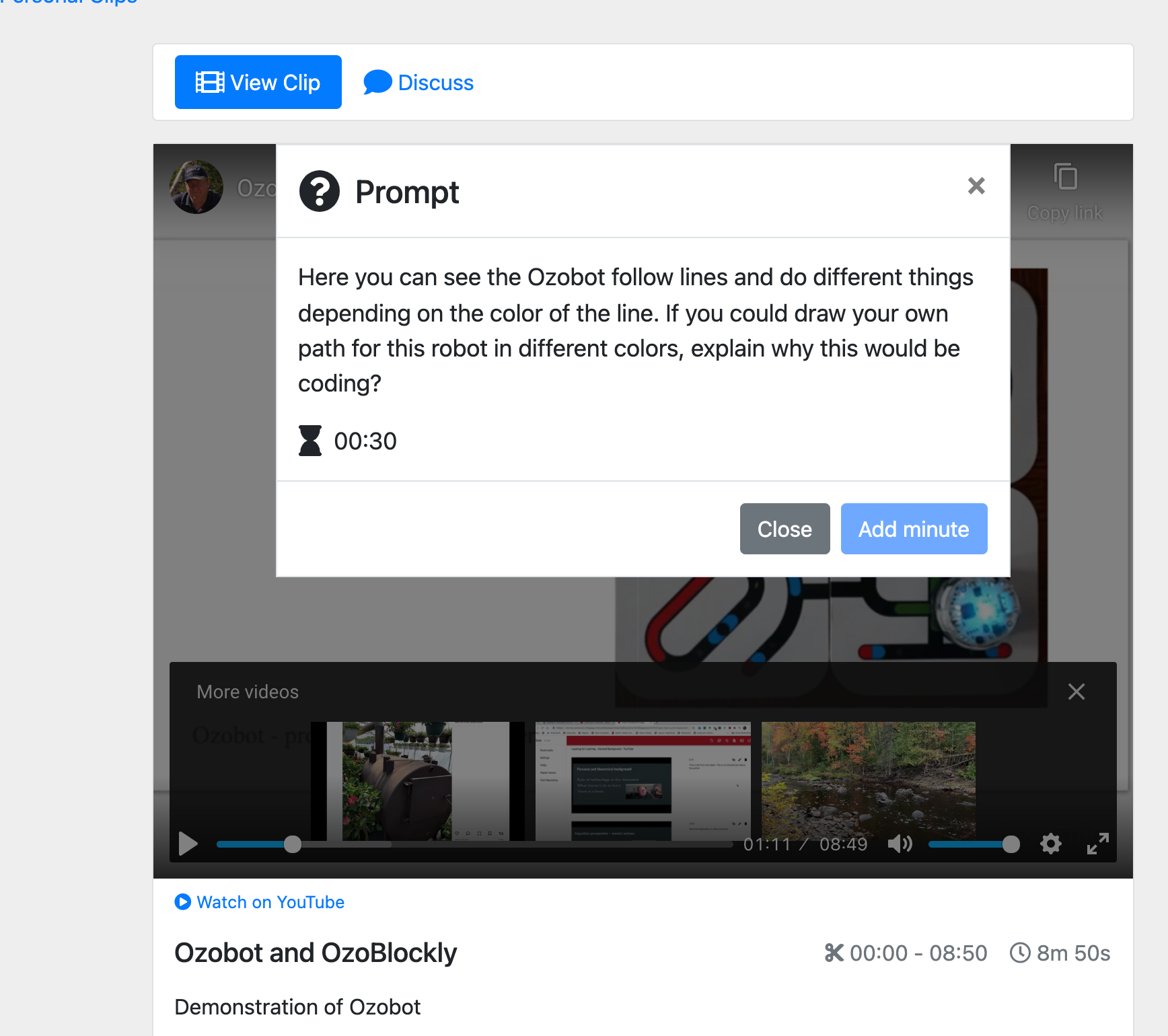
Classhook offers users access to digital content organized in multiple ways (topic, standard) and offers teachers the opportunity to add “pause prompts” to this content and then assign the resulting instructional content to learners. Perusal and Amazon would be an example of a company that offers a layering opportunity for text content – buy the book and then layer highlights and annotations. Classhook does allow the uploads of video content and I used this option to upload a YouTube video I had created to explore the service. Depending on the rights expected by the content creator this would not be a good thing to do with content created by someone else. I assume this is why Classhook has already secured rights for the content it offers and focuses on this material.
So, the way Classhook works, the educator selects a video and then adds “pause prompts” at designated locations within the timeline of the video. When a learner plays the video, the video pauses at the designated time providing time for the learner to consider the question.
Classhook offers a free option for educators wanting to explore its service. For educators wanting to use the service on a regular basis, the cost is $9 a month with a discount if access is purchased for the year.
I recently wrote a post describing the most recent offering of the Oregon Trail. Those of us working in the midwest who participated in the early days of classroom uses of technology are likely to have a special fondness for this “game”. My wife and I used to drive to Minneapolis from Grand Forks, ND, to be part of MECC (Minnesota Educational Computer Consortium) because it was a way to meet others with a similar passion and to pick up the software offered through this organization.
This recent KSMP story traces the 50-year history of the game and its origin with three Minnesota teachers who translated a board game developed by one of the teachers into a simple digital game. The story explains how MECC kind of launched Oregon Trail into wide visibility.
The originators did not make a dime – kind of the OER of that time.
Posted inUncategorized|Comments Off on 50 Year Anniversary of Oregon Trail
We use cookies to ensure that we give you the best experience on our website. If you continue to use this site we will assume that you are happy with it.
You can revoke your consent any time using the Revoke consent button.



You must be logged in to post a comment.