Educators frequently make use of Adobe Spark rather than the Adobe Creative suite is overpowered and expensive. Today, Adobe announced that the Spark tools would now be available as Adobe Express. The online access to Express is already active and your existing Amazon login will work.
Details about the new service can be found in this story from TechCrunch. For those who liked Spark because there was a free tier, Express will have both a free tier and a paid tier ($10 a month).
You may have an Amazon Show sitting in your living room and may go days with calling out – Alexa! This article from Android Authority includes some suggestions new to you. One discovery I made from this piece was the opportunity to play the video version of the news offered by Reuters. I have been watching this program on my phone after a friend recommended as a great news source without the commentary.
The command “Alexa, play Reuters” should work.
Posted inUncategorized|Comments Off on Alexa, play Reuters
Computer Science week is for everyone. Most K-12 educators will recognize the big event of the week as the “Hour of Code” – a special opportunity for all students to gain some experience intended to interest them in how they can control technology. Interested educators can find plenty of ideas for the celebration at the Hour of Code website.
Amazon Glow is a little known product I thought might be useful for reaching remote students, but I have since decided the device is more appropriate as a present for grandchildren. It consists of a display and projector system that displays images on a touch sensitive mat. The idea would be for the learner to have the Glow and the adult to interact with the learner using an app. The content could be a book to be read together or various games. The system works reasonably well (we found it was important to keep the mat clean), but all participants must have an Amazon account,
The price ($250) seems a little high based on the very low prices for other Amazon devices that seem intended to rely on the purchase of content to offset the cost of the device.
I was listening to a podcast episode from the creatives responsible for the documentary “The social dilemma”. They were describing the unexpected popularity of their documentary and their experiences in the year since the documentary was released. Their personal interests in generating documentaries to target serious issues took on the social media project as a secondary target taking time away from their primary interest in climate change.
They made an interesting point about their interest in social media. They concluded that the issues they describe in the Social Dilemma have ended up making it difficult to take on other challenges. The polarization encouraged by social media has made serious discussion of other problems far more difficult. I agree or at least our differences used to be more hidden. Why did disagreements over masks, vaccinations to tamp down a pandemic, financial inequities, etc. become much more difficult to take on logically and factually because of the tribalism that has resulted from social media driven animosities?
Posted inUncategorized|Comments Off on Solve social media issues now
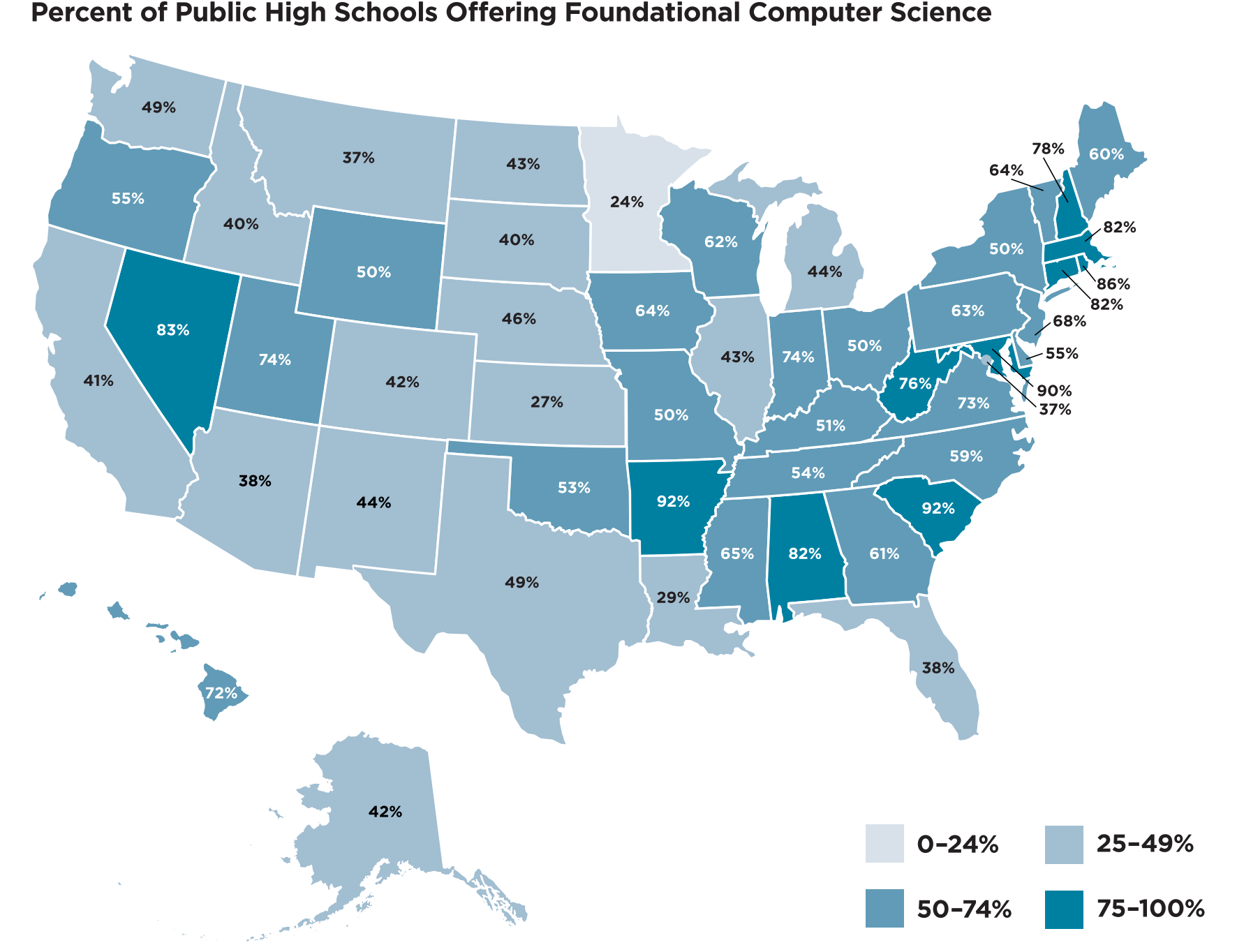
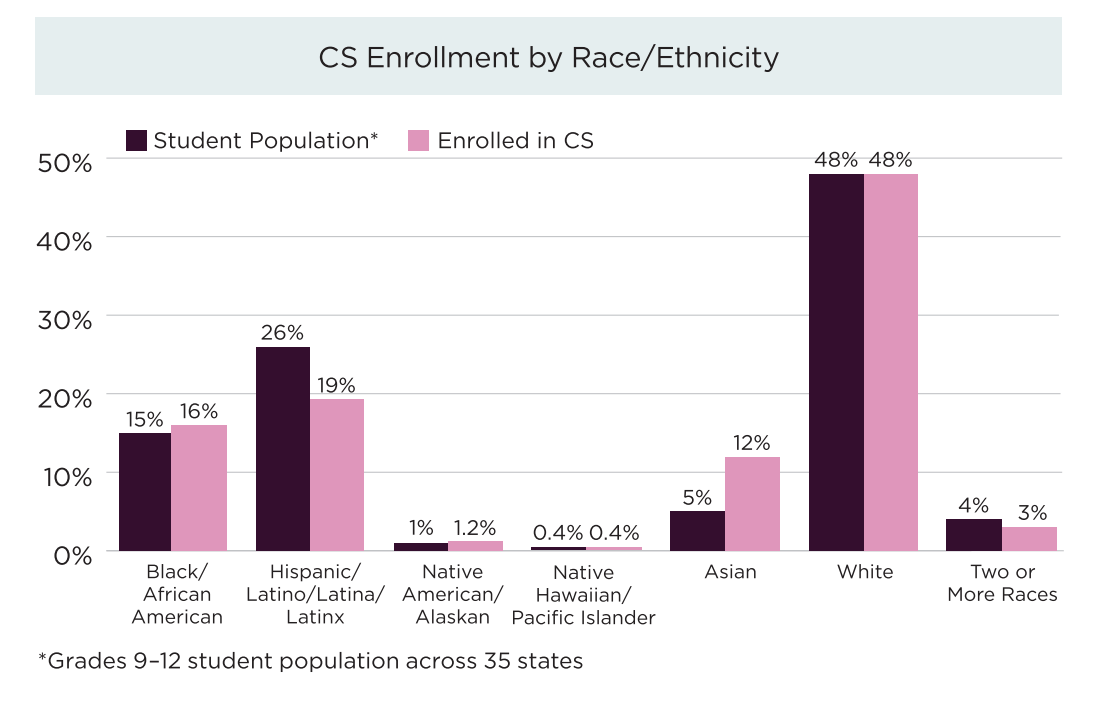
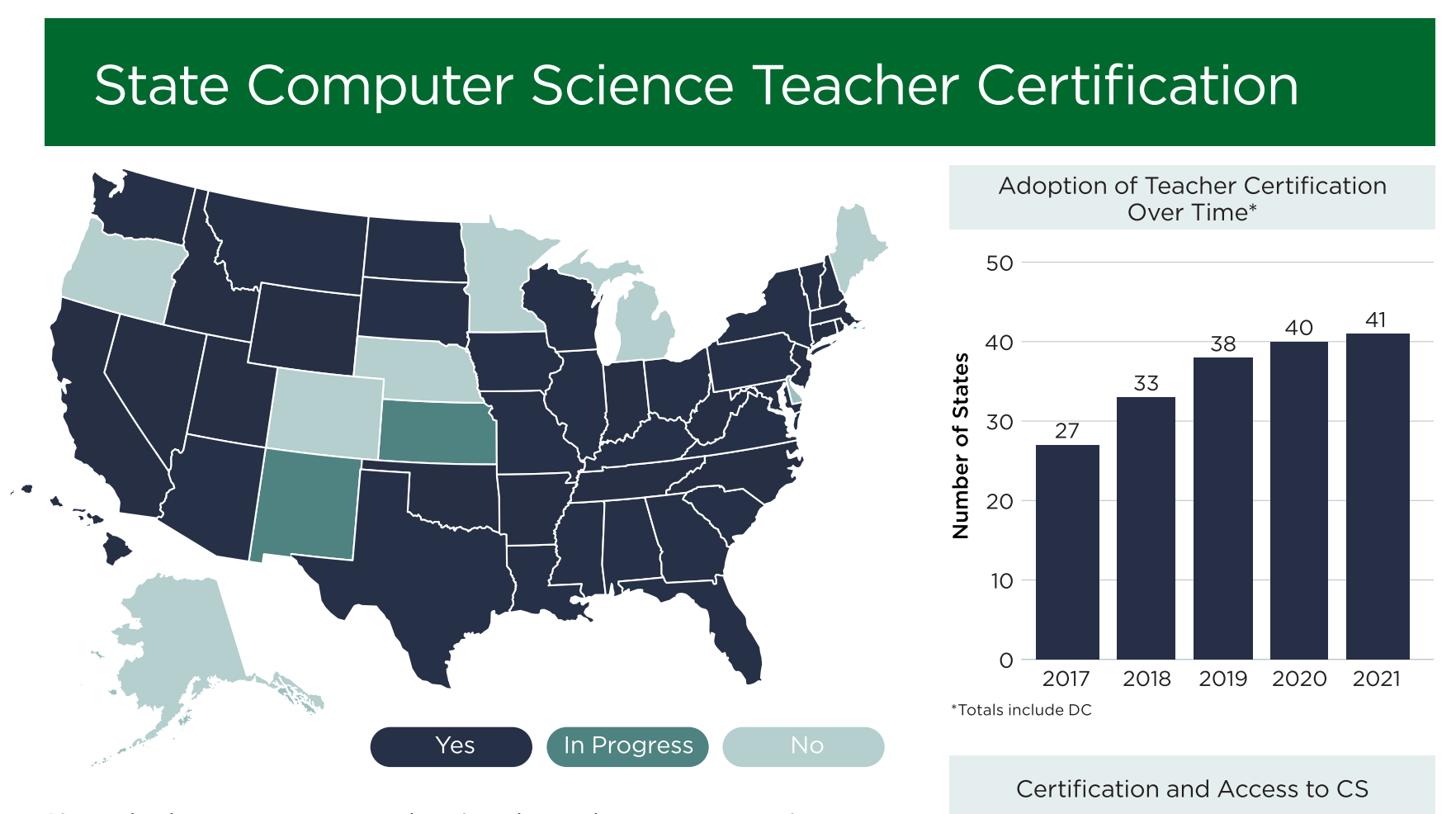
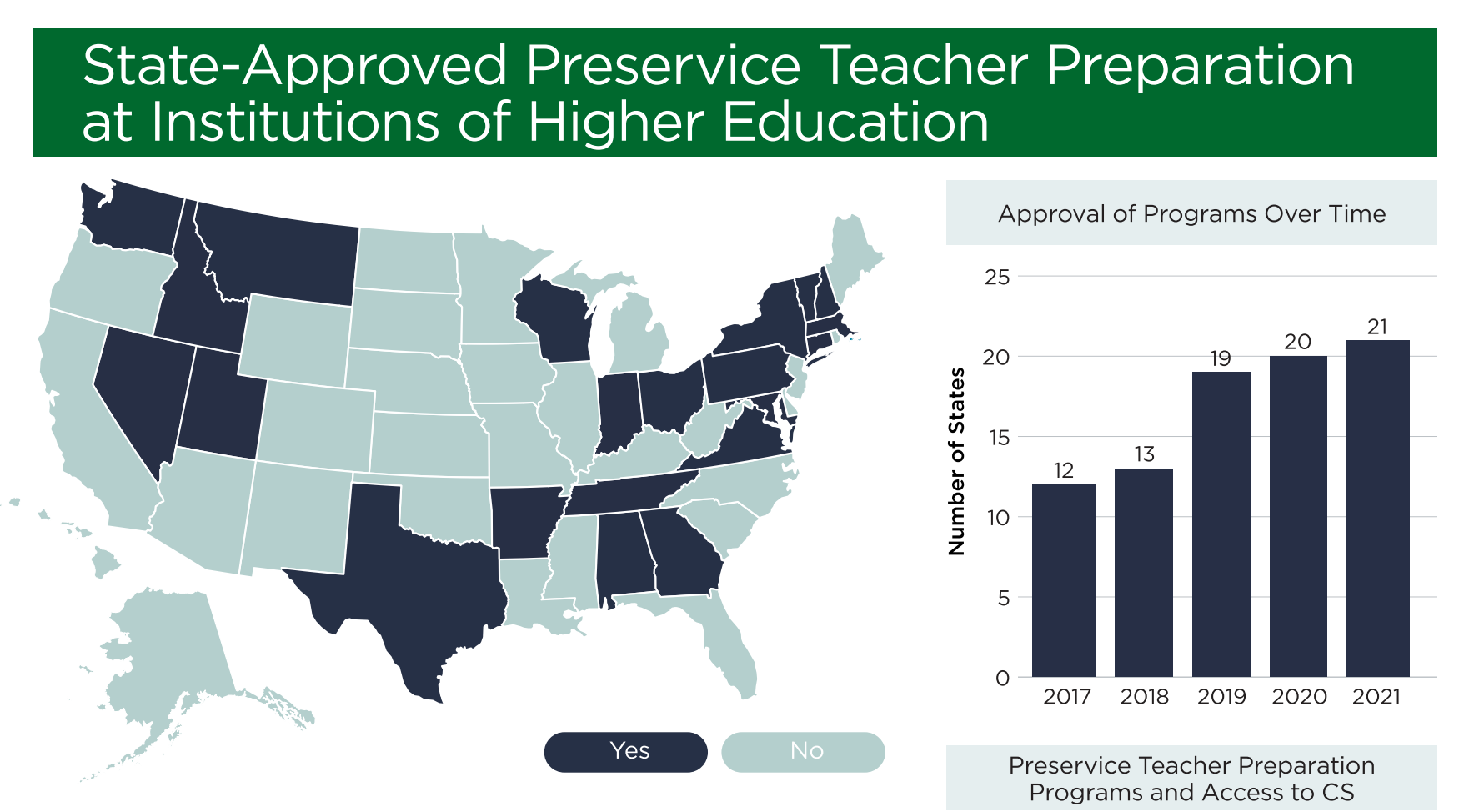
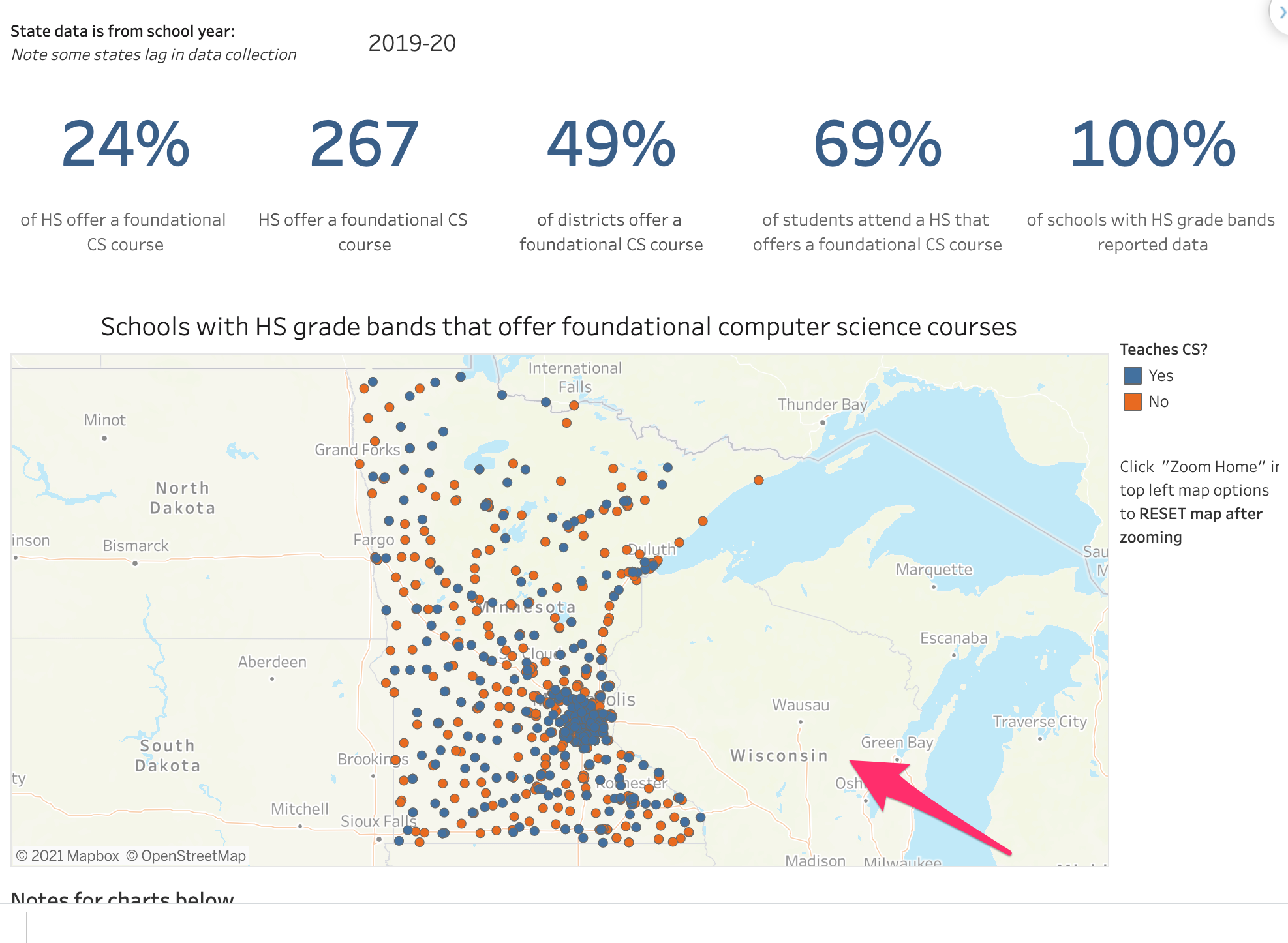
Descriptive statistics are very useful in the kind of writing that I do. Whether it is a textbook for future K12 educators or a blog post for practicing educators, being able to factually support a description of trends or offer some insight into the circumstances of a typical classroom, data in the form of charts or just simple descriptive statistics is helpful.
What I offer in this post is a link to a source for current statistics on computer science instruction. I highlight a few statistics here that offer insights into topics I find particularly interesting, but also promote this source as it offers a way to examine related issues on different levels (e.g., state and in some cases districts). I keep such links carefully curated for future wiring projects.
It is always important to consider the methodology used to accumulate statistics. The stereotype that anyone can lie with statistics has always annoyed me. The statistics don’t lie, but can be misleading if based on a flawed methodology. Pulling together data on a grand scale relies on contributions from other sources and may make assumptions about the comparability of the systems used to collect information and the willingness of the parties studied to share.
We use cookies to ensure that we give you the best experience on our website. If you continue to use this site we will assume that you are happy with it.
You can revoke your consent any time using the Revoke consent button.






You must be logged in to post a comment.