I have started to receive a lot of comment spam. You don’t see the spam because I have comments setup to require moderation. It has taken me some time to determine why the spam just started. I have been using the free Akismet plugin to block spam and it worked great. However, Akismet decided this blog was a commercial venture because of the ads and decided I had to pay for their commercial service. I use ads more out of curiosity than anything else and the cost for one month of the Akismet service would cost more than this site generates in ad revenue in a year. I have turned off comments as a solution.
I sometimes check a stock market page to see if my retirement funds are increasing or decreasing. The page offers the basic data on the markets, but also news of the day that may be influencing the markets and specific stocks. I encountered the following story on Pearson.
I know that Pearson has a presence at the University of North Dakota. The company had approached the Psychology department which already had a substantial presence online about partnering with the department. The department would make use of its existing developments as part of an offering through Pearson and the company would funnel more participants through the program. The department said no because it already had all of the participants it felt comfortable handling and the finances made no sense given the program was already fully operational.
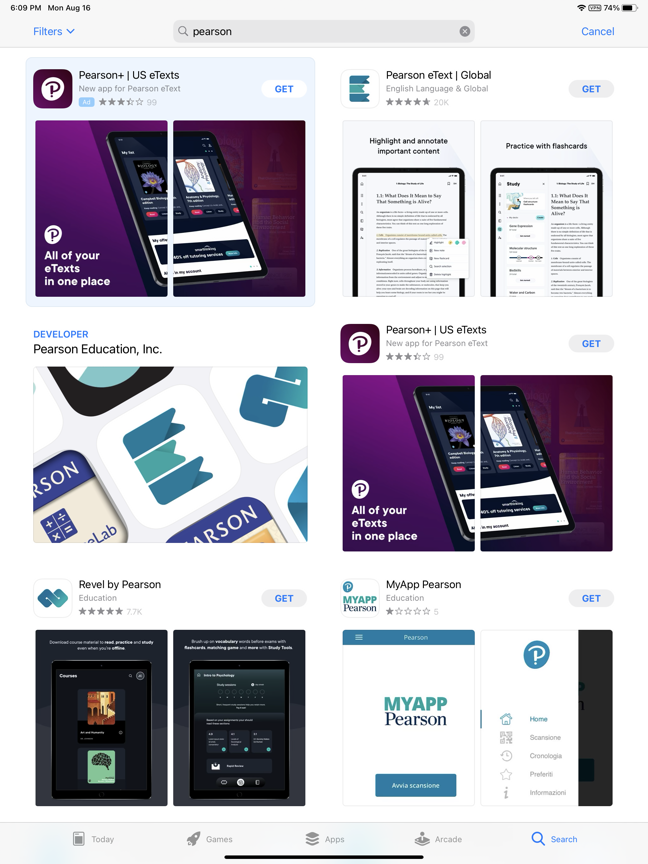
Textbooks – there is an app (actually quite a few) for that
The news stories I encountered were not about the online courses, but the new CEO’s innovative approach to college textbooks. Using a Pearson app (see options above), students could access textbooks by the month. As I read the article, the students would pay $15 for “all you can eat” or $10 per book (minimum of 4 months). The titles had to be offered by Pearson. The company also offers related resources (e.g., note-taking).
Here is a related post offering a broader perspective on the Pearson approach and general comments on the remaining larger companies focused on the higher ed market.
Posted inUncategorized|Taggedbook|Comments Off on Pearson – future of education?
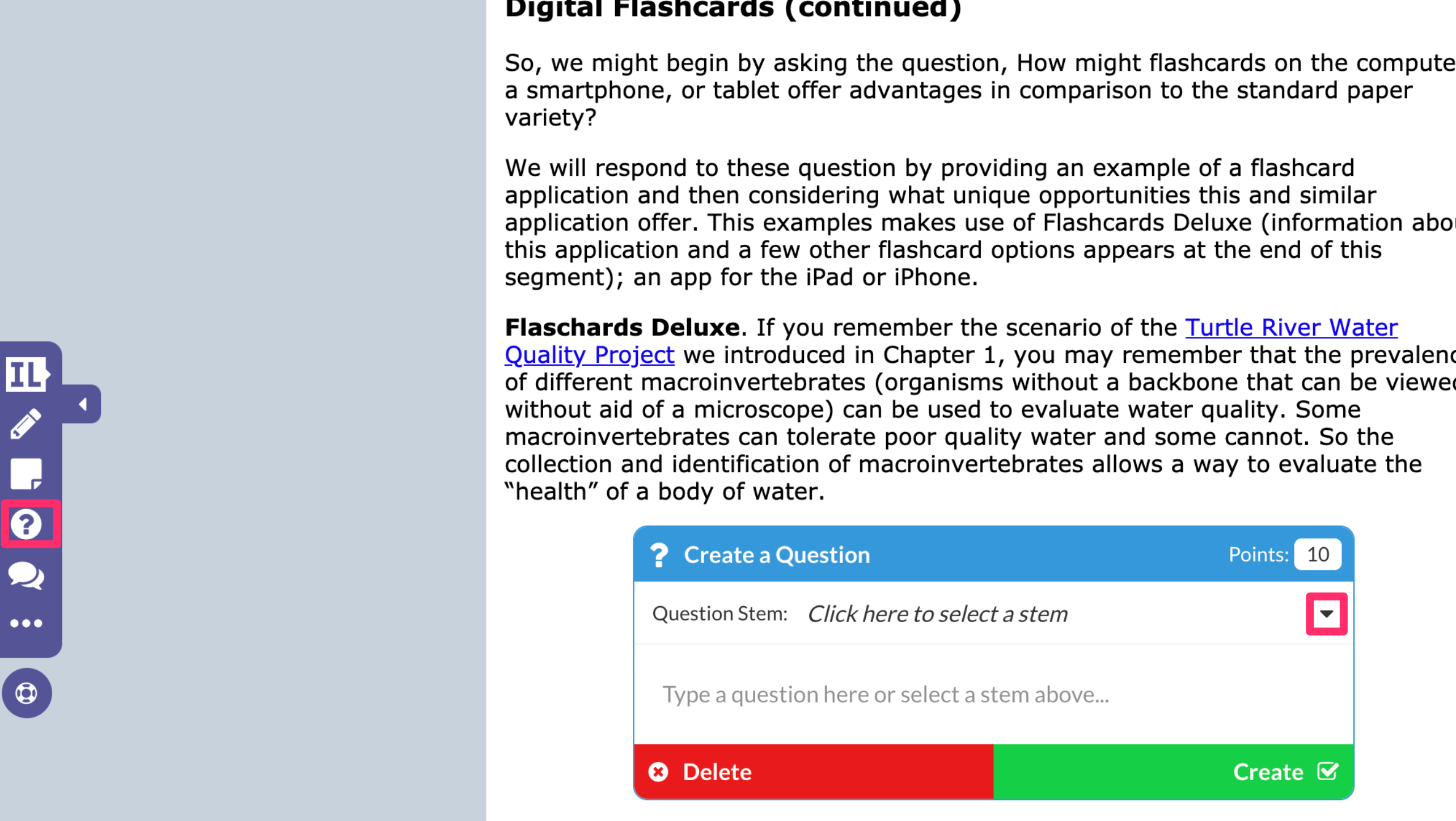
Insert Learning is the service I recommend for educators interested in layering elements (comments, links, questions, discussion prompts) on online web pages to create learning resources. I have generated a couple of video tutorials you are welcome to explore. In an effort to improve the efficiency of educators adding questions to online content, Insert Learning has added question stems that can be simply selected and edited if necessary.
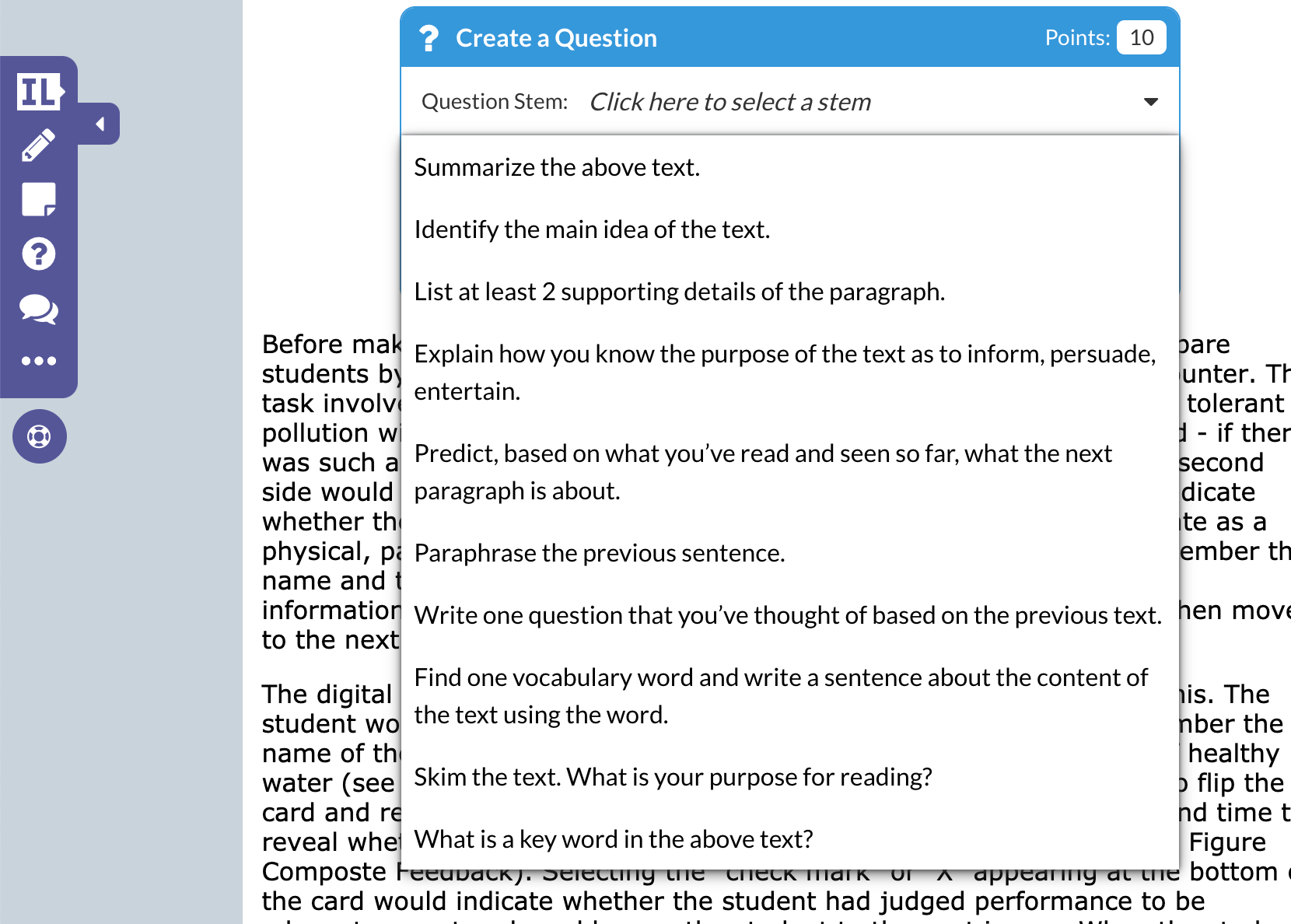
The following two images show the Insert Learning Toolset and an inserted question. The red boxes indicate the selection of the question tool (left) and within the blank inserted question dropdown menu icon that reveals the question stems (second image).
Insert Learning describes these stems as “text-independent” and “non-googleable”. I agree with these descriptions, but I think question stems are more useful if more specific. I understand the effort of Insert Learning to suggest educators consider the value of question stems, but either Insert Learning needs to go further in suggesting useful stems or educators should look elsewhere to become familiar with the use of stems and to find examples. Just Google question stems.
Here are the types of stems I recommend:
Do you agree or disagree with ………..? Support your answer.
Give an example of ……….
What is the difference between …… and ……
How does …. effect ….?
How does …. tie in with what we learned before?
These stems are not “text-independent”, but I would suggest they are more useful in facilitating productive cognitive activity.
Many are quick to criticize the limitations and the evils of social media, but continue to add their content to the same “services” they criticize. The reason tends to be that this is where the folks they want to interact with are. This problem is called the network effect. It becomes a circular problem – you don’t join a network because your friends aren’t there and your friends don’t join because you aren’t there. Make the first move.
Make the commitment to spend some time on a different service even if it means cross-posting comments. My suggestion for an alternative to Facebook would be wt.social. WT.Social was started by Jimmy Wales the developer of wikipedia. It is based on friends and what are called subwikis. Think of a subwiki as a topic or interest group. You follow people and participate in subwikis. This produces a feed that resembles your newsfeed in Facebook. Bring a few friends.
Wt.social is supported by contributions rather than ads. If you like the experience, commit a few dollars to keep it going.
I have been writing about services for annotating online web content and video for at least five years. now. I think of what these services allow users to do as layering – adding annotations of various types on top of existing resources in a way that does not actually modify the source. I keep finding new implementations of this approach. the latest is Speculative Annotation.
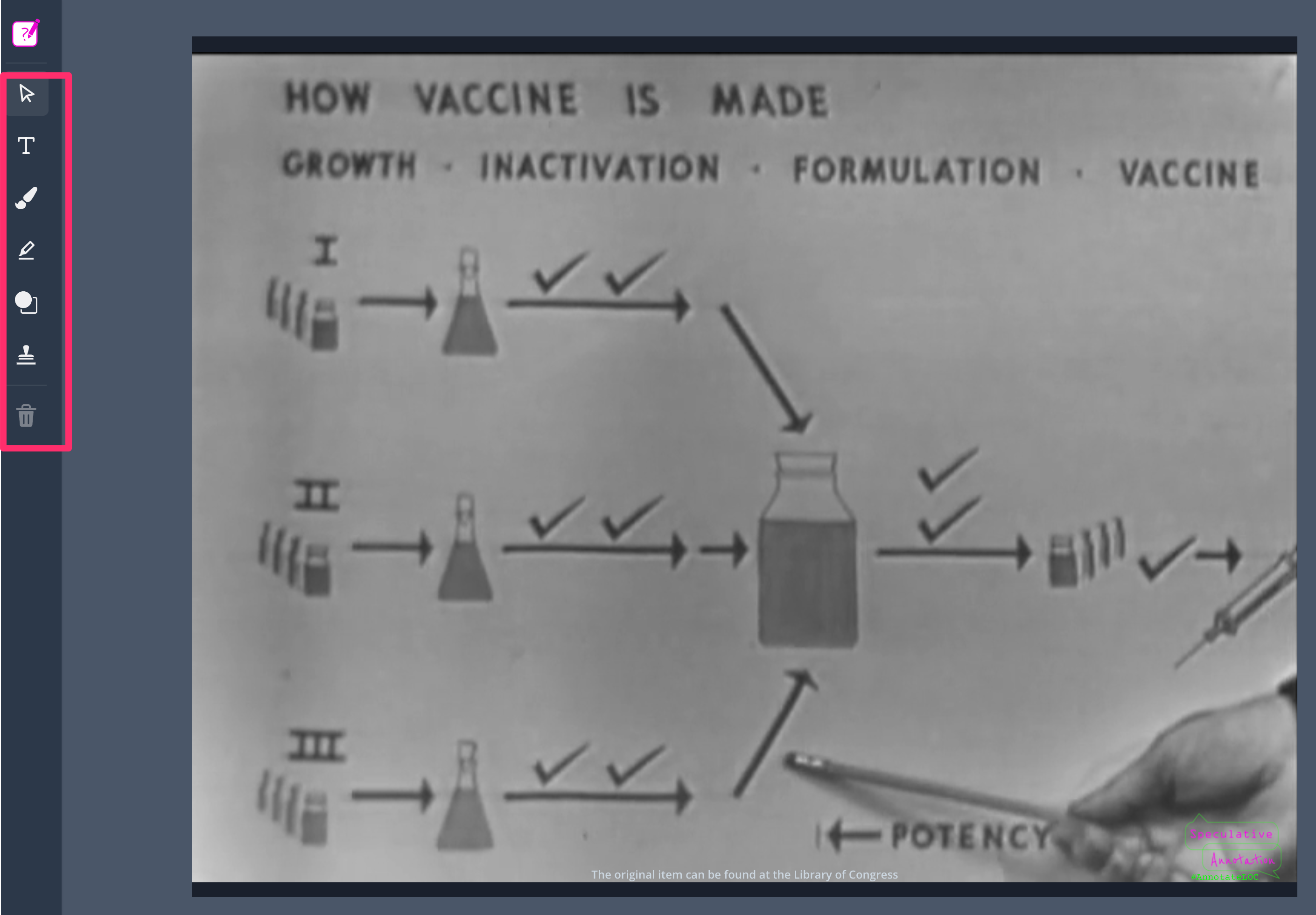
Speculative Annotation is a dynamic website, presenting items from the Library’s collections for students, teachers, and other users to annotate through captions, drawings, and other types of markmaking.
The site allows K12 students to annotate a variety of images and text from the Library of Congress collection and to see annotations offered by Library of Congress staff.
I thought the following image would make a good example. The annotation tools are shown within the red box.
The secret of success and longevity among social media wannabees is to find a niche and get big. This approach has proven so successful because of the network effect which explains that the value of a social service increases as a function of the number of others in the network. This is often explained using telephones. As more and more individuals own a phone, the opportunities to use your phone grows and this is true for anyone else in your phone network. Your phone network becomes more valuable as others join. The dark side of the network effect when it comes to technology is that even when superior technologies may become available, it is difficult to attract individuals using a competing network because you cannot take the network of individuals you have joined with you. If you are interested in innovation in social media, the network effect can retard progress.
The proposed ACCESS act (EFF description) is intended to increase the likelihood of innovation and to deal with other negative consequences of massive social media companies that have trapped so many in their networks. The act’s solution is to require some level of interoperability among competing networks. Often this is explained again using the requirements of phone companies. If you decide that AT&T better suits your needs than Verizon, you can change companies and continue to use your same phone number to call the same individuals you called when using your original carrier. What if something similar would work with WT:Social and Facebook? What if your data and connections to your friends continued if you left Facebook and moved your hosting service to WT.Social? What if it were possible to maintain an independent list of friends and their social media platform of choice and posts you generated were sent to these platforms pretty much as email “posts” can be sent to different email platforms? Companies would then have to compete based on the qualities of their service rather than how many members they had collected.
Posted inUncategorized|Comments Off on Find a niche and get big fast
We use cookies to ensure that we give you the best experience on our website. If you continue to use this site we will assume that you are happy with it.
You can revoke your consent any time using the Revoke consent button.




You must be logged in to post a comment.