Old tractors and new tech

I grew up on an Iowa farm and even for the 1960s I spent a lot of time on what were old tractors for that time. My dad made due with old John Deeres – an A, B, and a G. It also wasn’t just the tractors. I cultivated corn and beans with a two-row cultivator using the John Deere B. Other farmers used much larger tractors and could cultivate many more rows with one pass through the field.

The story of old tractors surfaced just this past week. When I left the farm in the late 1960s, I really had no further participation in farming. So the reference in news stories to older John Deer tractors caught my attention. Things have evidently been tough in agriculture since Trump got into the trade war with China. Farmers buy new equipment when they make money and use what they have when crop prices are low. With the depreciation on their equipment as a tax write off, this is the way to keep your taxable income low. However, what was being described in these articles was about something different. New tractors are incredibly expensive AND are so computerized (like modern cars) that farmers cannot really do their own repairs. Farmers have plenty of time in the offseason to work on their equipment and many are skilled at repairing equipment. With a prolonged downturn in crop costs, repairing your own equipment was another survival strategy. This was the emphasis of the articles I have noticed. One of the initial of these articles came from my Minnesota Paper which makes some sense, but other papers have been telling the same story.

One of the interesting angles on this story has been the similarity to the lack of repairability of most of the devices we use now. My original Apple II+ allowed you access to the innards and had slots you could use to add cards that added functionality. You connected your own disk drive or drives with controller cards. One of the first cards I added gave me access to lower case text.

My early Mac Pro (it looked very much like the present cheese grater) had a large door on the side that could be opened to add additional drives and other upgrades). I added a second drive and added more RAM. Early phones allowed you to change the battery.

The slim style of phones and tablets makes them difficult to work with. Laptops are slim as well, but this is less important and it would seem reasonable to at least allow users to put in a new battery.


Loading

Posted in Uncategorized | Comments Off on Old tractors and new tech

WordPress Pages and Plugins

Platforms such as WordPress and Blogger are associated with blogging, but are much more flexible and can be the basis for an entire online presence. WordPress offers an alternative to the sequential display of posts (blogging) called pages and plugins provide the opportunity to expand the potential of posts or plugins.

A feature I have not used in any of my WordPress installs involves ways to display photos. I tend to make use of Flickr and Google Photos to share photos and to explore possible applications of photography in the classroom. I often limit my exploration not understanding that others may not want to invest in the variety of platforms that I use. Individual images are easy enough to include in blog posts and many suggest that some image in most posts is a way to encourage frequent visits (e.g., my travel blog). Just for the sake of exploration, I have been experimenting with free options for adding photo collections to a WordPress site.

Here is a gallery page created on a WordPress page using the NextGen plugin. The number of images could be much larger than my example. The individual thumbnails expand to show a full-size image. You can explore this gallery using this link.

Loading

Posted in Uncategorized | Tagged , , | Comments Off on WordPress Pages and Plugins

Weak link

Since the election of 2016 interested the general public in “fake news”, efforts to combat misleading content have been an issue for educators. Somehow, it was assumed that educators should prepare learners in a way that would take care of the problem. A new “literacy” skill was proposed as the antidote. Digital literacy involved skills that encouraged readers to question the legitimacy of a source and encouraged readers to read laterally (cross-check statements that raised red flags).

Because digital literacy was associated with technology by so many, my wife and I have written about the suggested issues and instructional tactics in our textbook for future teachers. My background studying such issues as why students can learn scientific concepts in school and ignore them when involved with situations to which these concepts might actually apply led me to add a caveat to what were widely circulated suggestions for how to prepare learners not to be taken in by “fake” news. Simply put, we are quite capable of putting aside valid information that challenges what we want to believe. Changing personally developed ways of understanding the world (concept change) is not easy. When it comes to being influenced by facts, we are often the weak link.

As the issues of what is fake news and what needs to change about Google, Facebook, and other online services that take our personal preferences into account and feed us information accordingly and even knowingly circulate known falsehoods from politicians, others are taking the same position on what will be necessary to better educate the public on contentious issues. This article from Political Psychology explains my position in much greater detail complete with references if you are interested.

More and more I have come to accept the position that the only way to improve the effectiveness of online experiences for actually educating people is for participants to push back when encountering inaccurate information. Flawed arguments must be challenged. Yes, some see this as encouraging the lack of civility already widely present online. I don’t agree. Many of the inappropriate memes and posts I see online are not really part of discussions. Inappropriate content is often a way to gain attention from like-minded folks because hate and emotion are what gets you noticed and what gets you noticed lead to the likes and shares that social media platforms reward. Understanding why hate and fear work so well online is important. Emotions gain attention and the online platforms have the opportunity to offer more ads and make more revenue when content is liked and shared. Again, we are the weak link in perpetuating and elevating this type of content.

I prefer to think in terms of processes such as debate and the publishing processes of science as a way to think about how facts and sound thinking are elevated. When scientists publish, they often call into question the flawed arguments, methodology, and models that exist. The idea is to establish these weaknesses as a basis for a more improved understanding and the acceptable of superior ideas. We don’t call each other names or post inappropriate images to attack positions we feel are flawed or inaccurate. We point to limitations in existing positions and offer our own data as proof of a superior way of thinking and acting.

I doubt the success of the scientific method will be influential in changing the behavior of trolls and politicians. When you can’t argue the facts, you must resort to something else. However, I see no alternative to direct confrontation if we collectively want to move ahead. Debate, argumentation, the scientific method, or whatever you want to call it accepts the reality of differences of opinion and what it takes to pursue truth and logic. So, I will support your efforts to challenge positions different from your own as long as you do so with logic and facts and do so with a focus on the issue and not the individual you disagree with. People being people this will not solve the problems of online misbehavior, but refusing to participate will only lead us down a destructive path.

The reference I provide above may not be available to some without institutional access, here is a blog post with a similar argument.

Loading

Posted in Uncategorized | Comments Off on Weak link

Comment from Sal Kahn

I have followed Sal Kahn and the Kahn Academy since Sal first offered his TED talk. My interest was in his efforts to offer a practical way to implement an individualized mastery learning system. This recent comment from Kahn reiterates his position that individual progress systems are not a way to eliminate the role of the educator as is sometimes claimed. It is the combination of the carefully mapped series of learning tasks and the data collection system that allows the educator to identify students who are struggling and exactly where they are stuck – personalized progress and personalized help.

Loading

Posted in Uncategorized | Comments Off on Comment from Sal Kahn

Photo Ark

Watching CBS Sunday Morning is the start of our Sunday morning routine. The news magazine offers a wide variety of stories with something for pretty much everyone. This morning one of the program’s spots brought attention to the work of National Geographic photographer Joel Sartore and his Photo Ark project. Sartore photographs the endangered species of the world and offers his work online and in photo books that benefit preservation. The feature had nothing to do with the Australian wildfires and the potentially permanent damage to endangered species living in the outback, but in listening to Sartore it was impossible not to consider how his concerns regarding climate change are being realized as he spoke.

The Photo Ark project and web site even offers a section devoted to providing resources to classroom teachers. These resources include lesson ideas and plenty of stunning photographs.

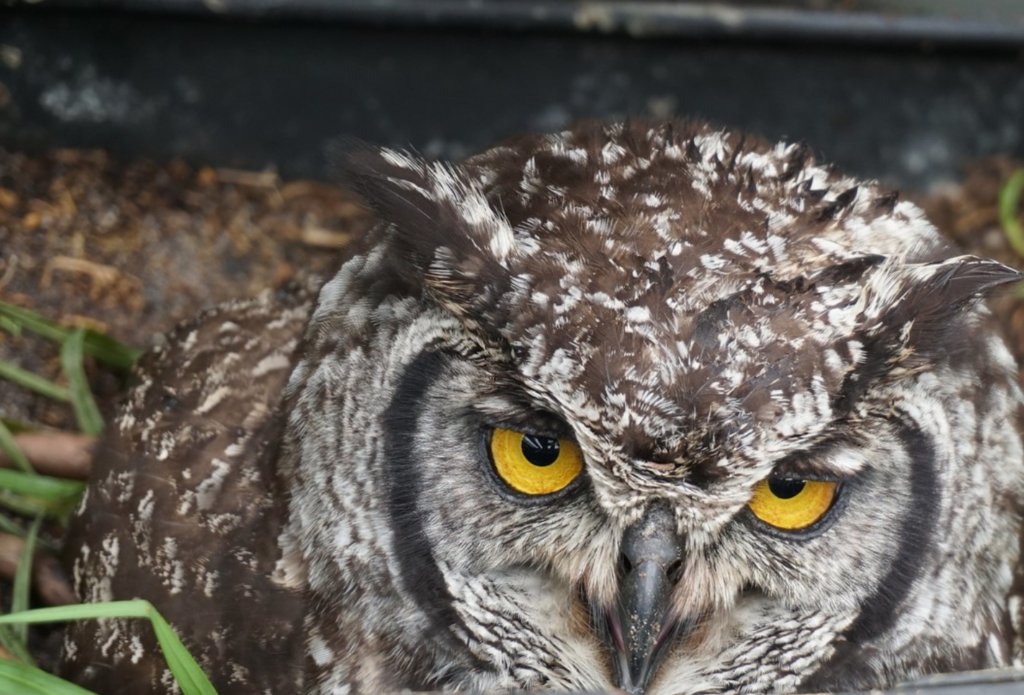
Photography can be a great vehicle for appreciating wildlife. This is one of my favorite photos taken during a recent trip allowing us to spend time in southern Africa. This bird is an eagle owl and the result of lucky photo opportunity. I have attempted to generate a collection of wildlife photographs from this trip I thought some educators might find useful. These photos identify the bird or animal, shared with a Creative Commons designation, and are attached with links to sources providing information about the species.

Loading

Posted in Uncategorized | Tagged | Comments Off on Photo Ark

STEM as vaporware

This essay from Wired addresses the educational preoccupation with STEM and concludes it is vaporware. The term vaporware in my experience describes promised software that actually never actually ships. The essay offers a claim for the origin of STEM education which was new to me and takes the position that the hodgepodge of content areas offer no meaningful cohesion. One ends up with the perspective that STEM is basically a marketing ploy pushing some vague position on what content areas are necessary for national competitiveness.

Loading

Posted in Uncategorized | Comments Off on STEM as vaporware