
Wikiversity

I encountered this resource by accident, but thought some who follow this blog might find it useful. Wikiversity is a side project of the Wikipedia foundation and is an attempt to organize OER resources appropriate for higher education.
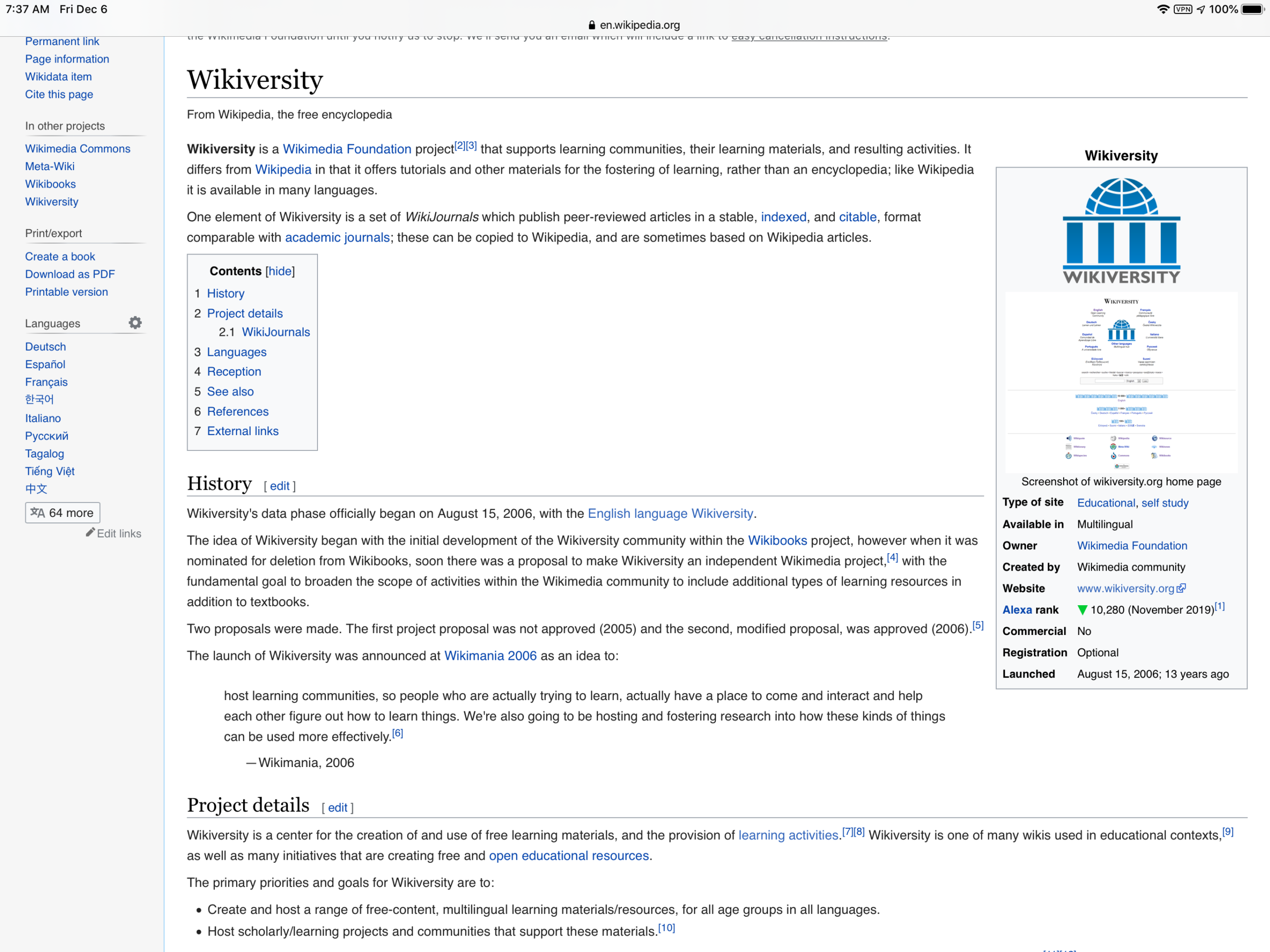
The link I provide takes you to an wiki entry describing the history of wikiversity and the categories of resources provided.

I must admit to having mixed feelings about OER resources and the multiple efforts to organize them. Regarding the organization issue I remember a discussion I had after a conference presentation with the Dept. of Education official announcing the OER effort association with the Office of Educational Technology. My suggestion was based on my experience with similar efforts (e.g., MERLOT) that had not impressed me. My suggestion was that instead of duplicating existing efforts, the federal edtech people invest money they had available in grants to content developers arguing that what was needed was a focus on the content and not another delivery system. I guess this made no sense, but I would argue that most of you probably have never used an content resource provided through this effort.

The related issue I have is that quality work should be compensated. Unless there is a way to compensate content developers, I just don’t see the hodge-podge of OER resources ever offering a serious, systematic challenge to the content generated by companies focused on educational content.

Loading

Posted in Uncategorized | Comments Off on Wikiversity

Phone camera skills

The general access to a cellphone camera makes it realistic to consider ways in which photography skills can contribute to learning. Just having the tool does not mean that the individual can use it effectively or even recognize when photography might present an opportunity. This guide for cellphone photography skills might be a useful resource.

For example, here is a section on macro-photography.

Loading

Posted in Uncategorized | Tagged | Comments Off on Phone camera skills

Tracking Trackers

The companies collecting your personal information and the companies attempting to protect you are in an arms race. It is easy enough to identify cookies set by the sites you visit, but are the cookies really the responsibility of what the cookie name might apply? This site from nextdns identifies cookies that are inappropriately labeled. Enter the URL for sites you visit and the service will search for misleading cookies.

Loading

Posted in Uncategorized | Comments Off on Tracking Trackers

The network effect

The network effect proposes that the value of goods or a service increases as more individuals use the goods or make use of the service. The network effect is the challenge to a new service that is similar to a large existing service. This can be the case even when the new service has the potential to be superior to the existing service. When a service leverages the contributions of those who use the service, the network effect is particularly powerful. The infrastructure provided by wt:social and effort to avoid surveillance capitalism may not be sufficient to overcome the user base and the content generated by these users on Facebook. This is why WT:Social struggles to compete with Facebook and new users of WT:Social struggle to attract participation. 

Loading

Posted in Uncategorized | Comments Off on The network effect

The Cramm

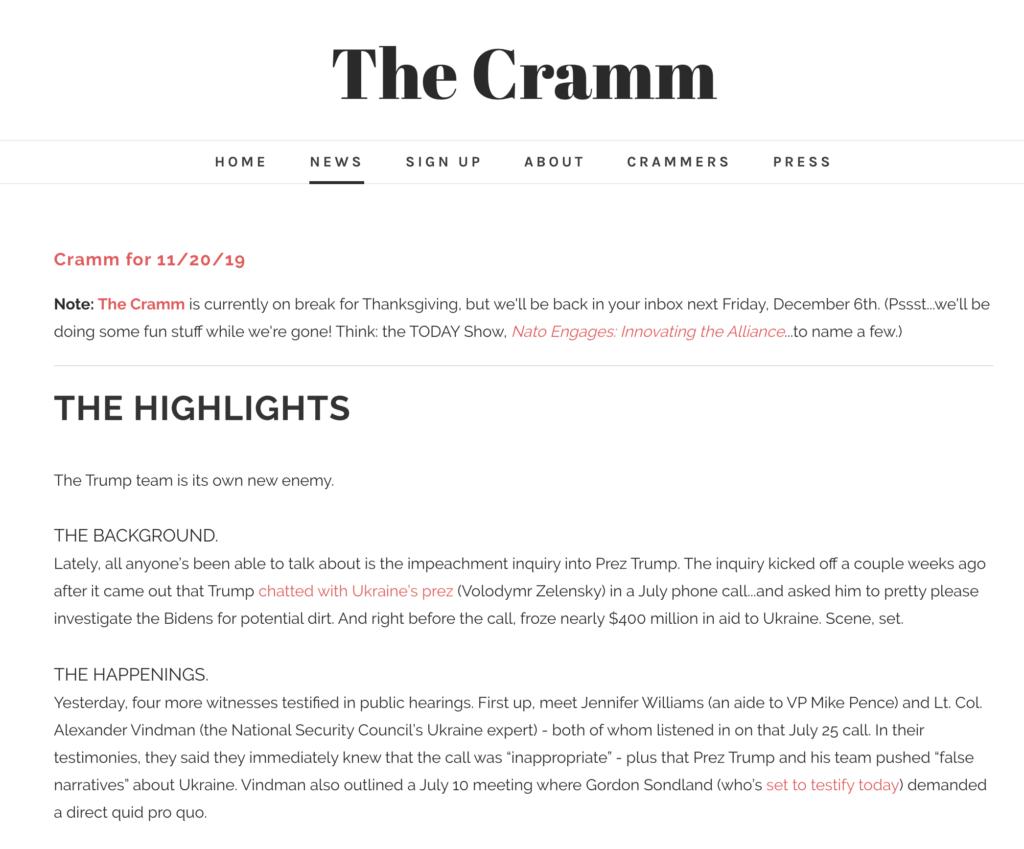
I watched an interview with the fifteen-year-old editor of The Cramm on today’s Today Show. Her idea is to rewrite news stories for younger readers. Not a bad idea and a great resource. Readers can visit the web site or receive a newsletter. The resource has been gone international and the founder offers the opportunity for participation through local social media.

NPR story on The Cramm and its founder.

Loading

Posted in Uncategorized | Comments Off on The Cramm

Ken Burns in the classroom

PBS LearningMedia has created an online access point for educational materials based on Ken Burn’s documentaries and media resources. The free resources for middle and secondary classrooms consist of video segments (250), images, documents and lesson ideas aligned with standards. I own the Ken Burns Jazz and Blues videos and Burns has a gift for contextualizing a topic (e.g., music, war, baseball, dust bowl) that offers great material for history and social studies teachers. Assignments can even be shared to Google classroom.

A sample from the environmental catastrophe of the dust bowl. Video segment with related study guide.

Loading

Posted in Uncategorized | Comments Off on Ken Burns in the classroom