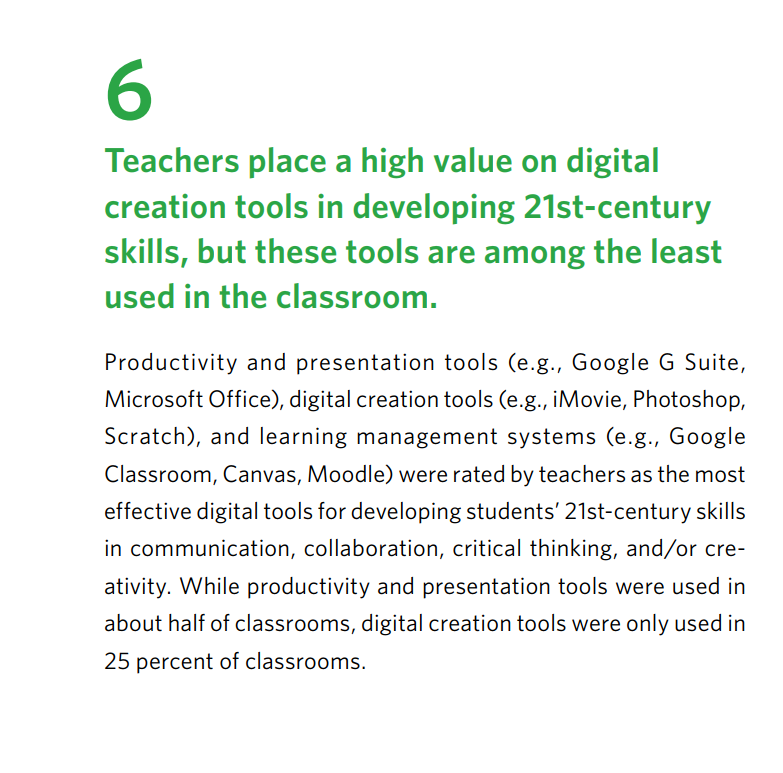
Common Sense has released its annual report on K-12 education and there is plenty in this report for those interested in technology integration. Concerns listed include issues of digital citizenship, equitable access for the use of technology from home. helpful professional development, and technology as a distraction in the classroom.
One specific issue that caught my attention was teacher concern for their opportunity to allow students to use technology in what were described as creative ways.
Posted inUncategorized|Comments Off on Teachers fail to engage students with creativity tools
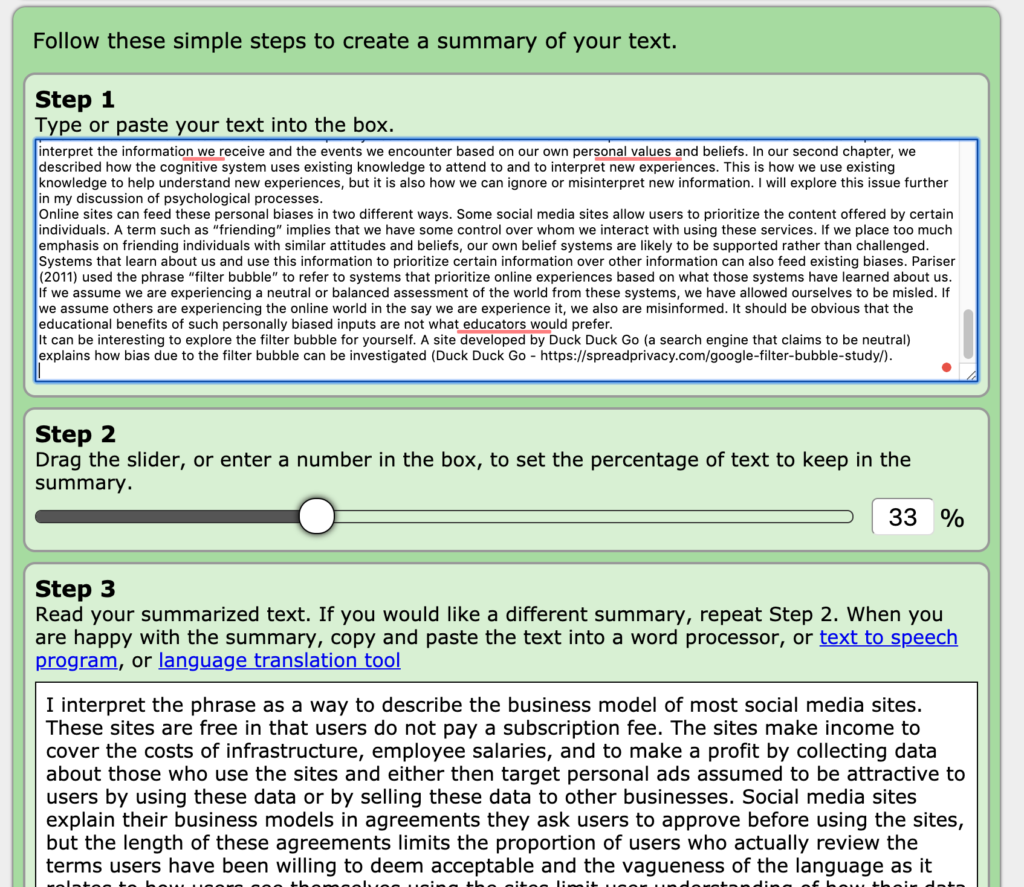
Leslie Fisher recently posted a link to a text compactor. She described the site as a way to simplify text.
I just completed writing a piece on the causes of adolescent screen time so I thought I would give it a try. I first attempted to have the compactor reduce my 4500-word project and that proved to be beyond the capacity of the site. I recently posted a section of this same project that focused on surveillance capitalism which was 1100 or so words long as a blog post so I tried this shorter piece. At the bottom of this post, the summary service generated is included (reduced to 33% of the original length).
Shortened summary.
I interpret the phrase as a way to describe the business model of most social media sites. These sites are free in that users do not pay a subscription fee. The sites make income to cover the costs of infrastructure, employee salaries, and to make a profit by collecting data about those who use the sites and either then target personal ads assumed to be attractive to users by using these data or by selling these data to other businesses. Social media sites explain their business models in agreements they ask users to approve before using the sites, but the length of these agreements limits the proportion of users who actually review the terms users have been willing to deem acceptable and the vagueness of the language as it relates to how users see themselves using the sites limit user understanding of how their data are being used. Zuboff, 2019).
Much of the negative connotation associated with surveillance capitalism is based on the techniques some online companies use to collect user information to improve the appeal of their ads and to increase of the value of personal information these companies can sell as a resource.
To collect as much and as varied data as are possible, sites seek to encourage heavy and exclusive use. Put another way, to generate a business advantage, sites are motivated to use strategies that generate heavy use. Content that offers these stimuli, whether prioritized by online services or highlighted by any of us as content creators or at least by any of us who share such content, attracts viewers and increases the collection of information about these users that is a byproduct of their online attention. I will explore this issue further in my discussion of psychological processes.
Online sites can feed these personal biases in two different ways. Some social media sites allow users to prioritize the content offered by certain individuals. Systems that learn about us and use this information to prioritize certain information over other information can also feed existing biases. A site developed by Duck Duck Go (a search engine that claims to be neutral) explains how bias due to the filter bubble can be investigated (Duck Duck Go – https://spreadprivacy.com/google-filter-bubble-study/).
Posted inUncategorized|Comments Off on Text Compactor
Flickr offers users, even users of the free version, to offer their photos for use under creative commons licenses. This video explains how to apply these licenses and how to search for Flickr photos offered under a creative commons license.
Like many Americans, I am reading the Mueller report. I prefer to highlight while I read and I was originally frustrated in finding a way to do this. I could locate several sources for a pdf, but most seemed to be protected in a way that do did not allow me to use my pdf highlighting tools.
My wife saw a recommendation for a searchable pdf. Evidently, some of the first pdfs released did not allow searching and to me this sounded at the core to be based on the same problem I was encountering. CNN is providing a searchable pdf of the report. I downloaded this version and found that the tool I use to highlight and annotate on my Mac (Skim) did work.
Posted inUncategorized|Comments Off on Highlight the Mueller report
There is growing discontent with Twitter and Facebook, but many still use these services to access the news. Using these social services is going to provide a slanted view of the world and also blends together legitimate and sketchy information sources. RSS offers an alternative that you control.
I have written about RSS many times before. Designating the sources you want to follow using an RSS reader, allows you control over the content you want to review. Certainly, this might end up feeding your own biases, but following reputable news outlets would likely offer an improvement for most individuals. This was the argument made in this Gizmodo article suggesting those who rely on recommendations through Twitter (and Facebook) improve the quality of the content they view.
I have long used RSS (Feedly) to follow bloggers I respect and I had not considered adding news feeds to the content I consider on a regular basis. A question I know concerns new RSS users is how they should discover quality sources. My response for news feeds is far easier to implement than how I recommend users get started following blogs. It easy enough to find lists of the RSS feeds for the major news outlets. If this idea appeals to you, I would suggest a specific list to get your started.
Posted inUncategorized|Taggedrss|Comments Off on Get your news through RSS
Social media has received severe criticism for the past several years. There were the revelations that Facebook was manipulated into spreading false information about Hillary Clinton and may have influenced the election of 2016. This seemed to start greater scrutiny of major online services leading to detailed information about how personal information was being collected and sold and how many services use behavioral techniques to increase heavy use and the sharing of more and more information. These findings have been widely distributed through every news outlet.
You might think that this would discourage users. The problem is that online services have become such a large part of our daily lives and have near universal acceptance. Despite the assumed frustration survey data collected by the PEW research center has found no decline in use. The charts in this report go back to 2012 and show use has leveled off since 2016, but certainly are not declining. Simply put – people see no options if they want to share with others. This is frequently described as the “network effect”. Being where everyone else is seems to be another example of too big to fail.
No matter how you view major social media platforms, the lack of meaningful competition is an important issue. Without competition, there is little incentive for innovation or responsible service.
Posted inUncategorized|Comments Off on There is no backlash
We use cookies to ensure that we give you the best experience on our website. If you continue to use this site we will assume that you are happy with it.
You can revoke your consent any time using the Revoke consent button.



You must be logged in to post a comment.