Writing does not always come easy. I think I have found a song to play when the words do not flow.
Writing does not always come easy. I think I have found a song to play when the words do not flow.
I don’t really mean the title as snarky or mean-spirited – it really is just a way to describe a practice as free market capitalism.
I have a measure of sympathy for the present reaction to the big tech companies – Facebook, Google, Apple, etc. They have gotten themselves in trouble (or at least should have) for their business practices. However, they are all doing what they need to do to make money. What I find offensive is how they defend themselves in explaining their business practices. They should just say – we need to make money and we did what we had to. Perhaps they could have done a little less of what they did, but stockholders want more and not less.
Here is how I see the various players:
Apple – makes money on hardware and selling stuff (music, apps). Apple is not good at social (I am not counting person to person tools such as Facetime here). The business plan includes overpriced hardware and a closed system that tries to keep you within the Apple environment. Rather than explaining that over pricing and a closed system are to boost profits, Apple has taken to position their tactics as privacy oriented. Of course, this is true, but Apple users still want to use the services that have privacy concerns and Apple cannot provide these services.
Google – the company promoting the “don’t be evil mantra” makes money most by providing a superior ad experience. The experience is better for the consumer because they see ads targeted to their personal interests and for those who purchase ads because their money on ads is spent in a better way. Of course, to provide this targeted service, Google must harvest information about users and their online activity. Google supports a more open experience and products such as Chrome have become the basis for hardware that other providers use to offer lower-cost products.
Facebook – Facebook has a similar business model to Google, but has found itself in trouble because it harvests personal information beyond user experiences within Facebook (now to change if I understand the newest proposals) and allows services to use information obtained within Facebook outside of Facebook (e.g., Cambridge Analytica). Of course, Facebook users do not pay for Facebook activities by subscribing for a fee and the power of the “free” service has made Facebook popular with users.
So, I can find fault and benefit in the behavior of all of these companies. I can also see how these companies conveniently focus on the faults of the other companies when promoting themselves to the public. The information collectors may end up subject to federal regulation and the adjustments they will have to make will reduce their profits and the benefits to stockholders (probably why their market value has been decreasing). Apple will likely continue to overcharge for their hardware until enough consumers find they can do what they want to do with equipment running Chrome and Windows.
If you are a loyal Facebook user, but concerned about the sharing of your data, you might find this FireFox extension (Facebook Container). It works only with FireFox so it will not be helpful with Chrome, Safari, etc.
you will continue to be able to use Facebook normally. Facebook can continue to deliver their service to you and send you advertising. The difference is that it will be much harder for Facebook to use your activity collected off Facebook to send you ads and other targeted messages.
So, this addition will fix only some of the identity issues with Facebook. I understand the targeted ad business model. The idea is that you will find targeted ads more helpful than random ads. This makes sense, but it also means you are vulnerable to “being played” based on your values and circumstances. I am accepting of ads because I recognize that ads pay the bills and I am getting access to a free tech service for viewing ads (same as television, radio, etc.). I find the cross-site collection of my data a greater concern. Other activities I engage in are within Facebook’s need to know.
Installing this tool on FireFox will not provide complete protection, but I have always used multiple browsers in an effort to make tracking my behavior a little more challenging. This may seem naive, but I think it provides service providers an incomplete picture of my activity.
The current frustration with Twitter and Facebook have causes many to wish they had options. Options do exist and I can direct you to them, but you are likely to be frustrated by the lack of action you presently find on Facebook and Twitter. The major problem a new product faces as Facebook or Twitter options is not the quality of the technology, but the fact that fellow users will not be there if they make the switch. POSSE is a way to increase the likely options will become more desirable.
POSSE – publish on your own site, syndicate everywhere. This is not my concept, I borrowed it. It usually means publish from your own server, but also on existing mainstream outlets. What I am proposing here is a similar idea – publish on Twitter and Facebook, but add the same content to alternatives. If this became a more common strategy, it would eventually more feasible to just make the switch if desired.
At present, I would recommend Mastodon as a Twitter alternative and Diaspora as an alternative to Facebook. Both Mastodon and Diaspora use a different model from Twitter and Facebook – they federate or loosely link multiple versions of the basic service. You join one of these services. You have immediate access to those in your own “instance”, but you can view posts from all instances and can interact with those from other instances. For example, I belong to diasp.org and mastodon.social.
You will find that Mastodon and Diaspora are not supported by ads or by selling your personal information. You are encouraged, but not required to contribute. I have sent a few bucks to each organization. These organizations are growing. I tried Diaspora several years ago and still have an account on one of the original servers. I was surprised to see how much more active the present version is.
While these new services allow you to avoid ads and data security issues, they still work in the manner that will see mostly what your “friends” offer unless you make the effort to see the group feed.
It is not my intention to destroy Twitter or Facebook. I do not totally blame the present state of social media on purposeful actions by these companies. I do feel that increasing the popularity of alternatives will encourage existing services to be more assertive in addressing problems and spreading participants across several services will reduce the impact of everyone being accessible through the same service.
I have this sense that older techies are frustrated with what the Internet has become and younger folks just shrug their shoulders and say “meh”. This is a case where always having the Internet is a liability. Experiencing the Internet only after it was relatively well formed does not provide experience of what the originators envisioned and what those of us who wrote html when it was first possible to operate a web server and offer your own web content imagined. Yes, we really did run our own servers and I think I thought things would get s little easier and everyone with a computer would soon do the same thing.
Things changed. Running your own server became more challinging because of hackers. Free services made posting your own content incredibly easy as long as you are fine with giving your content to a service and having the service benefit from ads and harvesting your and your viewers’ personal information.
Perhaps I have found a way to explain the vibe (does anyone still say that) of the early days. John Perry Barlow passed away in February. Barlow was an Internet pi0neer and word man for the Grateful Dead. Back in the day, tech folks were also something else as well. Barlow’s facility in expressing himself enabled him to author “The Declaration of Independence of Cyberspace.’ I encourage to read or listen (the audio) is toward the of the content from the preceding link. Yes, the declaration was naive. However, we are presently on such a different and negative path.
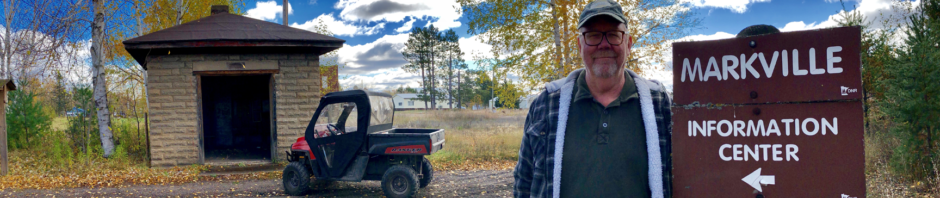
Back in MN for a lunch meeting with the advisory board.
I had to explain that YouTube would no longer allow me to collect ad revenue because I did not have enough subscribers.
They suggested I try being less boring.

Vox interview of Left Behind: Decline and Rage in Rural America author.
This sounds like an interesting read and similar to Hillbilly Elegy. Even understanding this perspective does not change my perspective.This is my youth without the anger. Perhaps that comes with age and frustration So many of the present policies hurt these angry people. Don’t they understand?
I had a similar reaction to similar frustrations after spending considerable time on Native American reservations. There is the same combination of commitment to a community and an idealized way of life despite the present toxic circumstances. A graduate program in my department was originally focused on what we described as “rural and reservation” mental health issues. Understanding never led me to see any solutions
The perspective explains why “Make America Great Again” plays so well, but the mantra is pretty much a fantasy interpretation of the past and the present.
I did purchase the book, but my list of unread books is long and it will take some time to the book so I can process at a deeper level
“The measure would require public and charter schools to pass an “academic balance” policy prohibiting school employees from having students “express specified social or political viewpoints” for academic credit or extracurricular participation.”
“The policy would mandate that students have “access to a broad range of serious opinions pertaining to the subjects of study” and prohibit discrimination based on a student’s personal beliefs.”
““It is absolutely imperative … that we do not let our public education system fall into what is happening to the rest of our society, which is so much anger,” Nelson said.”
I have probably mentioned before that things cost a lot in Kauai. I had pretty much assumed that this was the way it was going to be with the exception of COSTCO – a foot long hot dog on a soft bun and a soda for $1.50. I have learned that products you are known for are often overpriced. I have no idea what the going price is for coconuts, but I do know coffee. I have consumed coffee pretty much everywhere they speak English and a few places they don’t.
My wife knows the prices of things she buys at grocery stores and can recognize good deals even at expensive groceries. I know the price of brewed coffee. The coffee at one of my favorite coffee spots (Fresh Start Coffee Roasters) is $1.75 for a medium (25 cents for a self-poured refill). The Sparrow, one of the two coffee shops I can find on my own in Minneapolis, is $2.50 and I have always been afraid to ask for a refill because they will likely charge me the same for the second cup.
I understand that they grow coffee here and all that. They are probably very proud of their crops and status as the #1 coffee producer in the U.S. Where else would you grow coffee in the U.S.? Anyway, I pay $4 or so for coffee (straight) and since the price of a latte is about the same, I usually have a latte.
The exception is the Koala Mill Ice Cream and Coffee shop. This shop has what they describe as “Aloha Coffee Pricing”.


There would probably come a time if I spent enough months in Kauai that I cease to be fascinated by the physical beauty I can see and photograph just walking around. Here are a couple of examples from today’s trek back from the coffee shop.
This is the flower of the plumeria. I associate it with the flower leis most probably think of when thinking of Hawaii. I took almost this identical picture this morning with my phone and then came back this afternoon with my camera because I wanted an image with more pixels I might have printed. There were several trees just starting to flower and this one flower caught my attention because of the yellowish cast. It was a tough shot. I had to hold my camera over my head as far up as I could and shoot blind.

Here is the interesting thing to me about this plant. My understanding of trees and the various parts of trees suggest that in a given year, a tree opens leaves that generate the food (sugars) the tree needs through the process of photosynthesis. This sugar is used to accomplish the things a tree needs to accomplish – sustain existing structures, grow, and produce seeds of some type. The plumeria seems to accomplish all of these things, but in the wrong order. I guess this is considered winter here and the plumeria when we first arrived looked dead (for a region where everything else was green). Then a couple of leaves emerged and now the flowers. I assume the full foliage will emerge eventually. The work the tree is doing now all must be accomplished with the energy stored last season. I have no idea why this tree needs to make things so difficult.
Example 2 – note the strange coloration on this tree trunk – greens and oranges.

What is not really visible in this image is the more traditional bark that used to cover this trunk and still covers most of the rest of the tree. The tree seems to molt. I tend to think of a tree losing the bark in a complete circle of the circumference of the tree as fatal (girdling) because it exposes the cambium. This must not be what is happening in this case. This is a common tree along my path, but I have no idea what it is. It was the unusual colors that caught my attention.