Preparing for Finals

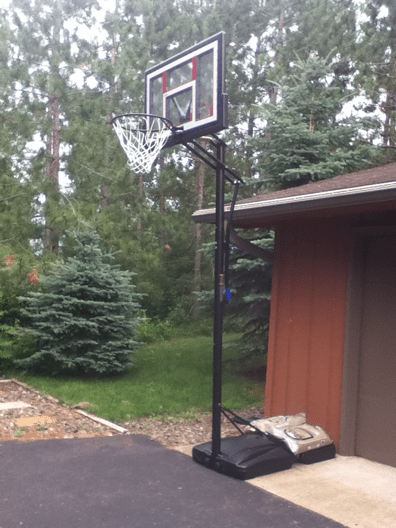
Finals being on Monday. I was heading to the coffee shop this before to have a cup before heading to my office to grade papers. I passed by University Park. Looks like they moved in some new equipment for the weekend. I see that the students will also be preparing for the challenges of next week.

Posted in Uncategorized | Comments Off on Preparing for Finals

North Dakota Way – By The Numbers

I have been employed in higher education most, but not all, of my working career. For a good part of this time, I have been a department administrator. As part of this job, I filed annual reports attempting to make the best case I could regarding the performance and needs of my department. I frequently used national data to comment on the salaries awarded to members of my department. I am used to making arguments based on numbers.

ND has enjoyed a good run relative to the general state of affairs in the nation. I attribute this to the foresight of the politicians of the state who had the wisdom to bring the rains, improve the value of the Canadian dollar, and position the state on top of vast oil reserves. I wish they would apply the same wisdom to supporting the higher education institutions of the state. The Governor has already announced that we in higher education should not expect as much from the state in the future. Since the oil is here for a while, I am guessing the politicians are anticipating a dry spell or a major disagreement with our neighbors to the North.

Anyway, I thought some pictures might be a concrete way to examine the state of the state relative to the state of the nation.

According to State Master, citizens of North Dakota rank near the middle of the country in average income and are in the bottom five (a good thing) when it comes to unemployment.

These data are less impressive than information summarizing the state’s recovery from the nation’s recent economic downturn (Bureau of Economic Analysis). If you look at the numbers, it appears that ND has grown more than any other state (at least 7.1 was the largest value I could find).

You may not follow the Chronicle of Higher Education. I am with you on this lack of interest, but the organization can be a good source for data on the national scene in higher education. The Chronicle offered a recent summary of faculty pay so I thought I would check out how UND was doing. I mean good times here, poor times elsewhere – perhaps UND was gaining some ground relative to what I remember from the days in which I charted this type of thing.

Hmm – far below the median. I guess this is the North Dakota Way the politicians are constantly touting.

Posted in Uncategorized | Comments Off on North Dakota Way – By The Numbers

Looking for passion in all the wrong places


I enjoy coffee shops a great deal. I like coffee and for some reason I like the kind of people who like to hang out in coffee shops.

We heard the story of a barista as told to a couple of film students (typical coffee shop people) in the Everything Cafe. After making this latte, the barista described his interest in all things coffee and indicated that he was leaving this shop in a couple of days. He had this idea for a new business related to coffee. I read a lot about young folks who are involved in business startups, but I can’t say I have really met such folks. Both the barista and the film students were into such opportuntiies.

The barista was going to start a coffee roasting startup patterned after a similar venture in San Francisco. Evidently, some businesses like to offer coffee to their employees as a perk (get it) and there is an opportunity for a roaster who will provide coffee beans each morning. I can understand this – I have a fine coffee maker at home and if this machine was in a business and available to employees it would be a nice benefit for some.

The barista said that all things coffee were his passion. I respect that. I do not know enough people who seem to have “a passion”. For too many, the interest seems to be self focused and involves little beyond self promotion. I think I value those individuals who do something well and do not depend on others to recognize this accomplishment.

So, I hope you begin your day with a fine cup of coffee and I hope you are then off to work that you find to be meaningful even if no one else notices.

Posted in Uncategorized | Comments Off on Looking for passion in all the wrong places

Life is game enough

Alt title – on education, games, gamers, and life

Games and the educational potential of games seem major interests for many of the faculty and students I know. These folks are ed tech types. This interest is somehow unique and not common among other groups of educators – the other professional circle I frequent. I must say my personal position is more aligned with the latter than the former perspective.

I get the “games are motivating” claim. At least this seems true for many. I can’t really claim I get interest in games. I think I have three versions of Call of Duty and have invested less than 5 hours in the entire collection. Perhaps it should be noted that boring is a personal reaction and not inherent in the activity.

I have read much of what Paul Gee has written about gaming. The name is likely familiar only if you are an advocate of learning from games. I find some of Gee’s observations to be interesting – it is gaming that bores me, not the analysis of why games fascinate others. It may be the analysis of what voluntarily engages people is of far greater value than the topic providing the opportunity for this analysis.

Consider the video embedded in the page that can be accessed via this link. I think it appropriate to give credit to other bloggers who make the effort to identify resources so I am not embedding the video here. This is Gee talking about gaming.

So, I propose we may learn from the gaming experience without having to be gamers. For example, a lesson from the video – gamers will read the manual when the game provides the background necessary to allow the manual to be understood.

Educational translation and application – students will read and process the book if they can identify the connection to relevant life experiences. I don’t translate Gee’s message to be find a relevant game. If learners do not have relevant life experiences or are not sufficiently motivated to recall relevant experiences, I don’t see games as the answer. At least for me, why heap boredom on top of boredom?

How about attempting to provide relevant life experiences? Simulations make sense to me. Simulations are substitutes for experiences that are impractical – dangerous, expensive, time-consuming. Sometimes personal experiences can be arranged and substitutes are not necessary. Often, life provides opportunities for observing, for capturing images and sounds, and for collecting data. History exists in the opportunity to discuss the past with grandparents. Biology lives in your parks and garden. Foreign languages are as close as a skype call to the right person. These are the situations we should consider when imagining uses for technology.

What about the book? When these observations and data are puzzling, it is time to read the book.
Posted in Uncategorized | Tagged | Comments Off on Life is game enough

Iowa Lutheran Winter Dartball League

I have an idea for a project, but I still need to decide which direction to take it. I generate ideas for curriculum-based projects intended to be used in K-12 classrooms. It always helps if I can provide an example of what a finished project would look like. Since I don’t have access to middle or high school students I must create these examples myself.

Anyway, I am thinking of an idea based on the use of old photographs in combination with the interview of an older relative. I will be conducting an interview of myself.

Here is the scanned photograph.

So, here is the dilemma. What skill area should be the focus of this example. I could turn this into a history project – what can we learn from photos as primary source documents. For example, do you view any evidence of gender bias in this image.

I am leaning toward creative writing – historical fiction with a humorous bent. I don’t have to make up Garrison Keillor’s Lake Wobegon. I lived on a nearby farm. Maybe I should model my effort after “A league of their own”. I think that will be it – the semi-true story of the Iowa Lutheran Winter Dartball League.

More on dartball – We are all part of history

Posted in Uncategorized | Comments Off on Iowa Lutheran Winter Dartball League

Locked!

This is a kind of a confession. I have done something twice in the past month that I have not done in the rest of my life. I find it somewhat disturbing. Perhaps talking about it will be helpful.

I left and locked my house early this morning and then started my truck and scraped the wind shield. Somewhere in this process, I cannot figure out where, I also locked my truck. I was standing in sub-zero weather locked out of my running truck and locked out of my house. The first time I did this my wife was driving down the street. She eventually came home. This time she is in Minneapolis and eventually will take a while longer.

I had such a great day planned. I was up early. I was headed to a coffee shop to write. My wife was not around which meant I could go to the coffee shop early and not deal with our different opinions regarding rising early on the weekend.

My office is within walking distance (my gloves are in the car) and I must carry two sets of keys which means I have a key to my office so I am now stuck in my office until my wife gets home this evening.

I wonder if this is an aging thing. If it is, it is going to become very inconvenient. Knowing something about the biological decline of aging I am trying to figure this out. Older people think more slowly. The one advantage we have is experience. Some people call this wisdom.

I know that locking yourself out of the house and car does not sound that wise. However, here is how I am going to spin it. Older people have an advantage when situations are complex and they can use past experience to match new situations. There is this kind of pattern recognition that allows us to act in what others perceive as an intelligent fashion. We don’t really figure things out based on our depth of understanding, we just remember what we did when we encountered a similar situation before. However, there appears to be a slight flaw in my pattern – I seem to be locking the door before I get in the vehicle and not afterwards.

Posted in Uncategorized | Comments Off on Locked!

Does it matter if you learn something or not

I am coming up on my first examination in Introduction to Psychology. I have developed this online study task which is intended to help students prepare for the examination. It makes use of online study questions. Study questions are hardly a novel idea, but I add a twist. I have developed a system in which students are given a target score and getting to this score is figured in as part of the course grade. The twist is that you advance toward this goal when you get questions correct and you lose ground when you are incorrect. It is a little more complicated that this, but for explanation purposes this is close enough. The idea is that if you are well prepared the goal can be achieved fairly quickly. If you are poorly prepared, you will find it difficult to get to the goal. The message is – if you are not prepared you should spend more time studying. The more you know, the faster the pace of advancement toward the goal.

My idea was to offer a way to evaluate and encourage preparation in a way that would allow everyone to earn this portion of their grade if they kept working. Points for spending time in proportion to the amount of time you need to spend. This is essentially an idea that captivated me in the 70s (mastery learning) – offer clear goals and allow students the flexibility necessary to reach the goals.

I now find myself arguing with some students about the trouble they are having. Despite my warnings, some failed to grasp the core idea. I think the problem here is that they end up losing points toward their grade unless they are willing to put in the time required to make progress toward the target score. No competition – just you and the goal score. Evidently a test you can walk away from even with a poor performance creates a different reaction. It is over and there is nothing more you can do. Why is a system that does not shut the door and offers the opportunity to keep trying a problem?


Posted in Uncategorized | Comments Off on Does it matter if you learn something or not

Unintended consequences

The university has decided to go green. Evidently, one significant area of waste is caused by faculty and students leaving the lights on when they leave offices and classrooms. To help those of us who are absent minded or unmotivated, the U has installed those automatic motion detectors in all rooms. For me, this has turned out to be another of those lessons in the unintended consequences of technological change.

My office – I actually did not need an automatic switch to turn my lights off. I prefer not to turn my lights on in the first place. I don’t like fluorescent lighting (another issue for another post) and use only a desk lamp and the light that comes through my window. This works great for my general reading and computer work. I think it does freak out people who come to the office to talk with me. I tend not to notice, but they may think it is kind of freaky to sit in the dark and discuss weighty issues.

Unintended consequences – the automatic light system ends up turning the lights on rather than turning them off. Now, to return to the state in which I do not waste energy I must come into my office and accept that the lights will come on. I must wait a little time for the “system” to do something (this the vague part where you talk to someone and they describe the system as calibrating or whatever that means) and then I have to return to the light switch that I used to never actually turn on and turn it off.

My lecture hall – I teach in a brand new lecture bowl with state of the art equipment. The new building is a “green” building so it has the same automatic light control system. Evidently, the architects originally positioned these controllers in the front of the hall. This makes some sense, I guess. Most of the students who populate this room would be sleeping most of the time and the instructor would be the only individual moving about. I get that part.

Unintended consequence – You go to school for a long time to become an architect. Those folks are trained to think of things that the rest of us take for granted but do not have the good sense to plan for. Except in this case. When I walk into this giant lecture hall, I enter from the back because this is the entrance off the street and the location the students use. I don’t mind entering through the door used by students – it keeps me humble.

Now, here is the problem. I am in a giant, steeply banked auditorium without any windows and I am an old guy with poor vision and unsteady legs and I must walk down these stairs in the dark to get to the front so I can move about and automatically be detected so the lights will come on. I called the dean about this one. This is dangerous for an old man. The facilities people suggested I walk around the building and come in the back of the building and the front of the room. I suggested that I would consider doing that if they would have the maintenance people actually unlock this door so that I could enter from that direction (I teach the first class in the morning and someone has to unlock those rooms).

I must report that I did make headway on this one. Sensors were installed when I entered the back door this morning.

Bathroom – I don’t want to get into the details here. You can imagine where this one is going. I am just thinking that the delay for inactivity might be set a little longer in the bathrooms.

Posted in Uncategorized | Comments Off on Unintended consequences

I am against SOPA but I am not turning this site off in protest

I am against SOPA but I am not turning this site off in protest. Why? Well, I am guessing very few would notice and I think discussing the topic is more productive at this point. Preventing access to this site will have no influence on how anything thinks about the issue.

I consider myself one of the “little guys”, but I do have an investment in the issue. It seems to me that the little guys are the ones who would be hurt. I do not intend to violate copyright. I do offer others the opportunity to add content to my site – that is the idea of the Participatory Web. I control a web site (I purchase server space) – many people do not. Part of the idea of a participatory web is to offer others the opportunity to share their ideas and content. My focus is on educators and the value of technology in education, but the group I am addressing is not the issue. I do offer others a way to have a voice.

Is it possible that someone could offer copyrighted materials using the resources I pay for? Sure. However, if this is a problem let me know – I will try to do something about it. It is very possible I would not know until you tell me. I can afford the server and I have attempted to take reasonable precautions – individuals need to provide an email address before they add content. This seems reasonable – contact me with specifics, I will contact the individual associated with the content you dispute.

There are comments on this issue everywhere – here is a suggested read for today – Joe Sestak on SOPA.

For and against analysis from PCWorld (from MacWorld site)

Posted in Uncategorized | Tagged | Comments Off on I am against SOPA but I am not turning this site off in protest

Why don’t college students take the opportunity to learn independently?

Let me begin by indicating this is a rhetorical question. I don’t know the answer.

So, supposedly there is a negative reaction to lecture courses. This format is boring and students want an alternative. Hence, proposals to flip the classroom and use large group meeting time in a different way, often for discussion, are becoming louder. I tend to try to understand issues by using my own experience. I think many people do this. There is a danger is only seeing the world from your perspective, but at least we can be aware of this problem and use our own insights as a starting point. I try to consider what I thought of similar learning situations and why.

The word “boring” annoys me. I do not think I would have described courses I took as a college student as boring. I did take courses that did not interest me. The difference is in who I thought was responsible – boring is blaming someone else, lack of interest is taking personal responsibility. I assumed I was required to take courses that were supposed to be good for me. This did not mean I would find these courses to be interesting, but I just assumed this is the way things were.

Here is what I did that very few students do now. Most departments have what are called “reading” courses. These courses might be implemented in different ways, but the idea is that these credits are more open to a focus assigned by the student and instructor. There are actually many credits available within a program of study that are not required. Once you meet college requirements and requirements for a major, there are usually lots of required credits that you get to select yourself. If you are bored or even disinterested in courses you select, this is your fault.

I used some of these credits to explore topics through readings. You do need someone to give you a grade for your work. The way it would work is that I would approach an instructor and ask if he/she would supervise a two credit readings on a topic. I would propose the topic and  the list of material I wanted to read. If the instructor was doing her job, she would probably propose some additional things I should read. We would agree on what else would be required – most often this was a paper. I would read a bunch of stuff and make an appointment to talk about what I thought was interesting. I would write the paper and this is how I took responsibility for at least part of my own learning. The point is that these credits are still there and available, but very rarely used in this way. I don’t know why. Mature students should understand that sometimes you need to allow more experienced individuals to help you explore the basics and sometimes you need to demonstrate independence and make decisions about your learning for yourself.

There was a recent book, Academically Adrift, that criticized higher education in many ways targeting both profs and students. One of the things I found quite interesting about the book was the research on what predicted the development of higher order thinking skills. I remember a couple of factors; a) does the course require at least 40 pages a week in reading material, and b) does the course require a major paper (25 pages plus). The more courses with these characteristics, the greater the typical gains in higher order thinking. The independent reading course I describe fit these criteria perfectly.

Posted in Uncategorized | Comments Off on Why don’t college students take the opportunity to learn independently?