Google can’t be that smart

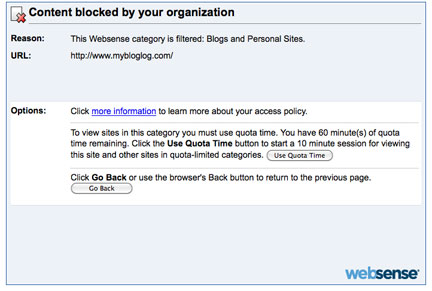
I can’t resist a follow-up to yesterday’s post. If you look carefully at the ad Google assigned to the page (lower right hand corner), you will note a link to information about an iPad app allowing users to view Republican election news. My comments were about ND Democratic Representative Earl Pomeroy. My post was hardly pro-Republican. I did use the word Republican in my post several times, but mostly to note why I thought a recent attack ad was unfair. So much for using context to understand intent. Perhaps I should consider restating my analysis.

Posted in Uncategorized | Comments Off on Google can’t be that smart

End of Election Season

Earl Pomeroy

I am working on a 365 photo project. That means I take at least one photograph each day. It is not an easy task and some of my photos show the strain of the commitment. I was in the Union today and I noticed that North Dakota Congressman Earl Pomeroy was walking about shaking hands. I decided a photo of ND’s only representative would be unique. I approached and just motioned that I wanted to take a photo. My Pomeroy nodded and after I had taken the picture came over to talk.

He asked how I was doing. I suggested he was in a tight race and I liked his most recent ad. I actually do. The Berg/Pomeroy contest is close and evidently both parties are pouring huge amounts of money into the campaigns because the ads associated with something like the evening news nearly fill all of the available time. Most have been quite negative. For whatever reason, the Pomeroy camp is now trying a different approach. The ad has been called an act of desperation by some. Evidently this time of year the strategy is to give the opponent no credit for anything. Anyway, it was a brief conversation – my choice. I felt a little strange taking the time talking with anyone engaged in such a competitive race of national significance. He wanted to know what I did. I said I worked in the Psych department. He said that he was a graduate of the political science program. I guess that was a connection of a sort. I wished him good luck and I added that he had my vote. He does. Time for him to spent time on someone else.

I think election ads would be great fodder for exercises in critical thinking. What credibility do we give the source? How effectively do we differentiate fact from opinion?

Here are a couple of examples from the recent ad by Earl’s opponent.

1) Evidently Earl votes in the same direction as Nancy Pelosi most of the time – 90+. Nancy Pelosi must translate as devil or the anti-Christ or something. I get the impression the ad creators assume North Dakotans will regard this as very disturbing data. Yes, I understand Nancy Pelosi is a Democrat.

I started thinking about the percentage. It does seem that 9o% is close to 100% supposedly indicating that Congressman Pomeroy cannot make his own decisions or something. I wonder about the 90% thing because I am sure that most people understand percentages and this seems very high. However, what do you think the agreement is on any given vote. I am guesing many votes are not controversial and everyone votes in the affirmative. What would be the voting record of the Republican with the lowest overlap with Nancy Pelosi? Would Republicans vote against any Republican who agreed say 50% or the time with Nancy Pelosi? How about 70% of the time? So, if Nancy Pelosi voted to adjourn for the day, should all Republicans vote to the contrary? The 90% thing is not what you need to understand. You need to understand how Congressman Pomeroy voted on issues that interest you.

2) It annoys me when people degrade by using “cute phrases”. So, educators sometimes use the phrase “drill and kill” to indicate their disagreement with a focus on memorization. It is a manipulative device that indicates nothing about the quality of the argument. So, the ploy in this case is used to describe Congressman Pomeroy’s support of health care reform as a vote for Obamacare. Just to be clear, the present approved health care legislation was not the proposal offered by the President. It was the bloated plan necessary to make some progress on health care and to avoid wasting a great deal of time getting through a lengthy delay and threat of fillabuster. This is what we call the political process and all involved own the result. I am not a defender of the games that are involved in the process. The President did want to change health care in our country. He did want to find a way to make certain anyone interested was covered by insurance and that some would not be excluded for pre-existing conditions. If you are against these improvements or if you took advantage of the Democrats wanting to assure these opportunities and complicated the process with your additions – stand up.

Posted in Uncategorized | Comments Off on End of Election Season

Outsourcing the IRS to China

I thought the title might expand my audience to include those leaning to the right.

So, my wife receives the following notice regarding her (our) federal tax payment. Neither of us could make sense of what the problem was, but she was to provide additional information. Of course, the scanner provided notification that the request was fraudulent, but the emall address should also have been a clue.

Posted in Uncategorized | Comments Off on Outsourcing the IRS to China

Election Season

petrossign

It is election season and political campaigns offer the curmudgeon plenty of material for a post. First, my friend, Tom Petros, is running for state office. I have never actually known anyone who was running for office this well. I would not bet on Tom’s campaign. Tom is a democrat in North Dakota. Second he has a Ph.D. I don’t think voters will ever know much more about Tom and both factors will work against him.

The 30 second television campaign ad signifies to me all that is wrong with the political process. Just what can you really explain about the complex issues we all face in such a short time frame. Take a picture of the candidate in working clothes talking to working people. I guess we all work. I mean people who earn their living in construction, farming, or an energy industry are considered real working people. If you don’t want to go with the working man theme, take a picture of the candidate with a rifle or shotgun out in the field. Show a flag or a military picture if possible. Mention you are “fighting” for something. Explain how many generations your family has lived in the state. Then, if there are a few seconds left, use a catchy phrase and possible work in a sound bite focused on an actual issue. My favorite meaningless phrase of this season is the “North Dakota way”. Evidently there is a secret way of doing things that folks who grow up here understand that has eluded the rest of us. Evidently it is passed down from generation to generation like a secret hand shake. I guess if you live in North Dakota you should support anyone who has learned this secret way of doing things.

My favorite “campaign logic” is used in an ad by now Govenor Hoeven who is seeking election to the U.S. Senate. For anyone who does not know, North Dakota is one of only a few states that has done quite well in these difficult economic times and is actually running a budget surplus. In typical North Dakota fashion, however, there is a movement to squirrel these funds away in a rainy day funds. It is what I as an Iowa farm boy refer to as the farmer logic. You never say times are good. Times are either bad or they will likely be bad next year. Anyway, the logic of the Hoeven ad is that anyone who has been so successful as the governor should apply these same principles and set the entire country on a more productive path. I will admit that Governor Hoeven has not screwed things up, but the state of the ND economy is not a function of brilliant leadership. North Dakota happens to be sitting on the Bakken Formation allowing for an oil drilling frenzy not present elsewhere (at least for some time). When energy costs go up elsewhere, a state with oil, coal, and wind power will do very well. The ag economy has also done very well in recent years. Then there are all of those Canadians flocking across the boarder (with our blessing and with money) to buy stuff and then go home. Finally, North Dakota has a very sparse population and probably with good reason. It can be a difficult place to live and this factor may limit many of the social challenges faced in other states. So, if you happen to be sitting on top of tremendous energy resources, have a second area of the economy that is doing very well, have few serious social problems, and the opportunity to sell lots of stuff to people with money, I know someone who can set you on a productive path. Of course, if you are in this situation I could probably do the same.

I think ads share some characteristcs with Twitter. There is not much there and you need to add a lot from your own knowledge. If you like someone, you agree with what they have to say and if not, you disagree. You fill in the blanks according your own biases. At least with Twitter, the 140 characters change from tweet to tweet. With the ads, they must assume the few seconds of content are quite difficult to understand because they repeat the same message time after time after time.

Posted in Uncategorized | Comments Off on Election Season

A view of the top from a lower level or life is not always fair

Have you encountered the book “Freakonomics” (or the sequel Super Freakonomics)? In the book (I have read only the first), as the subtitle claims, “a rogue economist explores the hidden side of everything”. The book explores unusual topics from the perspective of an economist and comes to interesting and sometimes counter-intuitive conclusions. I don’t have the book in front of me, but I seem to remember one of the examples involved the question of the benefits and costs of “going for it” when you are fourth and short. If I remember the analysis, the answer is it is better to go for it (tell that to the Vikings after last week). Part of the analysis is to understand that factors other than the probabilities of a given outcome can play a role in decision making. For example, it can be better to take the safe route if that is socially acceptable or “approved” – kind of the “you never get fired for buying IBM” approach. So coaches may kick even though the stats say you are better off attempting to make a first down and thus increase the probability of a touchdown. If this is not an example from the book, I apologize to the author. For anyone else reading this, it is still a good example.

Anyway, I was walking back from lunch today and I noticed something. If one were to look at the roof of campus buildings, some interesting differences can be observed. Some roofs provided a perch for lots of stuff and other roofs did not. There also seemed to be some relationship (correlation is not always causal) between the amount of stuff on the roof and the budgets of the departments housed within. For example, the three roofs appearing below cover the med school, the chemistry department, and the psychology department. Take a guess. Which department has less stuff?

It is my job to make the case for my department. Stuff probably comes with money. In the academic tradition, money comes with grants and rich alumni. Even viewed from an economic perspective, this is not actually how it works. Some departments contribute real money by generating student tuition dollars. So, if you generate 21,000 credit hours at approx. 250 per credit, that comes out to somewhere over 5 million. What was that expression – a million here, a million there, pretty soon it amounts to real money.

The stuff on the roofs sometimes has to do with learning experiences; i.e., labs. You need fancy labs with ventilation hoods to teach chemistry. I think you need labs to teach other things too. This is where the “you never get fired for buying IBM” thing comes in. You are always safe putting money into experiences in the “hard sciences” because there is a common assumption that those studying such subject matter need such experiences. Actually, for those taking lower division courses only, this is difficult to actually demonstrate, but such a position would begin sounding like science and real data and I won’t go there.

Hmm – Dr. Curmudgeon, “you seem a little upset. This was kind of funny, but a little edgy.”

Well, it is some of those other gadgets that have me annoyed. Some of that stuff involves air conditioning and I am still trying to figure out why real scientists require more cooling.

Posted in Uncategorized | Comments Off on A view of the top from a lower level or life is not always fair

So much for the wisdom (and composure) of the crowd

Late last Thursday evening I noticed that my Learning Aloud site was not responding. I moved most of my content to a BlueHost site a couple of years ago so I could quit worrying about such things. Commercial sites have the same problems my own servers have but they do a better job of backing up content and they have more experience fixing things.

I assumed the problem was unique to my site. I tried the chat to connect to customer service. The chat service kept claiming I had chosen to cancel the chat. I tried the phone number for support, but it was busy. This was a clue that the problem might be a general one.

I did a Twitter search and it became clear that my problems were not unique.

Twitter turned out to be an interesting source for information, but also the comments of many frustrated customers. Some customers were frustrated that Bluehost was not forthcoming with information about what was happening. Why were there no email notifications or tweets from Bluehost. Some had somehow learned what the company was dealing with, but doubted it. One explanation pointed to a concern with widespread viruses on Bluehost servers. Many claimed they were moving their accounts elsewhere and others jumped in with suggestions.

I received an email several hours later indicating the city of Provo had experienced a major power issue and Rocky Mountain Power had requested Bluehost to shut down all electical systems. My sites were up the next morning.

This was an interesting experience with the power of the social Internet. A group of strangers immediately shared what information they had. Evidently, the crowd does not necessarily generate much wisdom when the participants are frustrated and probably concerned about their content. I do think BlueHost made some critical mistakes in not keeping customers informed as the situation unfolded. Lesson – take a deep breath and see how things look in the morning.

Posted in Uncategorized | Comments Off on So much for the wisdom (and composure) of the crowd

No one cares what I think

I have been a blogger since 2003. Since that time I have written several thousand posts scattered across three different blogs. My original blog and the one I use to share my more serious thoughts on technology and education I call Learning Aloud – cute don’t you think.

I track access to Learning Aloud using Google Analytics. Using my well honed scientific mind I have carefully scrutinized that data and concluded that no one really much cares what I think. I have opinions like most popular educational bloggers but the posts in which I speculate about educational topics do not appear to draw much attention. I seem not to be among the crowd of popular education bloggers who are picked up on rss feeds allowing people to connect to just see what I have to say.

Most of my “hits” seem to come from searches for my descriptions of how something works. My most popular post during the past 30 days was something I wrote in 2008 about the similarities between cloud computing and the concept of thin clients. Somehow, my comments on using the iPad to write on Google docs has made the first page when you do a Google search on this topic. How about that text to speech feature of Snow Leopard – now that topic should appeal to the masses. I guess at least some attention is better than nothing. It seems I explain some things people want to understand (top posts from the past 30 days), but my opinions are not that interesting. If I can make topics like thin client computing interesting, surely what I think about educational reform should be spell binding. Perhaps there is just too much competition in the “opinion space”.

Posted in Uncategorized | Comments Off on No one cares what I think

We are #1. (if least is the best)

I pay attention when the general public is told something about higher ed. I am an educational psychologist so the topics are sometimes relevant to my teaching or research. I also am interested in how the area in which I work is presented to the public.

In 1961, the average full-time student at a four-year college in the United States studied about twenty- four hours per week, while his modern counterpart puts in only fourteen hours per week.

In mid-summer, the results of a research study by Babcock & Marks (prepublication PDF) received general attention. This does not happen often. The lead sentence from the abstract appears above. The amount of time college students spend studying has declined dramatically. (BTW – the authors use the word “curmudgeon” in the first paragraph of their article. How often does that happen?). The authors examine and reject some possible explanations. For example, technology does not appear to have made students more efficient learners. Only a fraction of the decline can be attributed to a higher proportion of college students who work.

So even though we lack the data to observe directly whether college has been “dumbed down,” we are able to draw from the data a solid conclusion about university practices: standards for effort have plummeted—in practice, if not in word.

I think their conclusion translates as – whatever has changed on the instructional side, college profs have lowered standards resulting in less student effort.

Now, this could have been the end of this story (and my post) – BUT NO!

UND, my institution, topped one of the lists generated by the Princeton Review. We are . We are . We study the least. Wait, this may not be a good thing. Just so those in the area do not scoff. We are also the only ND school Princeton Review considers for any ranking.

So, studying is declining. This decline may indicate a lowering of standards. UND students study the least. I am not sure I like where this logic exercise is going.
This topic (the general finding, not the UND data point) has generated a good deal of discussion and analysis.

Boston Globe
Atlantic Wire
Mother Jones

I do think this should be treated as a serious topic (generally and locally). I am not a big fan of survey data – participants can exaggerate or give answers to create an impression. Is indicating you don’t study much at your school fall within the same category as bragging that you school is a great party school?

Here is my take (no data here) as a prof. I think profs are pressured from two directions. First, there is the “I don’t want to buy and then read that expensive and large book” complaint. This is student pressure. Then there is the colleague pressure (with support from some students) that condemns lecturing as boring and passive. We should expect students to read and then discuss and explore in class. The combination may be deadly. If there is a resistance to reading and there is a resistance to presenting what you have left is discussion of personal opinions. We used to call this shooting the bull (not sure why – I did attend a land grant college) and it was what you did after studying when you walked to the campus town bar for a nightcap. I tend to think of a heavy emphasis on class discussion as “studying with your students”. This is not necessarily a bad thing if students come to class with something to study. Perhaps out of class and in class studying should be combined as a single variable. But, just what would be the focus of such effort?

I really hope this topic receives more attention. … enough of this writing stuff, back to reading the student’s book for the semester. …bah
Posted in Uncategorized | Comments Off on We are #1. (if least is the best)

You can take me to the mall but you can’t make me shop

Cindy and I have been married 40 years and we have arrived at several arrangements. These arrangements differ in importance. At some point we arrived at a significant agreement regarding shopping. I don’t. I buy. I do not care what Cindy spends as long as there is something left at the end of the month. I refuse to follow her around and watch what she looks at.

Now, it appears our arrangement is in some jeopardy. In North Dakota, going shopping may mean something a little different than you might imagine. We like to shop in Fargo because Fargo has a bagel shop and a Barnes and Noble. Fargo is about 75 miles away. This is not an unusual shopping trip in North Dakota.

I don’t mind going. It is not the time. It is what I have to do when I get there. Ever see that grumpy guy sitting in one of the stuffed chairs while the wife tries on clothes or looks for special finds for the grand kids. That could be me. EXCEPT – malls have wifi. Coffee shops have wifi. I can exist for possibly a week if I have wifi and coffee.

However, it appears today that our arrangement has encountered a problem. Is it possible that the mall is concerned that people are taking advantage of the free wifi.


Posted in Uncategorized | Comments Off on You can take me to the mall but you can’t make me shop

Vacation Time – Forget the Vacation Message

This is the time of year when people take off for vacations. Many email services offer the opportunity to leave a “vacation message”. It does sound like the polite thing to do – let others know you will be away and may not respond promptly too their emails. However, think carefully before you take this step. Do you subscribe to any listservs?

Here is what can happen (see below). An email is sent to you from the listserv and your email system follows your request and sends your vacation message back. The server may interpret this vacation message as a submission and send the message out to all members of the list which would of course include you. Which results in an email arriving in your inbox which results in a vacation message being sent back to the server, etc. etc.

Back when I learned to program I had to learn to essentially hit the “kill switch” for those times in which I put my computer into an infinite loop. If you are the culprit in this listserv problem you do not have access to the kill switch, but trust me every member of the list will soon recognize your name.

Posted in Uncategorized | Comments Off on Vacation Time – Forget the Vacation Message