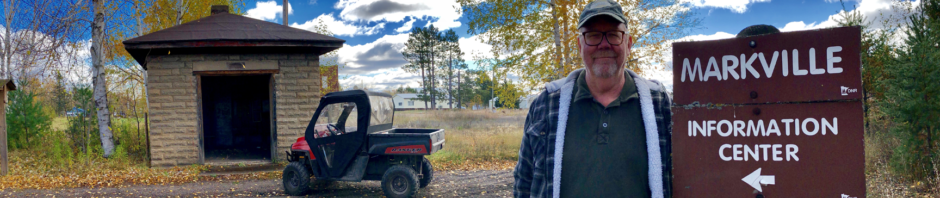
Depending on how you understand the curmudgeon personality, it has either been a difficult year or a year in which curmudgeons have plenty to complain about. The leadership of the country has led us all into a very dark time. Fear and hate are never a way to move the country forward or to gain respect from others. When fear and hate compound self-centeredness, we abandon too many people who need help. Label the concern for the less fortunate as socialism if you must, but citizens should not be put off by a label they don’t understand from going the right thing.
I like wood fires at our lake home. We added a small wood stove to our three-season porch which also serves as my office. It is a great place to write. The stove adds ambiance and warmth.
We have access to plenty of wood although we have yet to master the challenge of drying it appropriately. I have always wondered about the issue of whether the release of CO2 from wood fires adds to the problem of global warming. I need to heat our cabin, but is wood worse than using propane. I found this analysis from the BBC Science Focus. Burning wood is carbon neutral. I guess this makes sense – whether the wood is burned or rots in the woods, the carbon dioxide is no longer captured in the wood. The article does indicate that burning wood releases particles that can be damaging to lung health. I would think a stove in comparison to a fireplace would eliminate this problem.
Posted inUncategorized|Comments Off on Wood fires and climate change
I understand that many folks consider Bernie Sanders “out there” and idealistic. However, do folks really think that Bernie is wrong about issues such as climate change, health care, and income inequality? I always find myself agreeing with his descriptions of our most serious problems and his frustrations that politicians seem unable to confront these problems term after term. You have to give Obama credit for finally doing something about health insurance and look how much backlash there has been. What do voters think happens to people unable to pay for insurance or who had conditions insurance companies decided to ignore because of preexisting conditions? Al Gore had it right when he described climate change as an inconvenient truth. So many issues fall into this category and it is easier to ignore and focus on self-interest than face reality.
Some of the Democratic candidates take a watered-down version of this same position again suggesting that Bernie’s extremism means that a Republican will win the election. They offer approaches that are less idealistic and less likely to do much about the more severe problems. Republicans are different. They offer no pretense of addressing these problems. I have no idea how this lack of acknowledgment appeals to anyone worried about others and I guess that is the key. Republicans worry about themselves in the present and little else – no solutions to inequality, health care, or climate change.
There are reasons there is such an income and race divide in our politics.
The President does not make these decisions alone or at least that used to be the case. The President should identify a vision and then work with the legislature to make the case for this vision. We have forgotten this. What is wrong with someone making the effort to identify serious issues and proposing we could address these issues if we wanted to.
So, at least listen to Bernie’s message and be willing to explain how your candidate will address the problems we have that are getting worse and going nowhere.
Posted inUncategorized|Comments Off on Bernie Sanders
I came across this article from Reuters describing the drought in Southern Africa focusing on the little water now flowing over Victoria Falls. Take a look at the photos from this article and contrast it with the photo I took just a few months ago.
The falls is typically spectacular and is known for generating so much mist you can locate the site in the distance by just spotting the water cloud.
We visited in what is the dry season (winter) and realized just how serious the drought was at that time. Since leaving, we have read stories on the hardships endured by the wild life and now found the images from Victoria Falls. This should now be the rainy season and to see the Falls at this date does make you realize just how serious our present situation is becoming.
Posted inUncategorized|Comments Off on Drought in South Africa
This image has a story. The story begins a week or so ago when we purchased a frozen 19-pound turkey in anticipation of a family Thanksgiving gathering at our lake place. Because the turkey was frozen and we had to be at our other home for a few days, we left the turkey to thaw in the refrigerator. A blizzard canceled our return to the lake and the family gathering and by the time we returned to the lake we had an unfrozen turkey that would have been a danger to eat.
So, what to do with this giant decaying bird. I had this idea that also related to our experiences up north. While riding on the trails through the woods about this time of year, we have come across deer carcasses dumped along the trail. So hunters had killed a deer, harvested the meat, and then dump the remains back in the wood. Yes, it is not a pretty sight. I was concerned with the reason for this behavior and being naive to the ways of the people of the woods I had asked Natural Resource people about this behavior. No, it was not a sign of illegal activity. It was a great way to return what had to be discarded in some way back to nature. The scavengers would take care of the remains and benefit from the food source. Everything including most of the bones would eventually be consumed.
What we often found around such remains were eagles. Often, there would be multiple eagles that would be around at the same time. Some on the carcass and some in the trees. These birds are quite large when you get a chance to see them close up and I have collected quite a few images by coming across this type of setting and focusing on the eagles and not what they are eating.
So, what to with a decaying turkey? I could have discarded it in the garbage and taken it to the dump. Nope. We decided to take it out onto the ice near our cabin and see what happens. We have plenty of eagles, crows, vultures, coyotes, foxes, etc. around and why not offer them a late Thanksgiving feast.
I did take the roasting pan back to the house.
Posted inUncategorized|Comments Off on Feed the eagles
It has become obvious that online services offer benefits, but also liabilities. Many of these services have generated huge profits without charging those who use the services anything. For the most part, what these services have done is to create a model that provides services to users in exchange for the personal information of the users. This information is valuable to ad services that pay the online services money to microtarget ads. The online services also sell this information to other services that find value in what they can learn about those who are active online.
This is capitalism at work, but a form of capitalism that has been accurately described as surveillance capitalism. Perhaps those who use online services find this exchange acceptable. Perhaps they do not.
Because of the combination of benefits and liabilities available in the online world, each of us must make personal decisions about the present model. Those who want something different need suggestions for how they might proceed. My personal approach is to diversify my use of online services in multiple ways. I use different services for need purposes. What I am proposing here is that users make use of multiple services for the same purposes. The goal in this form of diversification is to reduce the information shared with the most popular services and to encourage competition. I would argue that competition is valuable without even considering the personable privacy issue. Without competition, what incentive is there for the dominant players to invest in improved services for users?
Here are my suggestions for diversification. I offer an alternative to some of the most dominant players. If you are unwilling to simply switch, consider either cross-posting to bolster the amount of content on these alternatives or using comparable services for different activities again as a way to increase the popularity of alternatives.
Brave – I am a fan of Brave as an alternative to other browsers and as a way to reduce the ad dollars benefitting other social media sites. I would encourage users still to view the ads shared through Brave and to spend the reward to you to compensate the content creators and service providers you utilize. At the core of this entire situation is the use of user content to provide the incentive for others to use a given social media site. In my opinion, it is not the ads that are the problem, but the funding of the ads via the collection of personal information.
WT:social is a social sharing site that offers an alternative to both Facebook and Twitter. Encourage your friends to move with you.
DuckDuckGo – is a reasonable alternative to Google search
Pixelfed – an image sharing site that works as well as Instagram
Posted inUncategorized|Comments Off on Diversify your online services
Thanksgiving should be a time for reflection. The parade is on so the kids at our house are occupied and I can spend a few minutes at the computer. I certainly have plenty to be thankful for. Yesterday, I turned 71. My age and health is certainly something I appreciate and no longer take for granted. My extended family is also doing well and we live close enough in our retirement to see everyone frequently. Life is good for us. I certainly appreciate my life and my lifestyle.
A great life comes with responsibilities. As folks who read my posts understand, I often use this platform to recognize serious issues I feel an obligation to recognize. Lately, I have been so frustrated with our leaders and their self-absorption that I seldom get beyond complaining about them to addressing the issues not holding our attention. Here are the topics we all should spend some time today using our free time to consider.
Inequities abound – a holiday dedicated to giving thanks is a great time to recognize the multiple inequities we allow. Allow is the word I intend. This seems a time of growing self-focus. Our leadership makes the argument we need to block those in great need from entering our land of plenty. Our focus on a winner take all economics has resulted in growing income inequity. The disparities are at such a ridiculous level that those with great wealth have so much the only real benefit of their wealth is to exert power and manipulate. To argue against this widening disparity now labels you as a socialist. What does that descriptor even mean to those who apply it to others? To me, it seems to translate as “we have ours, too bad for you”.
Climate change – folks my age can ignore what the scientists tell us about our deteriorating climate. We will not live to see the decline that faces our children. At least, our leaders should be willing to acknowledge that this is real and they are just willing to be indifferent. Who knows, perhaps being realistic about the future offers the opportunity for innovation, new occupations, and no industries.
Health care – old folks do think a lot about health. Our nation offers the potential for elite health care, but the belief that health care is a business limits the opportunity for many to purchase adequate insurance and adequate care. Of all the areas of life, why is staying alive and healthy not an opportunity that is equally provided? This is something other countries have figured out and it appears a nation that aspires to be great cannot.
Be happy. Be thankful. Don’t be selfish.
Posted inUncategorized|Comments Off on Thanksgiving reflection
We have grandkids varying in age from 3 to 13. We are lucky that all live nearby and we get together as a group quite often. I was a firstborn, but from observing our grandkids I have come to appreciate the frustration of being a younger child. If you are an older child, you are unaware of the options life presents. If you have older siblings, you watch the fun things your older brothers and sisters get to do and it must seem that life is unfair.
We have spent much of our personal lives promoting the educational potential of technology. Following through on our own values, we have given technology devices to our kids and we also invest in apps they can use. Mom and dad have to deal with screen time issues. Grandparents are like that. I am not certain when this investment starts. I let my wife make this decision. However, even without the gifts from grandma the kids find a way to get started. The touch interface just seems intuitive and we watch as our youngest scrolls through pictures, but also navigates to locate the videos she likes to watch and the games she likes to play.
Phones are a different deal. You can get into too much trouble with a phone. When to have a phone is definitely a mom and dad decision. When an older brother or sister has a phone, it can be tough on the younger ones. Some seem to be bothered more than others. Last year we let one of the more frustrated ones have an iPod. Many folks probably don’t even remember the iPod. It looks like a phone with apps, music, and a camera, but it isn’t a phone. Think a phone-sized iPad. This at least worked for family gatherings as it was possible to take photos just like the older ones.
Eventually, the opportunity to communicate must be the one thing you really want to do. It turns out that you can send messages on an iPad and the 7-year old who thinks she is 13 now has the opportunity to really participate in the online world. The problem is mom and dad have put extreme limits on the number of individuals she can contact. The immediate family is OK and so are grandparents. My wife and I have our phones at the ready, are retired, and bear some responsibility for the tech plague we have spread, so we end up being on the end of many of these conversations. We reasoned it could be a great way to develop reading skills. We now get messages early in the morning. I also now know when she gets home from school and when it is time for dinner.
The “this would be a great way to develop reading skills” isn’t going as well as we had hoped. Kids are impatient and smart enough to find ways around the obstacles they face. They know how to do speech to text so they don’t have to actually write. If they can’t understand something rather than attempting to sound out a novel word, they understand that messaging allows the person sending a sound clip so they just ask you to record the word they don’t recognize. Smart, but struggling a little more would probably be the ideal way to approach the task. When she asks you to read the last word (below), this is what she wants.
Our chats don’t have a lot of substance by my standards, but I have to keep telling myself that I have very little experience chatting with anyone so this may be the way all chats go. I am certain that the number of IM’s I have sent this year to a seven-year old will surpass the number I have sent all of my other contacts.
I have learned that emojis and creative spellings are cool. She signs off now by adding a lot of extra e’s to the end of bye. I think this is something she came up with herself.
Byeeeeeeeeeeeeeeeeeeeeeeeee
Posted inUncategorized|Comments Off on Texting with 7-year olds
The position of social content services have taken different positions on political ads. Facebook is in even when the ads contain verifiable falsehoods. Interpreted charitably, Facebook does not want to be in the position of assessing factual accuracy. Google and particular YouTube have been pretty vague on their position. Twitter has said they will refuse to accept any political ads.
On the surface, the Twitter position would seem a reasonable position even giving up considerable income in taking a stand. Conservatives argue that they are uniquely damaged by this policy. I can’t say I understand the logic of this position, but it somehow fits with the argued media bias conservatives see everywhere.
Twitter said ads that discuss elections, candidates, parties and other overtly political content would be prohibited. For ads that reference causes generally and that are placed by organizations and not politicians or political candidates, Twitter said it would place restrictions on them but not ban them outright.
The restrictions included removing advertisers’ ability to target specific audiences, a practice known as “micro targeting.”
So, you and I are completely free to use Twitter to express our political opinions and to link to sources. Individuals or organizations can take out ads advocating for policies that may be endorsed or rejected by a given party (e.g., climate change). This seems about as reasonable a policy as would be possible.
Posted inUncategorized|Comments Off on Twitter bans political ads, but not political discussion
This considerable controversy regarding Facebook’s policies when it comes to the ads each of us is shown. This is controversy is especially acute when it comes to Facebook refusing to block political ads that are widely known to be false.
There are multiple things you a Facebook user can do when it comes to the ads you receive. An important starting point should begin with your awareness of just how Facebook has categorized you. This categorization serves as the input to those purchasing ads to influence those believing an ad they purchase would be most effective against those falling into a given category.
Here is what you can do when you encounter an ad that makes you curious.
Click on the three dots that appear within the ad. This will open up a window with several options. One option will display information explaining the rationale for the ad being sent to you.
The display of the rationale also offers a way to hide ads from this source and to change ad preferences that can modify future ad displays.
We use cookies to ensure that we give you the best experience on our website. If you continue to use this site we will assume that you are happy with it.